Matt Gregory
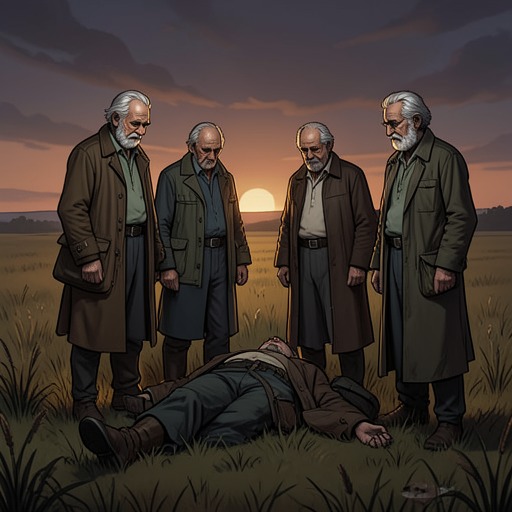
Finnegans WakeMatt Gregory appears as both an old sea-widower and a figure folded into the book’s unstable retellings of the past. He is one of the Four Old Men listening to Tristan and Isolde aboard ship, is called their pater familias, and later receives a brief, mournful farewell whose language makes his ending difficult to separate from the story’s transformations of identity.## Identity and the Four Old Men Matt belongs to the quartet identified as the “four maaster waves of Erin”: Matt Gregory, Marcus Lyons, Luke Tarpey, and Johnny MacDougall. Their familiar ritual of saying grace before fish returns as a refrain, with each man named and the group repeatedly insisting that there are four of them and no more. The comic insistence gives the quartet a communal identity grounded in habit, companionship, and repetition; Matt is its first-named member and its paternal figure.
The four are also described as old sea-widowers, their attention turned toward vanished times. Their memories and speech do not settle into a stable chronology: old friendships, youthful scenes, and later recollections fold into one another. Matt is therefore not presented through a continuous biography so much as through the social voice of the quartet and the recurring work of remembering.
Listening to Tristan and Isolde
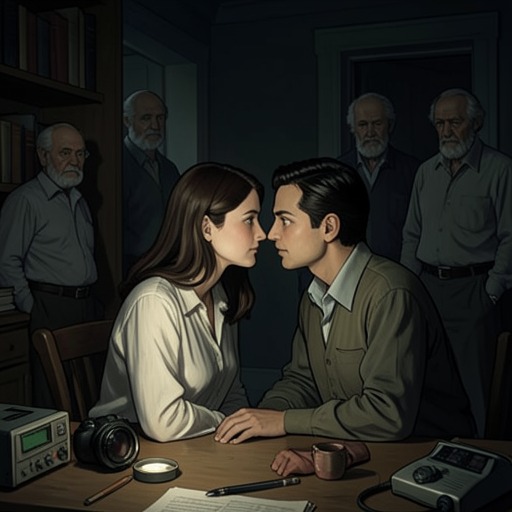
The Four Old Men listen as Tristan and Isolde kiss and embrace aboard a slowly moving ship. They strain their ears and watch with glistening eyes, while the narration dwells on the couple’s intimacy, including their position on a fifteen-inch loveseat behind the chief stewardess’s cabin and Isolde’s blue outfit embroidered with gold. Their listening makes them witnesses to a scene of desire, but also turns the lovers’ encounter into something retold and remembered by older observers.
The episode folds the present of the shipboard encounter into memories of earlier performances and youthful life. The four recall an old oyster supper and a scene of courting, while theatrical and historical echoes gather around the lovers. Matt’s role is not to intervene in their affair: he participates in the act of listening that frames it, joining his companions as the scene passes from intimate action into communal recollection.
Pater Familias and Recast Identities
In a later account, Johnny’s voice introduces poor Matt as the quartet’s pater familias. The passage then unsettles that designation, calling the old men “four dear old heladies” and describing them as pretty and respectable. The shift from patriarchal father to feminized, comic figures is characteristic of the book’s fluid treatment of identity: Matt remains recognizable by name and position, while the terms used to imagine him change around him.
The surrounding passage ranges among civic spectacle, auctions, statues, horses, and public figures before returning to the four listeners. Matt’s place in this crowded verbal world is relational rather than autonomous: he is the first of the four, the old group’s paternal head, and one of the sea-widowers whose memories keep the past in circulation. Those roles are repeatedly reframed rather than consolidated into a single realistic portrait.
Ending and Narrative Significance
Matt’s most direct leave-taking comes in a compressed exchange: he asks for loaf, the narration declares that this was the end, and a prayer follows, alongside the name Andrew Martin Cunningham. The sequence offers no stable explanation of whether Matt’s ending is literal death, a comic change of identity, or another turn in the book’s overlapping voices. Its abruptness matters: a shared meal, a final request, and communal sorrow collapse into a few phrases.
Across these appearances, Matt connects listening, eating, family language, and remembrance. The four men’s repeated grace and their reiterated count of four make memory itself cyclical, while Matt’s movement from pater familias to mourned “poor Matt” shows how a character can persist through a change of names and narrative registers. He is less a protagonist with a linear arc than a pivot in the book’s collective voice: a familiar elder repeatedly summoned, reshaped, and finally mourned.