Shaun the Post
Finnegans WakeShaun the Post is presented in changing roles: first as the messenger whose borrowed bag helps a woman prepare a disguise, then as Chuff, a fair-haired performer cast in an ongoing contest with Glugg. These brief appearances connect postal service, theatrical transformation, and recurring opposition without establishing a fully continuous personal history.
Identity and Introduction
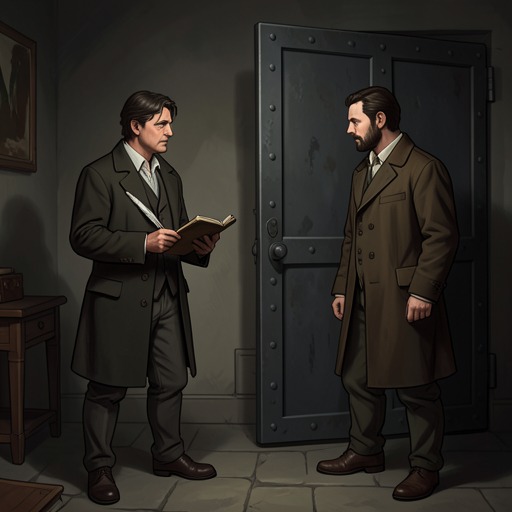
Shaun the Post is identified as one of the woman’s “swapsons,” from whom she borrows a bag to carry out her plan. The messenger’s practical object becomes part of her preparation for a masquerade, placing Shaun in the narrative as a source of useful assistance rather than as the plan’s author or central actor.
The name later shifts to Chuff in the playhouse’s announced cast. Chuff is described as fair-haired and as the opponent of Glugg. The text offers no explicit explanation of the relationship between Shaun and Chuff, but the supplied appearances place both names within the book’s fluid system of roles and recasting.
The Borrowed Bag and the Masquerade
The woman obtains a bag from Shaun the Post with the help of a loan, then consults her books and other materials as she prepares to join the masquerade. Shaun’s contribution is concrete but limited: the bag assists her scheme, while the woman devises and carries out the transformation herself. The episode thus associates the messenger with the circulation of an object that enables another person’s change of appearance.
The account gives no further action or response from Shaun in this episode. His presence is brief, yet the postal identity suits a passage in which objects and plans move between people and the narrative itself moves rapidly between voices and roles.
Chuff in the Playhouse
In the playhouse cast, Chuff is a “fine frank fairhaired fellow” from the fairy tales. He wrestles with Glugg for superiority in a deliberately unstable contest whose subject shifts among caps, bags, and other possibilities. The struggle does not settle into a clear practical dispute: the performers’ opposition produces a pattern pointing beyond either combatant, after which both are taken off the set and returned home to be cleaned and prepared again.
This staged conflict gives Chuff a defined counterpart and a repeatable role, but not a settled victory. The playhouse presents the encounter as one installment in a performance where parts and players are redistributed nightly. Chuff’s identity is therefore shaped as much by casting and recurrence as by the contest itself.
Recurrence and Narrative Role
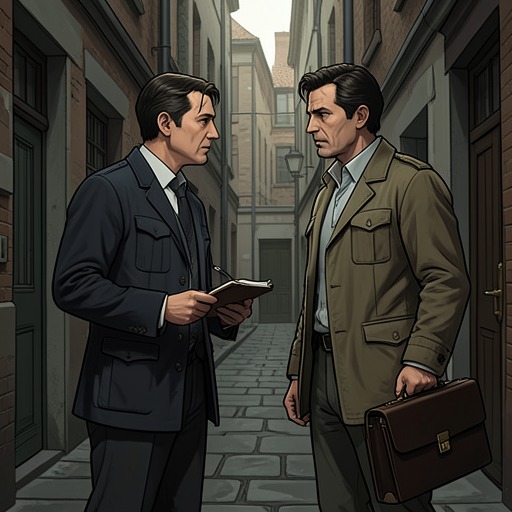
A later brief scene has two figures meet face to face and stand force against force, with the moment compared to a fated contest. The text names neither figure in that passage, so it does not establish that either is Shaun or Chuff. Its juxtaposition with Chuff’s earlier rivalry may echo the book’s recurring pattern of paired opposition, but the identity of the combatants remains unstated.
Across the supported appearances, Shaun’s messenger role and Chuff’s theatrical role are linked by mobility: one supplies an object for another person’s disguise, while the other is repeatedly placed within a staged contest and removed for renewed preparation. The text’s shifting names resist a firm biographical account; what emerges instead is a character-pattern shaped by delivery, role change, and opposition.