Tristan
Finnegans WakeTristan is figured as a youthful lover whose shipboard intimacy with Iseult draws both comic public commentary and the covert attention of the Four Old Men. The episode makes his romance less a private idyll than a scene repeatedly watched, sung about, and folded into remembered stories.
Identity and Introduction
The birds’ song presents Tristan as a “spry young spark,” calling him “Tristy” and predicting that he will court, marry, and bed Iseult. The verse turns him into a boastful, sexually assured figure whose anticipated success is tied to making his “money and mark.” Its jaunty confidence establishes a comic register before the narrative shifts to the lovers themselves.
A later musical appeal names “Tristan, sad hero,” setting the lover’s exuberant public image against a more elegiac one. The accompanying calls to Iseult and the references to drum, reed, and fife place the pair within a ceremonial, ballad-like soundscape, rather than resolving their story into a straightforward romance.
The Shipboard Encounter
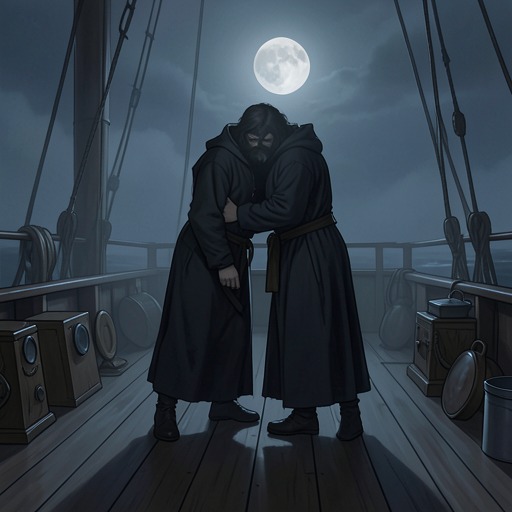
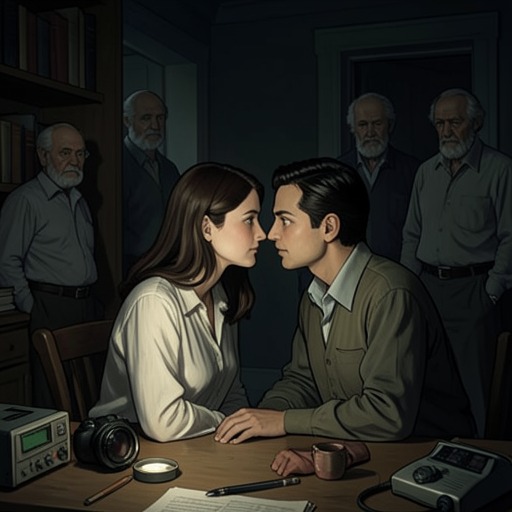
Tristan is shown cuddling and kissing Iseult on a small fifteen-inch loveseat behind the stewardesses’ cabin. The narration describes his handling of her as palpably improper, while also dwelling on her blue maiden’s dress, its gold-touched net overdress, and the pair’s playful, intimate closeness. The scene holds tenderness and scandal together: his embrace is affectionate, but the description insistently marks it as something improper to witness.
Their intimacy is accompanied by verbal play about lovers and numbers, while Tristan whispers of their story. The narration later recalls an oyster supper and the lovers’ kissing, linking the shipboard scene to an older, repeatedly retold erotic memory. The episode supplies no settled account of what follows; instead, desire persists as an image that can be revived and embellished.
Witnesses and Recollection
The Four Old Men listen from a distance while the ship moves slowly under light winds. Their collective attention makes the lovers’ encounter a watched performance, set amid seabirds and the sea; they sigh and sob as they listen. Their presence changes the scene’s scale, turning a concealed embrace into material for communal observation and remembrance.
The Four Old Men are identified through a recurring grace before fish, in which Matt Gregory, Marcus Lyons, Luke Tarpey, and Johnny MacDougall count themselves as four and insist that none be left out. Their ritual of counting and repetition echoes the retelling of Tristan and Iseult: the lovers’ encounter calls up recollections of earlier days, old theatrical versions, and student memories. Tristan’s episode therefore belongs to a larger pattern in which erotic scenes return through listening and repeated narration, not as a single, self-contained event.