Coterie dominance in Boston
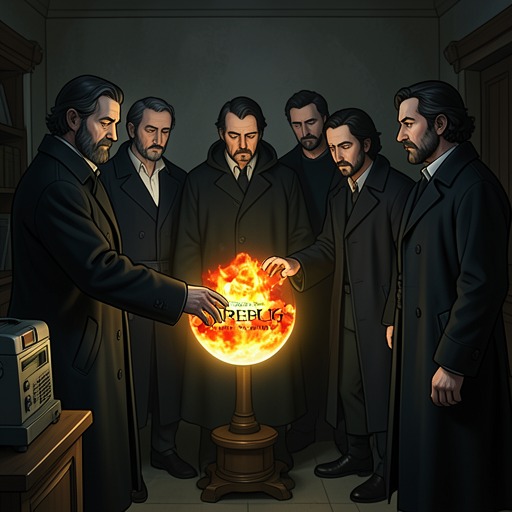
FirebugCoterie dominance in Boston is a system of supernatural rule under Venus, sustained by the organization’s power over nonhuman residents and the absence of an effective Council to check it. The city’s hierarchy is more than a criminal analogy: it determines who belongs, who can enter protected spaces, and whose safety can be treated as expendable. Through Ava’s account, Boston becomes a place where the Coterie’s reach is visible both in its lavish public-facing venues and in the violence that those venues conceal.
Nature and Reach
The Coterie resembles a mob family, but its defining feature is that its members are not human. Its ranks include people who joined by choice and people drawn in through coercion, among them Lock, Ezra, and Ava. Their common ground is inherited supernatural ancestry: somewhere in their bloodlines, something had fangs, could speak to trees, or could start fires, and those traits continued through the family line. Membership therefore links personal identity to an organization that can claim power over its members, not simply to a voluntary association.
That boundary between human and nonhuman also shapes the danger of the Coterie’s territory. The Inferno presents itself as a venue with several distinct levels: Heaven, the dance club and bar, occupies the top floor; Purgatory, a candlelit restaurant, sits at street level; and Hell lies below. Purgatory is open to the general public, while Heaven and Hell are reserved for VIPs. The polished restaurant can welcome diners in either formal clothes or ripped jeans, but the hospitality is conditional: in a Coterie establishment, a human visitor may instead be regarded as prey, or as a source of blood for Venus. The contrast between an accessible dining room and restricted, predatory spaces makes the organization’s social boundary legible in the architecture of its own business.
The Council’s Disappearance
The Coterie’s dominance is sharpened by the absence of the institution that might oppose it. Duncan had told Ava that some cities maintained a Council, a governing body intended to stop abuses of the kind the Coterie could inflict. Boston once had such a body, but no longer does. The account does not establish exactly how or when the Boston Council vanished; it presents the absence as a settled condition, leaving Venus’s power without a local supernatural counterweight.
Ava’s account places that condition against a wider historical change. Before phones and cars made communication and rapid travel easier, supernatural communities relied on local forces powerful enough to keep dangerous beings in check. These organizations were themselves vicious and bloodthirsty, but they served as a frightening form of control in a world with fewer ways to coordinate protection across distance. Over roughly the last century, most comparable groups either died out, went underground, or were replaced by Councils. The Coterie’s continued prominence in Boston is thus a reversal of a broader trend away from private supernatural rule.
Venus and the Uses of Power
Venus does not treat that historical decline as a reason to relinquish authority. Instead, she appears to regard it as a challenge and to pursue greater power. At this point she is content with ruling Boston, but Ava doubts that such satisfaction will last: the most powerful figure must keep finding new rivals to prove that she remains on top. This is Ava’s assessment of Venus’s ambition, rather than evidence that the Coterie has already expanded beyond the city.
The organization’s authority combines direct coercion with control of spaces and access. Its members may be there by choice or force; its establishment divides ordinary public dining from VIP floors; and its human visitors risk being treated as food. These elements show why the Inferno is more than a setting: it is a compact illustration of the order Venus commands, where glamour and service operate alongside exclusion and threat. The venue’s social polish does not soften the underlying power imbalance; it makes that imbalance part of ordinary life in the city.
Limits of Outside Protection
The nearest Council to Currant is in Portsmouth, New Hampshire, but its reputation offers little reassurance. Ava and her mother once sought temporary asylum with a local Council while travelling. Someone within that body betrayed them to the Coterie, and they had to escape through a bathroom window in the middle of the night to avoid capture. After that near-disaster, they never contacted a Council again. The episode gives institutional failure a concrete consequence: a supposed refuge can expose those seeking protection to the very organization they fear.
Ava reports a rumor that the Portsmouth Council is in the Coterie’s pocket and therefore useless; the claim is presented as rumor, not confirmed fact. Even so, the family’s earlier betrayal explains their distrust, while Boston’s vanished Council leaves them no local alternative. Together, these circumstances make Coterie dominance more than Venus’s individual rule. It is also a political vacuum: other Councils exist, but the nearest one is suspect, and the one in Boston is gone. In that vacuum, the Coterie’s power can pass for the city’s prevailing order because no trusted institution remains to enforce a different one.