Council
FirebugThe Council is a form of supernatural government intended to protect the weak and keep organizations such as the Coterie from ruling unchecked. Its authority offers an alternative to violent local power, but the novel gives that alternative little romantic gloss: councils vary in effectiveness, can betray those seeking shelter, and may be so compromised that inaction becomes their safest policy. The Portsmouth Council’s failures make it both a potential refuge and a tool in the strategy against Venus.
Purpose and Place in the Supernatural Order
Duncan explains that some cities have a Council, a ruling body that looks out for vulnerable supernatural beings and keeps groups like the Coterie at bay. In Boston, such a body had existed in the past but no longer did. Its absence leaves Venus’s organization without an effective local counterweight: she controls the Inferno and can use her power against people and creatures who have little recourse. The Council therefore represents not merely another faction, but the possibility of limits on the Coterie’s authority.
The novel sets that possibility against an older history of supernatural enforcement. Ava Jane Halloway’s mother had explained that local organizations once served as a frightening force to restrain dangerous creatures, in an era before phones and cars made communication and travel easy. Those groups were vicious enough to make survival of the fittest an inadequate description. Over roughly the previous century, many died out, went underground, or were replaced by Councils. The change suggests that supernatural society had developed alternatives to rule by the most powerful monsters; Venus, however, treats that historical shift as a challenge rather than a reason to relinquish control.
A Protection That Can Fail
The Council’s promise is shadowed by Ava’s memory of seeking temporary asylum with her mother. On one occasion, a person within a Council betrayed them to the Coterie. Ava and her mother escaped capture by slipping out through a bathroom window in the middle of the night, and they never approached a Council again. The experience gives Ava grounds for distrust beyond rumor: even a body meant to shelter the vulnerable can expose them to the organization they fear.
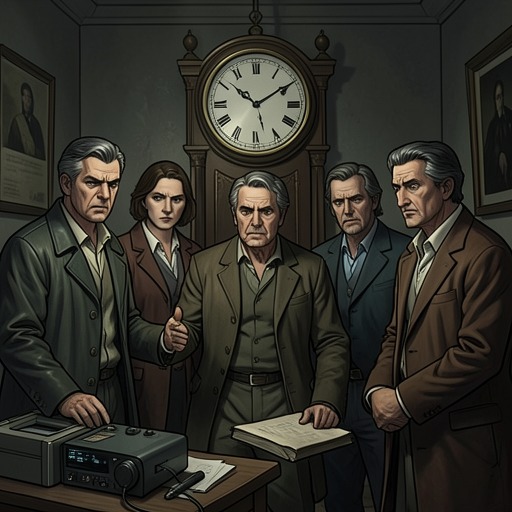
The nearest Council to Currant is in Portsmouth, New Hampshire. Before meeting its members, Ava and her companions have heard that it is in the Coterie’s pocket. Duncan confirms that the Portsmouth Council is weak, divided by infighting and petty disputes, and unable to provide dependable help. At least half its members, he says, have been bribed by Venus, while the rest may answer to other private interests. Because no one knows which members belong to which faction, approaching the Council means relying on people whose priorities cannot be trusted. Its proximity to Currant does not make it a reliable refuge.
This weakness distinguishes the Council’s intended purpose from its actual political capacity. It is supposed to restrain the Coterie, but the Portsmouth body cannot act as a unified protector. Duncan’s assessment also complicates the assumption that replacing supernatural enforcers with government necessarily produces justice: a Council may be less openly coercive than the Coterie and still fail the people who need its protection.
Ava’s Appeal and the Council’s Response
Ava nevertheless goes to the Portsmouth Council seeking help. She offers to get the Coterie off its doorstep and explains the reasons for her request, including accusations of kidnapping, murder, and extortion. She keeps her account to its bare essentials. The Council’s response exposes the gap between a claim of authority and a willingness to use it: Martinique dismisses Ava’s allegations, points out that she has no proof, and treats her as a disgruntled employee inventing stories about her boss. Ava admits that she has only her word. She has no phone with the messages she had sent Venus after completing jobs, and recognizes that those messages would not necessarily cast her in a favorable light either.
Alistair, another Council member, rejects Martinique’s attempt to end the meeting outright, but does not promise immediate intervention. He acknowledges that Duncan vouches for Ava’s group while stressing that they are strangers making serious accusations. The Council, he says, will investigate, but its procedures take time; it cannot abandon other people who have approached through proper channels simply because Ava’s companions have an important connection. His response is more measured than Martinique’s dismissal, yet it leaves the group without the urgent protection it sought. The Council’s process supplies a reason for delay where the danger, from Ava’s perspective, demands action.
The Council’s failure also becomes useful to Ava’s allies. Ikka explains that they had expected the members not to help. By revealing where Ava would be, the group makes it likely that someone working for Venus will report her location. Their objective is to draw Venus away from her safe base rather than attack her there. The appeal therefore works politically in reverse: the Council does not protect Ava, but the predictable failure of the meeting helps create an opportunity to expose Venus to danger.
Alistair and the Council’s Political Limits
After a vodyanoy ambush, Alistair appears at Duncan’s table with two other people, including a huge man from the Portsmouth Council. Ava remembers that the Council had refused to stretch out its neck for her group and challenges Alistair over the earlier attack. He clarifies that he has not come in the Council’s official capacity. The distinction matters: his presence is not evidence that the institution has changed course or committed itself to defending Ava.
Alistair describes his fellow members as repeatedly bribed, so that any action risks angering someone with influence; complete inaction is the only choice that will not land them in trouble. The account gives the Council’s paralysis a political mechanism rather than presenting it as mere timidity. Its members are pulled among competing interests, and corruption makes a collective response dangerous to their own positions. Alistair, by contrast, approaches Ava as an interested party acting for his own advantage. He has been in contact with Duncan about regime change, an idea Duncan had previously rejected, and offers to help remove Venus and then take her place to avert the resulting struggle for power.
That offer is Alistair’s proposal, not a commitment by the Portsmouth Council as a whole. The distinction continues to matter after Venus falls. Alistair uses the Coterie’s paperwork to show that Ava’s pact binds her to the organization rather than to Venus alone, and he intends to use her abilities as he consolidates control. The Council has not supplied Ava with a reliable route out of the Coterie’s authority; the man who offered assistance instead becomes its new leader. Through this contrast, the Council remains a flawed counterweight to supernatural domination: it can provide a language of protection and a possible political alternative, but its local weakness leaves decisive action to individuals pursuing their own interests.