The Inferno
FirebugThe Inferno is a Coterie-owned Boston restaurant and nightclub whose polished hospitality conceals the organization’s criminal business and supernatural hierarchy. Under Venus, it served both as a center of operations and as a carefully staged display of control: a place where visitors could be welcomed, watched, threatened, or turned into part of a public spectacle. Its continued operation after her fall makes the building a measure of political change as well as a recurring site of danger.
Layout and Public Face
The Inferno has three levels, each with a distinct role. Purgatory occupies the ground floor, where a maître d’ takes names and seats diners ranging from customers in suits to those in ripped jeans. The restaurant offers dishes such as surf ’n’ turf and burgers in a candlelit room that manages to feel upscale without being snooty. Its small bar is dimly lit by candles and candle-shaped chandeliers, with red light reflecting from burnished copper in the walls. The polished atmosphere makes the venue attractive on its own terms; the danger comes from who owns it and what the public-facing room shelters.
Heaven, the top floor, is a bar and dance club, while Hell lies below ground. Both are VIP spaces rather than areas open to the general public. The division is more than a nightlife arrangement: access to the upper and lower floors places guests inside the Coterie’s private world, where the humans present may be prey rather than customers. The venue’s ordinary restaurant business therefore sits alongside a much more predatory social order.
The upper club is designed as a dreamlike spectacle. Smoke rolls across the dance floor, obscuring dancers below the thighs; deep-purple velvet seats and hazy lighting soften the room’s outlines. Its winged staff wear scanty costumes, making the club’s unreality part of its carefully arranged glamour. Even the route upward is controlled: stairs are reserved for emergencies and staff, while security ushers visitors into an elevator that Venus prefers for its theatrical effect.
Venus’s Base and the Coterie’s Power
The Inferno is a Coterie-owned restaurant and dance club used to launder money. It is also where Venus commonly conducts operations and holds court. Ava knows the surrounding Boston area as a place to avoid precisely because Venus is based there; for a Coterie employee, visiting the venue is not simply an evening out but an approach to the center of Venus’s territory. The restaurant’s attractive public face and the organization’s coercive authority occupy the same address.
The security arrangements make that authority physical. Staff elevators lead down behind the maître d’s podium, and anyone using them must pass guards, show identification, swipe a key card, and then face another security check and pat-down. Hell is carpeted and furnished almost entirely in white, from its ivory carpet to walls painted Arctic Chill and snow-colored seats. The immaculate palette is striking against the violence associated with the room: blood would show readily, but pointing that out to Venus would be dangerous. Ava has previously been punished for tracking mud onto the carpet, chained and left hanging from a wall. In the venue, even a mark on the decor can become an occasion for Venus to demonstrate control over her employee.
Venus’s rule is reinforced by the assumptions surrounding the club. Boston no longer has the Council that might once have constrained the Coterie, and the nearest Council to Ava’s home is rumored to be compromised. The Inferno thus stands not only as Venus’s headquarters but as the visible center of power in a city where an effective counterweight is absent. Its mixture of restaurant, nightclub, and guarded private rooms gives the organization a respectable façade while keeping its hierarchy and threats close at hand.
Ava’s Visits and the Venue’s Threats
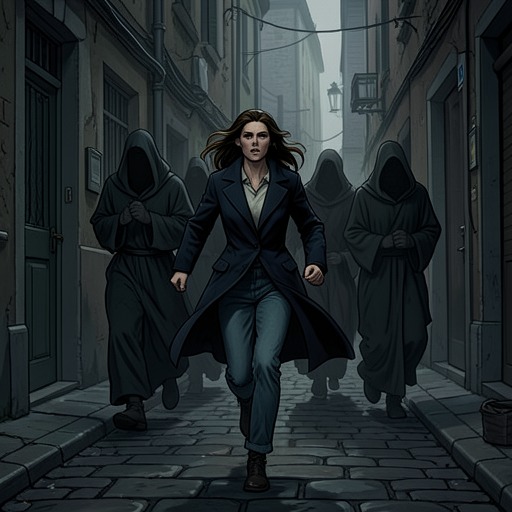
The Inferno first threatens to turn an ordinary date into an involuntary visit to Venus’s territory. Ryan proposes a horror-film outing, and Ava believes the plan may be safe because she knows of no theater near the club. Instead, Ryan drives her into the streets around the Inferno. On a Friday night, the line curls around the building; Ava recognizes the red neon sign and understands that the outing has brought her directly to the place she most wanted to avoid. She is seventeen and cannot enter Heaven as a club patron, but the restaurant’s public floor is open to them.
Venus’s arrival changes the social atmosphere even before she speaks to Ava. In a conspicuous off-the-shoulder outfit, she draws the attention of men nearby and leaves Brittany resentful at losing their focus. Venus’s dazzling, wolfish smile turns the apparent glamour into a warning. After offering the group access to Heaven, she leaves; Ava follows, knowing that Venus likely wants to discuss her work as a firebug. Behind the public restaurant, Ava uses the guarded staff elevator to descend into Hell and then crosses the lower level, where elaborately dressed guests mingle beneath the appearance of old-Hollywood glamour. Venus receives her from a divan in a beaded gown, smoking through a long cigarette holder, with Owen standing behind her.
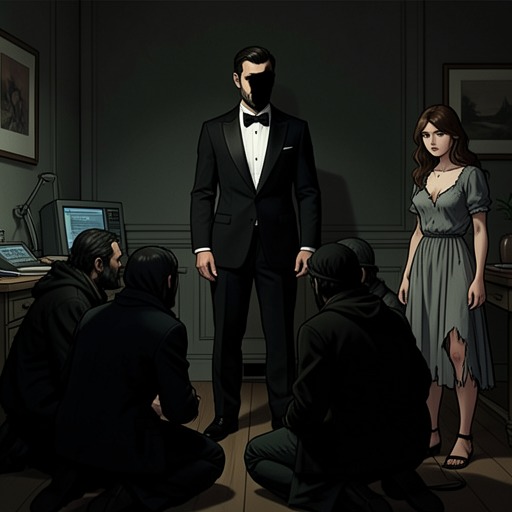
The venue’s theatricality reaches its most coercive form in a ballroom confrontation. After Ava, Lock, and Ezra are brought through a small lounge, they enter a room with black-tie guests, red velvet walls, roses, chandeliers, and a string quartet. At least a hundred people stare at the underdressed arrivals. The plates are empty, and Ava recognizes the danger of being among supernatural predators as an unprotected human might be regarded as a meal. Venus’s audience is not incidental: she uses the gathering to make an example of the three friends, whom she believes have become too comfortable and are setting a bad example.
The ballroom floor opens at the touch of a concealed mechanism, revealing an empty swimming pool roughly twenty feet below. Tables crash into it, breaking into wood and glass as the guests flee to the edges of the room. Venus’s men remove the trio’s wards with precise assistance from a smaller guard, then force them toward the pool. The transformation of a formal banquet room into a trap captures the venue’s governing logic: polished design is only a surface, and the machinery beneath it can be activated without warning.
Escape, Damage, and Change of Rule
Ava turns the threat back on the crowd by encouraging a dying firebug’s controlled flame. Fear spreads through the ballroom; guests panic, fire extinguishers appear, and the sprinklers add to the confusion. Ava does not want the building to burn down while people are still inside, so her priority is to escape rather than destroy the venue. Lock throws part of a smoldering chair at Owen, and Ava, Lock, and Ezra climb out of the pool area. Their escape depends on coordination as much as fire: the friends move together through a crisis created for public spectacle.
That damage remains part of the Inferno’s history after Venus is gone. Alistair gives Ava a week to recover, then summons her back to the venue. She arrives on crutches with Cade, who has only recently been revealed as her father, and finds the exterior and interior apparently unchanged. Ezra greets them at the door, but cannot whirl Ava around as he usually would because of her injury. He instead kisses her cheek and reminds her that she owes him towing fees for his car. Familiar gestures persist in a place whose political order has shifted.
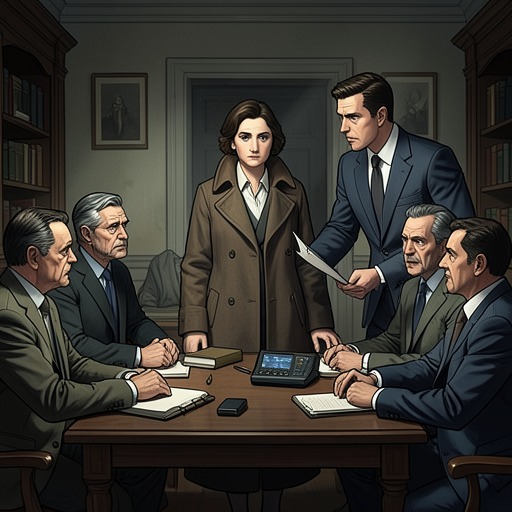
The change becomes visible in the staff. Ava recognizes people who fought on her side and notices that other familiar employees are conspicuously absent. Ezra describes Alistair’s personnel changes as a clearing of house. Instead of leading Ava and Cade down to Hell as habit would suggest, he takes them through the restaurant to a secluded booth in Purgatory. There, Alistair sorts stacks of papers and explains that Venus did not even have an office. The damage Ava caused downstairs gives him reason to remodel, while the paperwork and new attention to organization signal a different approach to managing the Coterie.
The Inferno does not become harmless with Venus’s death. Alistair summons Ava there and shows her documents stating that her pact belongs to the Coterie, not solely to Venus; her assumption that the pact ended with Venus is therefore wrong. The venue’s function persists even as its leadership changes: it remains the place where organizational power is administered, obligations are asserted, and Ava learns that escaping Venus did not free her from the Coterie. The contrast between the familiar building and its new management makes the Inferno an emblem of continuity under regime change.