
The Price of Tully’s Ambition
Firefly LaneThis thread follows the conflict between Tully Hart’s pursuit of professional success and her longing for love, family, and a life beyond the public spotlight.
increasing Bearing strength in each event
 decreasing
Bearing strength in each eventdecreasingThe Reporter’s First Rejection

Ambition Meets a Closed Door
A dream takes form
Margie Mularkey encourages Tully Hart to think beyond the chaos of home and imagine a future as a reporter. Tully turns that encouragement into a consuming ambition: she writes to a television station, prepares a portfolio, and appears for an interview while still a high-school student.
The assistant news director refuses to hire her because she is too young. He does not dismiss her potential, but the distinction offers little comfort to someone who equates progress with immediate recognition.
A setback becomes fuel
Tully interprets the rejection as a delay rather than a verdict. She takes a local newspaper job and continues sending work, determined to enter television news as soon as she can.
Her ambition gives direction to a life marked by uncertainty, but it also establishes a recurring conflict. Because achievement becomes her proof that she is worth noticing, each barrier risks feeling like a personal rejection rather than a normal part of learning a profession.
The Internship She Makes Herself

Work Before Recognition
A place at the station
At the University of Washington, Tully Hart presses for journalism opportunities before the institution considers her ready. She studies broadcasting, sends tapes and resumes, and approaches Johnny Ryan directly to ask for work, even though the station has no formal internship program.
Johnny tells her she has promise but still needs experience. Tully accepts unpaid grunt work rather than wait for a position that may not arrive, volunteering to clean, research, and do whatever the newsroom needs.
The value of persistence
The job places Tully inside a working newsroom and gives her practical chances to learn. It also strengthens her belief that every barrier can be overcome through sufficient effort and that she must keep pushing until someone grants her access.
That belief serves her well, but it leaves little room for rest or uncertainty. Her professional identity grows around relentless forward motion, a habit that later makes it difficult for her to recognize when success has come at the expense of other forms of connection.
The Affair and the Career Choice
Love Competes With the Next Opportunity
A relationship on uneven terms
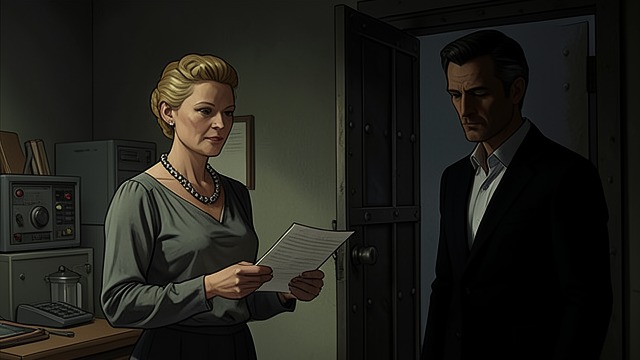
Tully Hart begins an affair with Chad Wiley, who mentors her and offers intimacy different from the coercive sexual experience she suffered as a teenager. Chad falls in love and eventually asks her to marry him, offering a shared life and a job opportunity in Tennessee.
Tully is drawn to him, but her first instinct is to measure the offer against her ambition. She fears that marriage will redirect her from becoming a nationally recognized journalist, while Chad fears that a future together is impossible if she cannot choose him.
The cost of postponement
When Tully receives a career opportunity that could bring her closer to network news, Chad leaves a letter saying that he is proud of her and will love her, but he cannot keep asking her to want the same life. Tully later questions whether she loved him enough to follow him, but she does not undo the choice.
The decision proves that success can be both a genuine calling and a refuge from emotional risk. Tully achieves the career she has pursued, but the relationship leaves behind an unanswered question about the life she declined to attempt.
A Bigger Platform, a Smaller Life

Success Accelerates
The climb continues
After early television work and a dangerous live robbery report, Tully Hart wins a position at NBC and moves to New York. She works punishing hours, studies prominent anchors, and treats every assignment as a step toward greater visibility.
Edna Guber helps Tully enter high-stakes reporting, including a trip to Nicaragua. The work confirms that the adrenaline and public purpose of journalism genuinely excite her, so her ambition is not merely vanity; it is also a vocation she has built through skill and courage.
Fulfillment remains elusive
Even as Tully becomes a recognizable journalist, takes major assignments, and later becomes a highly paid television host, the demands of work leave little room for a stable private life. Relationships such as her on-and-off connection with Grant do not become the dependable family life she has begun to miss.
By the turn of the millennium, Tully is increasingly tired of success that cannot be shared with someone who knows her. She has more recognition than she once imagined, but its inability to answer her loneliness makes the old bargain between career and intimacy newly visible.
Leaving the Spotlight for Kate

A Career Put Aside
Success cannot solve the crisis
When Tully Hart learns that Kate Ryan’s breast cancer has spread to her brain, professional achievement offers no solution. She has money, authority, and a successful television show, but none of these can reverse Kate’s prognosis or restore the years they lost during their estrangement.
Tully returns to Kate and apologizes, then stays close as the family prepares for hospice. Her attention shifts from audience approval to the needs of one friend whose private life has mattered more than the public image Tully built.
A deliberate withdrawal
Tully uses her final Girlfriend Hour broadcast to explain inflammatory breast cancer and its warning signs. She also tells her audience that she is stepping away for a while to be with Kate, naming real life and friendship as the reason.
The choice does not erase Tully’s ambition or suggest that her career was false. Instead, it changes the hierarchy she has lived by. For once, she accepts that the person beside her matters more than the crowd watching her.
1977, before Tully’s senior year of high school
1981, near the end of college
1980s, from Tully’s affair with Chad Wiley to her move to network television
Late 1980s through the 1990s, after Tully’s move to New York
Near the end of the story, after Kate’s terminal diagnosis
