Ima Hart
Firefly LaneIma Hart, known to Tully as Gran, is her grandmother and childhood guardian: a quiet, devout presence whose care offers Tully a rare experience of steadiness amid maternal abandonment and upheaval. Ima’s love is expressed less through spectacle than through practical shelter, physical comfort, and provision for a future she will not live to see. Her death leaves Tully grieving and without a home, while the letter and inheritance she leaves behind make clear that her care has continued even beyond her final days.
Identity and Home
In 1970, ten-year-old Tully lives with her grandparents in an orderly, quiet house on Magnolia Drive. Ima dislikes music, television, and board games; she spends much of her time in a rocking chair by the fireplace, making needlepoint samplers, many of them bearing Bible verses. At Christmas she donates the samplers to the church for its fundraisers. The domestic world she maintains is defined by routine and restraint, a sharp contrast with the upheaval beyond the house and the instability in Tully’s relationship with her mother.
Ima’s household also includes Tully’s grandfather, who has been confined to bed since a stroke. When he rings his bell, Ima hurries down the hall to him. Her response is one of the few moments when the quiet house breaks into motion, revealing care as a habitual act rather than an abstract virtue. The samplers, the rocking chair, and the bell together suggest the pattern of her life: patient work, religious faith, and attention to the people who depend on her.
Care for Tully and Dorothy
Ima’s care for Tully is tender as well as practical. When Tully needs comfort, Ima sits beside her on the worn floral sofa and pulls her onto her lap. Tully snuggles close, resting her cheek against her grandmother’s chest. The gesture offers what Tully’s troubled relationship with her mother cannot: uncomplicated physical reassurance and a place where she can be held.
Ima does not disguise her view of Dorothy’s condition. She tells Tully that her mother is weak and confused, urges her to stop pretending things are different, and insists that Tully herself is strong. She also acknowledges wishing that the relationship could be otherwise, but describes Dorothy as having been a lost soul for a long time. The honesty is painful, yet it does not diminish Ima’s affection for Tully; it gives the child a frank account of the absence she has been left to navigate.
Her connection to Dorothy persists through money. Ima leaves instructions that monthly payments to her daughter continue, believing this is the best and only way to keep track of her. The arrangement indicates both Dorothy’s unreliability in maintaining contact and Ima’s effort to preserve a thread between mother and daughter. Ima’s provision is therefore double-edged: it recognizes the limits of what she can repair while continuing to offer support in the form she considers possible.
Death, Letter, and Inheritance
When Tully is leaving for work, she finds Ima lying still in bed, her chest motionless and her cheek cold. The samplers that had given the home its familiar order appear in the dimness as indistinct shapes. Ima’s death turns the household’s repeated signs of care into remnants, and Tully loses not only her grandmother but the guardian who had made the house feel like home.
Among Ima’s inexpensive jewelry is a folded pink paper addressed to Tully. In it, Ima apologizes for leaving her, recognizes Tully’s fear of being alone and left behind, and offers religious reassurance that she and Tully’s grandfather will watch over her from Heaven. She tells Tully that she was the greatest joy of her life. The letter answers Tully’s deepest fear directly, but it cannot prevent the immediate loneliness that follows Ima’s death; its promise must endure where Ima’s daily presence cannot.
Ima leaves all her assets to Tully: both homes, the car, bank accounts, and stocks. She also directs that the monthly payments to Dorothy continue. Her estate thus combines an attempt to secure Tully’s future with an ongoing, carefully managed connection to her own daughter. The practical consequence, however, is painful: the homes are to be sold, leaving Tully without a home even as the inheritance is meant to ensure she can afford college. Ima’s instruction reflects a future-facing hope rather than a promise that Tully can remain in the place where she was raised. She had told the lawyer that Tully would win the Pulitzer someday.
Loss and Continuing Influence
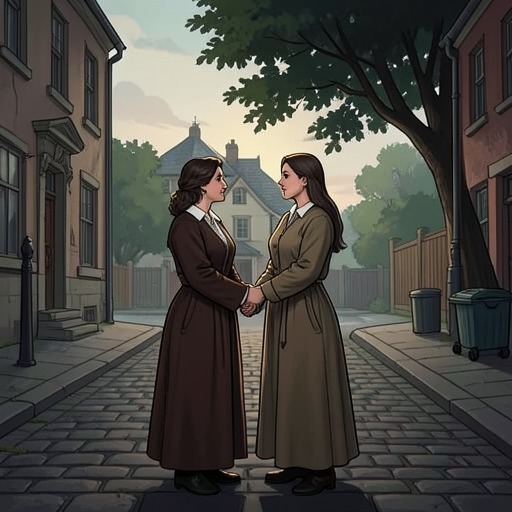
Tully later tells Kate that Ima died while Kate was away. Kate’s embrace gives Tully the sympathy she has been waiting for, and Tully breaks into sobs as Kate holds her without demanding that she explain or compose herself. This grief makes visible how much Ima’s death has taken from her: with Gran gone, Tully has lost the person who had provided both a home and dependable affection.
Ima’s influence persists through the forms of care she leaves behind: the inheritance, the payments intended to keep Dorothy connected, and the letter assuring Tully she will not be alone. Those efforts cannot erase Tully’s abandonment or restore her grandmother’s presence. Instead, they establish a lasting contrast between the fear of being left and the evidence that she was deeply loved. When Tully later accompanies Kate through a medical crisis and remains beside her in the ambulance, the novel places that act of loyal presence within the history of care Tully herself once received from Ima. Her grandmother’s significance lies not in changing the uncertainty around Tully’s family, but in giving Tully a durable memory of being held, valued, and provided for.