Inflammatory Breast Cancer (IBC)
Firefly LaneInflammatory Breast Cancer (IBC) is the rare and aggressive disease that kills Kate Ryan. The novel distinguishes it from the familiar expectation that breast cancer announces itself as a lump: Kate’s first visible sign is a small discoloration, initially treated as an infection, and by the time the illness is identified it is too advanced for the treatments she has already undergone. Its course makes a missed warning sign consequential not only to Kate’s prognosis but to how she and those closest to her confront the time left to them.
Identity and Presentation
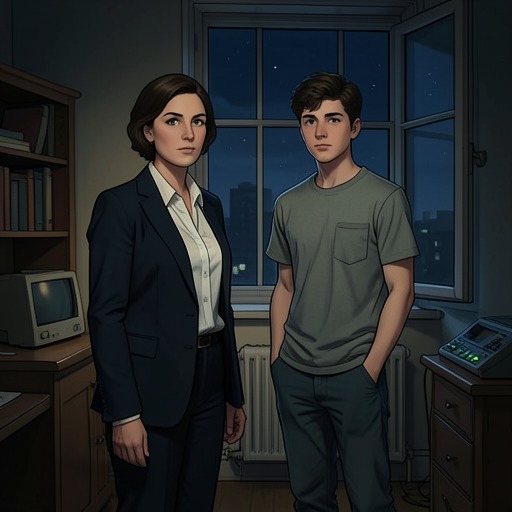
Inflammatory Breast Cancer is described as an uncommon form of cancer that may begin with a rash or discoloration rather than a lump. During a routine examination, Dr. Silver notices a quarter-sized red patch beneath Kate’s right nipple. The skin is slightly puckered, like an orange peel. Kate says it has been there for about nine months, perhaps a year, and recalls that it began as what seemed to be a bug bite. Her family doctor believed it was an infection and prescribed antibiotics; the patch temporarily disappeared and later returned. At times it felt hot, which reinforced Kate’s belief that the problem was infectious.
Kate has also had a mammogram on schedule, and its results were clear. That apparently reassuring result does not resolve the visible change that Dr. Silver is examining. When the doctor stops their routine conversation and asks how long Kate has had the discoloration, the ordinary checkup changes direction: she uses the wall phone to arrange an immediate breast ultrasound. The contrast between a clean mammogram and a persistent, changing patch makes the novel’s central warning concrete. A clear screening result and a symptom interpreted as an infection do not, in this case, mean that the disease is absent.
Diagnosis and Progression
Kate later tells Johnny that she has cancer. When Tully arrives, Johnny names the diagnosis as inflammatory breast cancer. Tully initially reaches for the familiar sequence of treatment she associates with cancer: mastectomy, radiation, and chemotherapy. Johnny tells her those have already been done. The answer closes off the hopeful assumption that treatment is only beginning and reveals how much of the illness has already unfolded beyond Tully’s knowledge.
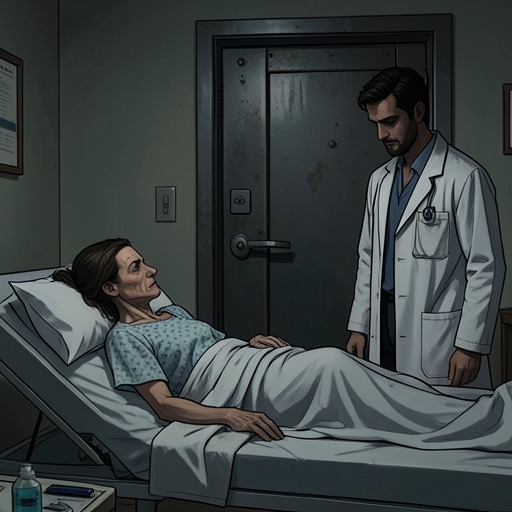
The cancer has metastasized. After Kate suffers a minor stroke, doctors take her to the operating room quickly; once inside, they see there is nothing they can do. The cancer has reached her brain. The neurological spread has consequences beyond the prognosis: Johnny warns Tully that Kate is fragile, that the cancer has affected her faculties, and that she may have good moments and bad ones. She might not recognize Tully. The disease therefore threatens both Kate’s life and the continuity of recognition and conversation through which her closest relationships are lived.
When Tully and Kate speak, Tully proposes contacting a doctor in Ontario whose new drug she remembers from a breast-cancer program. Kate refuses another round of treatment: she has had them all, and none has worked. She asks Tully simply to be with her. The exchange sets professional knowledge and the impulse to search for another intervention against Kate’s own assessment of what she can endure and what she wants now. The cancer’s significance is not only that it defeats treatment, but that it brings the question of care down to presence.
Public Warning and Education
Tully carries Kate’s diagnosis into her television work, but does so as an explicit change in what the program is for. Addressing her audience, she recalls an earlier show in which she ambushed her best friend, Kate Ryan, on the same stage. She then tells them that Kate has breast cancer and explains that this rare cancer may start with a rash or discoloration rather than a lump. In Kate’s case, a family physician mistook the sign for a bug bite and prescribed antibiotics; by the time the cancer was diagnosed, it was too late. Tully emphasizes that this kind of missed diagnosis happens to too many women, particularly younger women.
The broadcast turns that personal history into practical information. Tully introduces Dr. Hilary Carleton to discuss inflammatory breast cancer and its warning signs: rashes, localized heat, discoloration, puckered skin, and inverted nipples. The doctor has brought Merrilee Comber, from Des Moines, Iowa, who first noticed a small scaly patch near her left nipple. Tully interviews the guests, shows pictures, and urges her audience not only to obtain yearly mammograms but also to watch for changes in their breasts. The distinction matters: screening for lumps alone does not capture the signs the program names.
At the end of the broadcast, Tully abandons her usual closing tagline. She tells viewers that Kate is the best friend she has and the best mother she knows, then announces that this will be her last show for a long while because she is taking time off to be with Kate. She frames the decision as a choice between the constructed demands of a television program and the immediate claim of real life, friends, and family. The illness thus changes Tully’s conduct as well as the show’s subject: public disclosure serves education, while leaving the stage makes room for private care.
Meaning in the Novel
The novel presents IBC through a sequence of widening recognition: a patch that seems like a bite, a doctor’s urgent decision to investigate, a diagnosis disclosed after treatment has already taken place, and news that the disease has spread to the brain. That structure makes delay visible without suggesting that Kate ignored ordinary screening; she had her mammogram on time, and it was clear. The failure lies in the mismatch between the signs of this particular cancer and the expectations that shape how those signs are read.
The disease also reorganizes the relationships around Kate. Tully’s first response to the news is to imagine more treatment, but Kate’s request is for companionship rather than another proposed cure. Later, on Kate’s last night in the hospital, Tully persuades Johnny to take the children home and takes his place in the other bed. She pushes it across the linoleum until it nearly touches Kate’s, then plays the recording of her final show. Their shared viewing turns the broadcast—from which Tully has stepped away—into something they can experience together in the hospital room. Public testimony and intimate friendship meet around the same illness, but they do different work: one warns other women; the other keeps Tully beside Kate.
The author’s closing note makes the warning personal as well as fictional. She says that she lost her mother to breast cancer and describes doing self-exams and getting yearly mammograms, yet finds IBC frightening because it presents itself in sly, unexpected ways and may be overlooked or misdiagnosed. She urges women to learn its warning signs, to ask questions or seek second opinions when something feels wrong, and not to let fear prevent them from seeking help. In the novel and its afterword, IBC is therefore both a devastating plot reality and a reason to look beyond the expected symptom, trust bodily knowledge, and ask for support.