Kate Ryan's Funeral and Tully's Farewell
Firefly LaneKate Ryan’s funeral and Tully Hart’s farewell bring their lifelong friendship to its final, defining scene. Tully cannot bear the formal service, but a box Kate entrusted to a priest reaches her outside the church. Its letter and three personal gifts transform the moment from public mourning into an intimate exchange between friends; Tully ends by dancing alone, held by the music and memories they shared.
The funeral and Tully’s retreat
Kate’s last To Do list covered her funeral, and Tully followed it closely. The Catholic church on the island was filled with photographs, flowers, and friends; true to their friendship, Kate had chosen Tully’s favorite flowers rather than her own. In the days before the service, Tully concentrated on arrangements and care for the family while the Ryans and Mularkeys sat together on the beach, holding hands and sometimes remembering to talk. She tried to meet the funeral as a professional might, telling herself she could smile through anything.
That composure failed when the cars arrived at the church. Tully said she could not do it. Inside, an organ began a slow, plodding version of “You and Me Against the World.” The service’s music, the priest’s account of Kate, and the projected montage above the coffin all seemed to Tully to make the woman she knew into a shadow. Before she could reconsider, she walked out. Her departure is not indifference: it marks the limit of what she can endure in the public ritual of grief.
Kate’s message from beyond the service
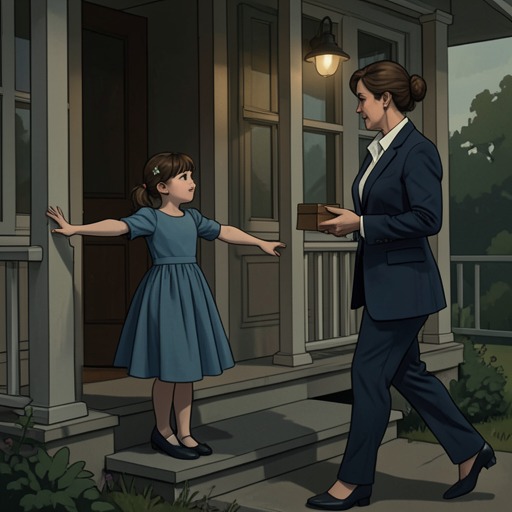
A priest who had met Tully when she brought clothes for the burial and photographs for the montage found her outside. He gave her a large black box, explaining that Kate had entrusted it to him for the day of the funeral and had predicted that Tully would be standing out front when the service began. Tully smiled at Kate’s uncanny understanding of her, even through the pain, and carried the box across the street to an iron park bench.
On top lay a letter in Kate’s unmistakable, bold, left-slanted handwriting. Its opening addresses Tully directly and acknowledges that she would not be able to stand the funeral. The letter’s intimate tone makes explicit what the delivery itself already conveys: Kate anticipated Tully’s absence from the service and arranged a different way to reach her. Rather than requiring Tully to participate in the communal ceremony, Kate has prepared a private farewell suited to the particular friend she knows.
Three gifts and a shared past
Beneath the letter were three objects, each accompanied by a brief instruction: a Virginia Slims cigarette with a yellow sticky note reading “Smoke me,” an autographed David Cassidy picture marked “Kiss me,” and an iPod with headphones marked “Play me and dance.” The gifts are funny and specific, not solemn keepsakes. Together they direct Tully through familiar gestures—smoking, remembering, and moving to music—and give her something to do with grief when the service has become unbearable.
Tully lights the cigarette and coughs as she exhales. Its smell immediately recalls nights with Kate on the banks of the Pilchuck River, lying against fallen logs and looking at the Milky Way. The memory links a small present-day action to the friendship’s earlier life: the funeral does not erase their history but makes its ordinary shared moments newly vivid. When Tully puts on the headphones and plays Kate’s chosen song, “Dancing Queen” carries that memory forward into the present.
Dancing as farewell
Tully whispers to Kate, starts the music, and finds herself laughing or crying as she stands. She feels that she is not alone and that Kate is not simply gone: more than three decades of good and bad times remain theirs, held in music and memory. The friendship’s “Best friends forever” promise thus survives not as a denial of death but as a bond Tully can still experience after Kate’s death.
The closing gesture is public and solitary at once. In the middle of the street, by herself, Tully begins to dance. The movement answers the song’s instruction and the earlier years of the friends’ shared music, but it also reverses the funeral’s prescribed stillness: after leaving the church rather than watching Kate’s life projected above the coffin, Tully makes remembrance active and bodily. The farewell does not restore Kate; it gives Tully a way to carry their friendship onward, with grief and joy occupying the same dance.