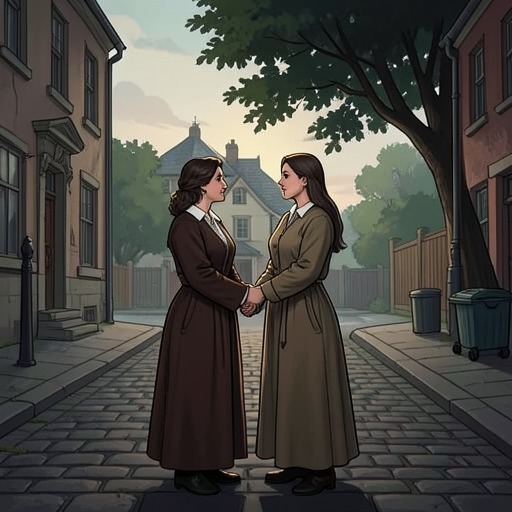
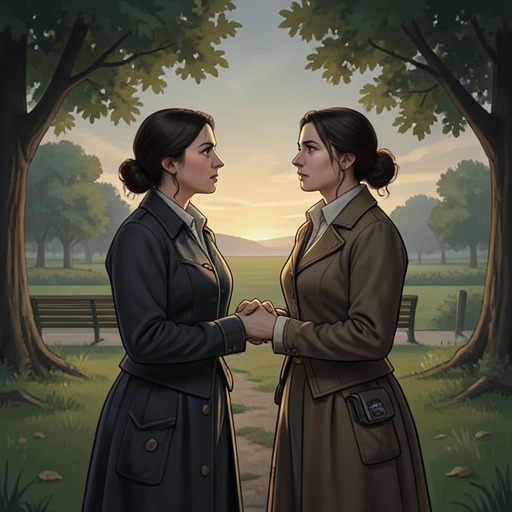
Tully and Kate's Reconciliation
Firefly LaneTully and Kate's Reconciliation brings two friends, separated by a long history and a recent rupture, back together at Sacred Heart Hospital as Kate is dying. The reunion does more than restore their friendship: it makes Tully confront the years of closeness she has treated as secure, and turns their shared past into a commitment to face what remains side by side.
The call that breaks the silence
Tully hears Kate’s name through the intercom in her office, just after a successful show and the familiar routine of meeting fans. Hope rises before Tully can stop it, and the strength of that hope angers her. When she takes the call, the two speak bluntly: Kate says Tully is the one who is angry and refuses to apologize; Tully counters that she is not apologizing either, then insists that the disagreement matters. Kate cuts across the argument with the essential news: she is in the hospital, on the fourth floor of Sacred Heart. The call ends there, leaving Tully to move from resentment to alarm without the comfort of a settled explanation.
Tully urges her driver to hurry, then runs through the hospital’s glass doors. People gather around her, as they often do when they recognize her, but the attention she normally builds into her schedule cannot hold her now. She pushes through the crowd and asks to see Kathleen Ryan. The scene sharply reverses the usual balance of her public life: a famous television host accustomed to managing other people’s attention is suddenly concerned with reaching one person before it is too late.
The approach to Kate’s room
Before Tully enters, Johnny warns her that Kate is fragile and that the cancer in her brain has affected her faculties. Kate has good moments and bad ones, he explains, and may not know who Tully is. The warning makes the walk to the room feel lonelier and longer to Tully than any journey in her life. Johnny leads her to the doorway; the people speaking quietly around them offer no relief from the possibility that the person waiting inside may not recognize her.
Kate lies angled against stark white sheets and piled pillows, bald and without eyebrows after her illness and treatment. Tully’s voice seems too loud and too alive in the quiet room when she says Kate’s name. Then Kate opens her eyes, and Tully sees the friend she has known since girlhood—the girl to whom she once swore to be best friends forever. The moment answers the fear Johnny has raised, but it does not erase the estrangement. Tully must speak to a friend who is present and recognizable while knowing how much time they have lost.
An apology made through memory
Tully reaches toward Kate and lets her knuckles graze Kate’s cheek. She calls herself the former best friend who hurt Kate and says she is sorry for what she did, wishing she had said so earlier. Rather than make the apology abstract, she recalls the particular history that made them friends: Kate was the first person who truly wanted to know her, and she stood by Tully after Tully was raped. Tully also remembers their early, comic disagreements, including Kate’s bafflement over a word in Love Story and her youthful disgust at French-kissing. These memories place their intimacy in ordinary details as well as in the crisis that first tested it.
Tully recalls their letters after she first left Snohomish, signed with one of the phrases they used for their enduring friendship. Their past comes into the room as a shared record, not merely as Tully’s claim that she remembers. Tears gather in Kate’s eyes and run down her temples. Kate asks whether Tully really thought she could forget her. The question releases Tully from the fear that the illness has taken their history from Kate, even as it exposes how deeply the separation has made Tully doubt what once seemed certain.
Mutual fault and a renewed promise
Kate’s response is not a simple absolution. Smiling tiredly, she calls Tully a bitch and says she has always known it; she also admits that she could have called back. More than thirty years of friendship, she observes, can include a few broken hearts. The exchange gives the reconciliation its mutuality: Tully accepts responsibility for not calling, but Kate acknowledges her own part in the silence. Neither woman pretends the estrangement did not hurt, and neither makes forgiveness depend on a perfect account of it.
Tully struggles to explain the darkness that has kept her from calling, but the conversation moves away from a full explanation and toward the time they still have. When the reality of Kate’s illness presses in, Tully says they will do what they have always done: face it side by side. The promise echoes the childhood friendship they have just remembered, now made under radically different circumstances. Their old vow is no longer a carefree assurance about a shared future; it becomes a practical declaration of companionship in the face of death.
Reconciliation expressed through care
After leaving Kate’s room, Tully comes out shaken and covers her mouth as she tries to contain her response. Later, on Kate’s last night in the hospital, she persuades Johnny to take the children home and takes his place in the other bed in Kate’s room. She pushes the bed across the linoleum until it nearly touches Kate’s. The movement gives physical form to the promise made at the reunion: Tully closes the distance between them and stays.
Tully brings a recording of her last show and starts it. Kate dryly questions whether that is what a dying woman would want to watch; Tully answers with laughter, and they watch the broadcast together like girls at a sleepover. The scene joins the worlds that have long defined their friendship: Tully’s public career and the private, familiar ease they can still find with one another. Her choice to leave the stage and remain with Kate makes the reconciliation consequential beyond words. Their final closeness does not undo the missed calls or the years of hurt; it gives them a way to inhabit the time left together.