Anselmo
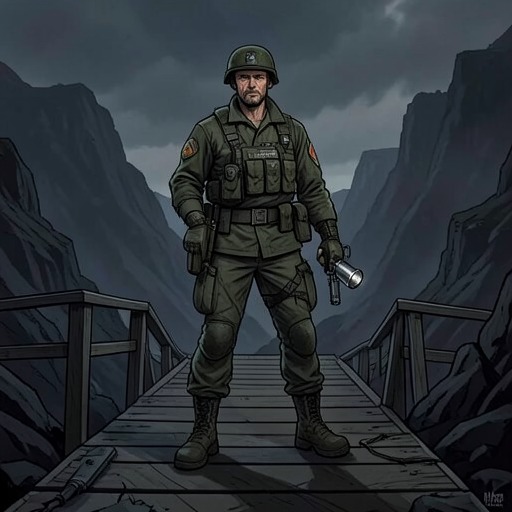
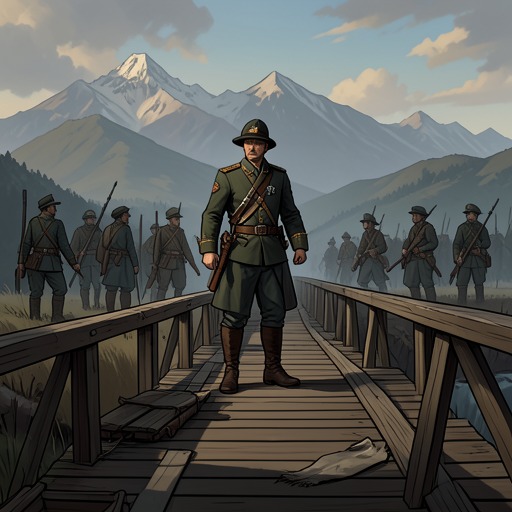
For Whom the Bell TollsAnselmo is Robert Jordan’s guide and closest scouting partner in the mountain operation against the bridge: a capable, disciplined man whose practical service is inseparable from his distress at killing. He watches the roads, reports troop movement, and helps place the demolition charges; when the bridge is destroyed, he is killed by falling steel. His path brings the work of war into direct conflict with his belief that even an enemy remains a human being.
Identity and Introduction
Anselmo introduces himself as a man from Barco de Avila. Robert Jordan has forgotten his name, a lapse that troubles him; Anselmo responds plainly, offers to help with the pack, and continues the journey toward the bridge. Their first exchange establishes the relationship’s working terms: Anselmo knows the terrain and leads, while Jordan carries the equipment and directs the mission.
Jordan quickly recognizes the old man’s exceptional mountain endurance. He has followed Anselmo since before daylight and believes the guide could walk him to exhaustion. Jordan trusts him as a guide, though he reserves judgment about Anselmo’s judgment; responsibility for decisions, he insists, remains his own. This distinction foreshadows their collaboration: Jordan sets the military purpose and makes tactical choices, while Anselmo supplies local knowledge, observation, and dependable execution.
Scout and Messenger
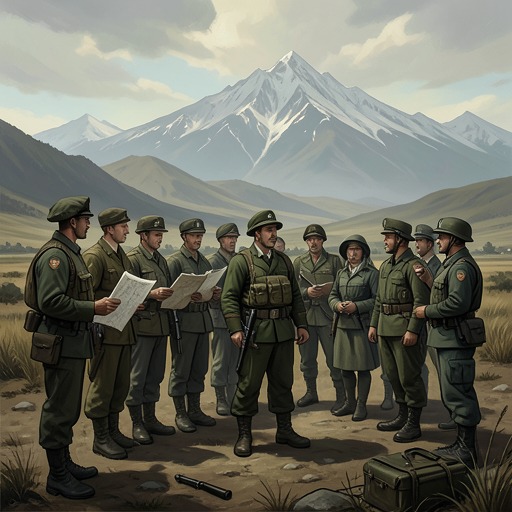
Anselmo’s duties repeatedly place him on the roads and at observation points. During a discussion of possible troop movements, Jordan says he will send Anselmo with a report of movement and concentrations, and notes that he is checking the road. The assignment relies on more than physical endurance: the report must turn what the scout sees into information the operation can use.
On a snowy watch near the sawmill, Anselmo remains at his post despite worsening weather and the risk of freezing. He has been ordered to stay until relieved, but recognizes that the storm has changed the circumstances and debates whether continuing to obey is useful. When a camouflaged staff car passes, he records it on the sheets from Jordan’s notebook. It is the tenth car going up that day; six have come down, and four more are expected. Anselmo counts and marks the traffic, but does not distinguish among the types of cars or infer the significance of the General Staff vehicles. The episode shows both the value and limits of his intelligence work: he is conscientious in gathering facts, while interpreting them belongs to Jordan.
His obedience is not mechanical. Anselmo considers leaving because the cold is severe and he has a report to make, yet stays longer because Jordan told him to hold the position and could be searching for him in the snow. He also weighs the discipline demanded by the war against the need to respond sensibly to changed conditions. The sentry’s dilemma is practical, but it is also ethical: an order matters because other people depend on it, though an order that ignores circumstances can become useless.
Anselmo’s reports continue after the snowy watch. After the fighting around El Sordo’s position, he sees the dead and wounded being carried away, recognizes El Sordo’s automatic rifle, and later reaches the hill where the band had fought. He counts those left there and hurries across the hills to Pablo’s camp with the news. He then reports to Jordan that there had been much movement on the road and that he has written it down as instructed; another observer is now watching in his place, and Anselmo plans to collect that observer’s report. His work links separate scenes of danger to the group’s decisions, even when the intelligence arrives alongside news of loss.
Conscience and the Meaning of Killing
Anselmo’s account of killing sets him apart from a simple image of the hardened partisan. Asked whether he has killed, he acknowledges that he has done so several times, but says he did not take pleasure in it. He considers killing a man sinful, including killing Fascists whom the guerrillas must fight. He distinguishes human beings from animals and rejects the idea that people and animals are simply brothers in a way that erases the moral difference he feels.
He expects that he will kill again, but imagines that, if he survives, he will try to live without harming anyone so that his past actions may be forgiven. The question of who could forgive him has no reassuring answer. Anselmo says that God is no longer present for him—not God, the Son, or the Holy Ghost—and that if God existed, God would not have permitted what he has witnessed. His faith has not yielded to an alternative certainty: he does not know who can pardon the violence. This unresolved spiritual and moral anguish remains active even as he accepts the necessities of the mission.
His unease also shapes how he sees the enemy. While watching the men at the sawmill, Anselmo thinks they are much like his own people, and that orders are what put them on opposite sides. He knows the men are Galicians and believes they cannot desert because their families would be shot. He dislikes thinking about killing them, although he understands that the operation may require it. In his view, the word Fascist does not make the people behind the post cease to be poor men subject to the same war. His conscience does not make him refuse the work; it prevents him from treating its human cost as abstract.
Service in the Bridge Operation
Anselmo contributes both the equipment and the surveillance needed for Jordan’s plan. He says that he brought sixty explosive charges in one pack, weighing ninety pounds. The explosives had previously been used by Pablo to destroy the Otero post. Their return to the bridge operation links the current task to an earlier action and makes Anselmo’s contribution concrete: he has helped transport the material on which the demolition depends.
Before the attack, Jordan gives Anselmo a detailed role. On the signal, Anselmo is to fire; after Jordan’s sentry is dealt with, he is to cross the bridge and help place the charges. Jordan explains how to secure them with wooden wedges and grenades, and tells Anselmo to carry out the work himself if Jordan is incapacitated. Anselmo answers that he remembers the instructions. The exchange makes clear that the mission depends on his competence, not merely his presence: he must understand the sequence well enough to continue without Jordan.
Anselmo also knows the ground from earlier observation. In darkness, while leading Jordan and Agustín downhill toward their positions, he stops by a pine and quietly points out the fire at the bridge. He shows Jordan a small fresh blaze he had cut low on a tree trunk, marking the place from which they had watched before, and identifies the spot Jordan had considered for the machine gun. The marks convert remembered terrain into usable tactical knowledge, allowing the two men to orient themselves at the bridge before the attack.
When the firing and grenades begin, Anselmo runs down toward the far end of the bridge. He returns to Jordan saying that nothing is wrong and that he had to finish the sentry. Jordan sees tears running down through Anselmo’s gray beard. He tells Anselmo that he too has killed a man, indicating the sentry at the other end. The brief exchange refuses to separate the operation’s success from the burden of the acts that make it possible: both men have done what the plan required, and Anselmo’s tears disclose the cost that obedience has not erased.
Death and Narrative Significance
After the bridge’s center section is destroyed, a truck stops up the road and its occupants run toward a culvert. Amid the continuing danger, Jordan finds Anselmo lying behind a white marking stone, with the loop of wire still around his fist. He checks that Anselmo is dead and does not turn him over to inspect the fatal injury. The narrative confines the fact of his death to that recognition, making its finality plain without dwelling on the wound.
Jordan thinks that Anselmo looks small in death and wonders how he carried such heavy loads. The remembered weight of the packs, his rope-soled shoes, and his work as a scout give this perception its force: the man whose endurance had seemed almost inexhaustible has become a body Jordan must leave behind. Jordan picks up Anselmo’s carbine and the nearly empty sacks, then climbs into the trees without looking back at the bridge. He is coughing from the explosive fumes and feels numb. The mission has been accomplished, but Anselmo’s death is not converted into a clean victory.
Anselmo’s role joins the military and moral strands of the operation. He is reliable enough to carry intelligence, explosives, and the knowledge of the terrain; he is also the character who gives the clearest voice to the belief that killing remains wrong even when war demands it. His death at the bridge makes that contradiction part of the mission’s outcome. The work succeeds through the cooperation of people who cannot make its human consequences disappear, and Anselmo’s final absence measures what that success costs.