Anselmo’s moral anguish over killing
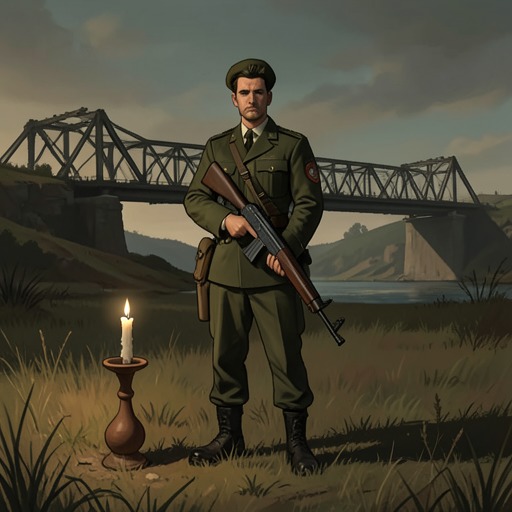
For Whom the Bell TollsAnselmo’s moral anguish over killing is a sustained conflict between his belief that taking a human life is wrong and his recognition that war may make it necessary. His answer is neither to celebrate violence nor to deny its military purpose: he imagines a future, perhaps collective, penance that could acknowledge the harm and help people recover a humane basis for living.
The moral distinction between hunting and killing
Anselmo’s unease is rooted in a distinction he draws between killing an animal and killing a person. He remembers taking pride in the memory of an encounter with a bear, but says that killing a man leaves nothing good behind. The difference is not simply whether the act is violent: a human being remains a fellow person, not a trophy. Robert Jordan replies that a person’s hand cannot be displayed as a bear’s paw can, exposing the grotesque implication of treating human death as a comparable source of pride.
Anselmo does not pretend that he has remained outside the violence he condemns. He admits that he has killed several times and expects he may have to do so again. He calls killing a man a sin even when the victim is a Fascist whom the fighters believe they must kill. If he survives, he hopes to live without harming anyone, as though later conduct might make forgiveness possible. Yet he cannot identify who would grant that forgiveness: he says that God is no longer present to him, and that he does not know who can absolve the living of what they have done.
Necessity, responsibility, and the enemy
The contradiction returns during his watch in the snow near the sawmill. Anselmo is cold and waiting, while across the road he sees a light and smoke from a place where the opposing soldiers are sheltered. He has watched them and heard them speak; he imagines that, apart from their orders to challenge travelers and inspect papers, he might have been welcomed at the mill. He thinks of them as poor men like himself, not as people naturally destined to be enemies. Their opposing military orders, rather than any essential difference between them, stand between them.
That recognition does not make the impending violence disappear. Anselmo knows that the men at the post are Galicians and believes they cannot simply desert because their families could be shot. He also thinks of the next day’s fighting and of the men who died in the Otero raid. His compassion therefore coexists with an awareness of the conflict’s coercive circumstances: the men may be ordinary people, but the war places them on opposing sides and makes their deaths a foreseeable consequence.
His proposed alternative is not an easy claim that there is no danger or that the enemy should simply be spared. Anselmo says that he would not kill even a bishop or a proprietor; instead, he would require them to work as field laborers and live and eat as ordinary workers do, so they might understand the lives of those they had ruled. Robert Jordan objects that they could survive to enslave the workers again. Anselmo answers that killing teaches nothing, imprisonment merely breeds hatred, and extermination would produce descendants who hate more intensely. His preferred punishment is meant to teach through shared labor rather than reproduce violence, though the exchange leaves the practical risk of renewed domination unresolved.
Penance and the possibility of repair
When Anselmo is alone, the problem repeatedly returns. He believes that killing is necessary, yet also that it damages the person who does it. He hopes that after the war there will be a public or civic penance, organized so that people can be cleansed of their participation in killing and regain a genuinely human basis for life. The idea matters partly because religious forgiveness no longer seems available to him: he has stopped praying since the movement, and regards prayer as unfair or hypocritical if it asks for special favor while other people suffer the same conditions.
His desired penance is concrete in purpose even though he does not know what form it should take. He imagines days of work for the state, or another serious act that could remove the burden, and remembers that the Church had been well organized to deal with sin. The thought makes him smile in the darkness, but the moment does not settle the issue. His wish is for a way to begin atonement now, not merely to postpone moral reckoning until victory.
The moral struggle also sets a limit on his judgment of Robert Jordan. Anselmo wonders whether the younger man’s apparent sensitivity and kindness mean that he does not feel killing as deeply, or whether age, nationality, and religious experience have shaped different responses. He suspects that anyone who kills will eventually be brutalized, and distinguishes those who accept violence reluctantly from those who like it; the latter, in his view, carry a kind of corruption. His concern is not only whether a particular killing is justified, but what repeated participation may make of the person who carries it out.
A shared burden, not an isolated guilt
The novel places Anselmo’s scruple beside other characters’ responses to violence without making them identical. Pilar recalls that Pablo’s killing of the Civil Guard had seemed ugly but necessary to preserve the Republic, and that at first she accepted the planned participation of the townspeople as a way of sharing both guilt and the hoped-for benefits of victory. When the proceedings around the executions turned coarse and the crowd’s conduct became repugnant to her, she felt shame and distaste and withdrew. Her experience gives Anselmo’s concern about a common reckoning a social counterpart: the moral cost of violence can be shared, but collective participation does not guarantee dignity or justice.
Robert Jordan, meanwhile, interrogates his own right to kill. He affirms his belief in people’s right to govern themselves, but insists that this belief must not become belief in killing itself. He recalls that he has killed more than twenty people he can count with confidence, while knowing that only two were certainly Fascists; those two were captured at Usera. He says he has avoided killing unarmed people since then. His reasoning converges with Anselmo’s in refusing to turn political commitment into permission without limits, though Jordan frames the condition more sharply: taking a life can be justified only to prevent something worse from happening to others.
Near the end, Jordan’s thoughts return to the possibility of having to kill himself rather than be captured and questioned. He is reluctant, and the thought arrives as an immediate problem under pressure, not as an abstract resolution of the ethics Anselmo has considered. That contrast preserves the force of Anselmo’s question. Military necessity can impose a choice, but it does not make the choice morally weightless; the wish for penance registers the distance between doing what war demands and believing that what it demands is good.