El Sordo
For Whom the Bell TollsEl Sordo, also known as Santiago, is a guerrilla leader and comrade whose practical judgment makes him valuable to Robert Jordan’s planned bridge operation. His final stand, fought with a small band on a hilltop in the snow, shows the limits of individual courage against superior weapons and turns his loss into one of the story’s clearest measures of the resistance’s precarious position.
Identity and Place Among the Guerrillas
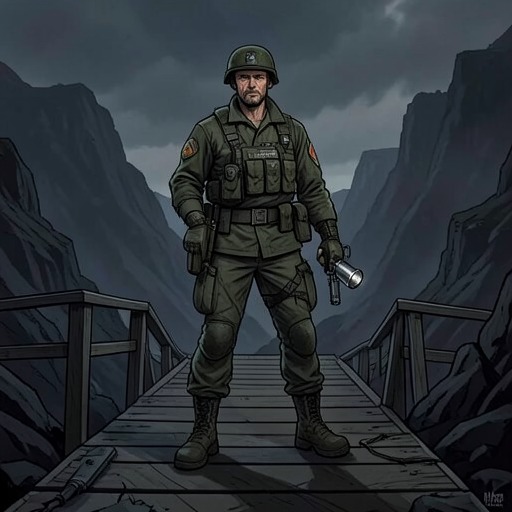
El Sordo is a short, heavy, gray-haired man with broad cheekbones and yellow-brown eyes. He walks with the bow-legged gait of a herdsman and wears the leather clothing of someone accustomed to life outdoors. When he arrives at the cave, he greets Pilar and Robert Jordan, acknowledges Maria with a familiar gesture, and asks whether the others have eaten. His direct manner and unceremonious concern for food establish him as a leader accustomed to practical necessities rather than display.
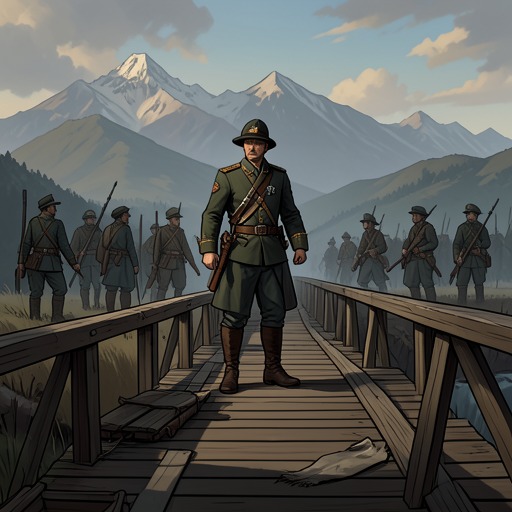
He is a neighbor and friend as well as a comrade to the group at the cave, and he comes there regularly. Anselmo describes him as a good, practical man and recalls his substantial contribution to the train operation. El Sordo has around eight men and some dynamite, though not much; his small force is part of a larger, loosely connected network of mountain bands. With warning and coordination, Anselmo thinks, those groups might bring together about fifty dependable rifles. El Sordo therefore matters not only as a fighter but as a link between local bands whose cooperation could enlarge the scale of an operation.
Judgment and Cooperation
When Robert Jordan asks how many men he has, El Sordo answers that he has eight. His assessment of the proposed operation is unsentimental: he says that four good men are better than many bad ones, and that in the war there are always many unreliable fighters and very few good ones. He considers Pablo’s condition increasingly poor, sharing Pilar’s judgment that Pablo is getting worse. This exchange presents El Sordo as a clear-eyed observer of both manpower and leadership, attentive to the difference between numbers and dependable ability.
He also identifies a problem that a successful attack would not solve: getting away afterward in daylight. Robert Jordan recognizes the danger but points out that he is alone, whereas El Sordo’s group has several people to protect and move. The exchange gives the tactical question a human scale. A plan that can be carried out is not necessarily a plan that allows the participants to escape, and the larger group’s size makes withdrawal more difficult.
The Last Stand
After the snowfall, El Sordo goes to look for horses. Robert Jordan learns of his departure from Pilar, who can report no further message. The snow makes the search dangerous: Jordan worries that the tracks left by the horses may have exposed El Sordo’s party. He sees the day’s delay as critical, hoping to avoid a fight until the following day, when the bridge operation might still be attempted with the people and resources available. The account of El Sordo’s fight shows how quickly that hope is overtaken by events.
Pressed by attackers, El Sordo chooses a hilltop as a last defensible position, though he dislikes the ground and has no better choice. As he climbs, he carries his automatic rifle, ammunition pans, and grenades; Joaquín and Ignacio stop to fire and then move again, covering his advance. When his horse is hit, El Sordo leads it by the bridle up the slope and uses its body to help close a gap between rocks. He then shoots the wounded animal and positions the automatic rifle over it. The decision is grimly practical: the horse becomes cover, and the ammunition he has brought allows the defenders to make their position costly to attack.
El Sordo’s small group breaks an initial assault with grenades, killing several attackers, including the young officer who led the charge. From the hill, El Sordo uses the automatic rifle against another advancing officer, firing three rounds and bringing him down. Yet the defenders’ success does not change the balance for long. The attackers can wait for heavier support; El Sordo understands that a trench mortar could destroy the position, while he remains exposed on the summit and anxiously anticipates aircraft.
Death, Memory, and Significance
The stand ends when an aerial attack destroys the remaining defenders’ ability to resist. Afterward, Lieutenant Berrendo finds only Joaquín alive, unconscious beneath Ignacio’s body; he shoots the boy, then identifies El Sordo’s body by the automatic rifle and orders the dead men’s heads cut off and wrapped in a poncho. He also orders the weapons collected and the automatic rifle carried away. The contrast is stark: El Sordo’s skill and resolve have imposed real losses, but neither can protect his group once the attackers bring overwhelming force.
El Sordo’s death also sharpens Robert Jordan’s understanding of the operation’s danger. Jordan had hoped to avoid combat that day and feared the snow had exposed El Sordo’s party; the news that the fighters on the hill have been lost makes the cost of delay and exposure immediate. Their defeat is not an isolated misfortune but a warning that the planned bridge operation must proceed amid forces and circumstances the guerrillas cannot control.
The book gives El Sordo’s end through the close attention of the hilltop fighting, then places the loss within the wider chain of information available to the guerrillas. Jordan reflects that mobile bands often leave before learning how events conclude for the people who shelter them: they return later to hear that their hosts have been killed. He recognizes that hearing of harm is not the same as seeing it, and that Pilar’s story of the village has made him confront consequences he had previously known only by report. El Sordo’s fate belongs to this same pattern of belated knowledge: a comrade’s disappearance and the destruction of his band become part of the war’s accumulating record.
As a character, El Sordo is defined by practical judgment rather than heroic self-description. He counts the men and resources he has, weighs the escape problem as carefully as the attack, and fights on ground he considers poor because no better choice remains. His final defense makes courage inseparable from material conditions—terrain, ammunition, weather, and the arrival of heavier weapons. The stand honors his competence without turning it into a promise of victory; its force lies in showing both what disciplined resistance can accomplish and how abruptly superior power can overwhelm it.
Judgment and Cooperation
When Robert Jordan asks how many men he has, El Sordo answers that he has eight. His assessment of the proposed operation is unsentimental: he says that four good men are better than many bad ones, and that in the war there are always many unreliable fighters and very few good ones. He considers Pablo’s condition increasingly poor, sharing Pilar’s judgment that Pablo is getting worse. This exchange presents El Sordo as a clear-eyed observer of both manpower and leadership, attentive to the difference between numbers and dependable ability.
He also identifies a problem that a successful attack would not solve: getting away afterward in daylight. Robert Jordan recognizes the danger but points out that he is alone, whereas El Sordo’s group has several people to protect and move. The exchange gives the tactical question a human scale. A plan that can be carried out is not necessarily a plan that allows the participants to escape, and the larger group’s size makes withdrawal more difficult.
Memory, Witness, and Narrative Significance
El Sordo’s death also belongs to a larger problem of how the guerrillas know what the war does to others. Robert Jordan reflects that mobile bands often leave the peasants who shelter them behind, then return later to hear that those families have been killed. He distinguishes that reported knowledge from witnessing an event: Pilar’s account of the village made him imagine the violence as though he had been there, and he wishes he could write it down as she told it. This reflection does not establish El Sordo’s death as a story Jordan witnesses; it places the loss within a war in which people often learn the consequences only after the fact.
El Sordo’s final defense gives that wider reflection a distinct military cost. His judgment remains practical: he weighs the number and reliability of fighters, the danger of withdrawing in daylight, the ground available to defend, and the weapons that can be brought against him. The hilltop resistance demonstrates what such judgment and courage can achieve, but its destruction shows their limits when aircraft and heavier weapons decide the outcome. His death is therefore not a simple triumph of heroism or a failure of resolve; it records the gap between local competence and the scale of force that the guerrillas cannot control.