Pablo
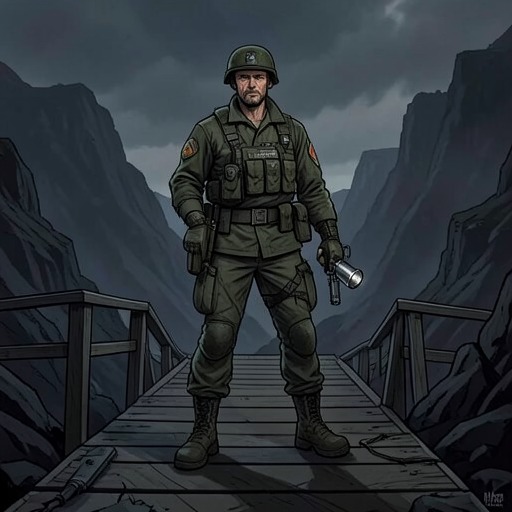
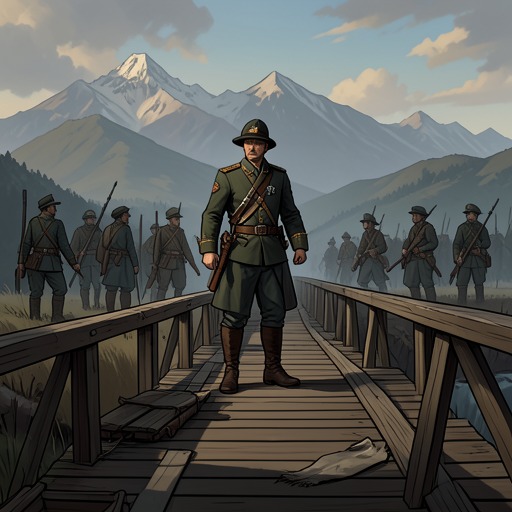
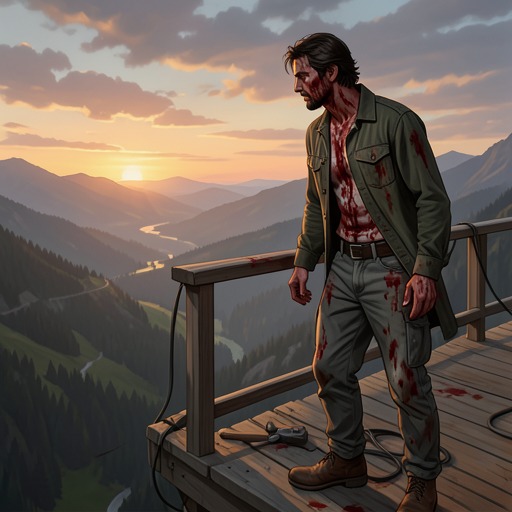
For Whom the Bell TollsPablo’s changing leadership shapes the guerrillas’ struggle to carry out Robert Jordan’s bridge-demolition mission: once a formidable fighter, he becomes convinced that resistance can lead only to defeat, refuses the operation, and then returns with recruits to take part. His retreat and reversal make him more than an opponent or ally to the mission; they expose how command in the band depends on practical courage, collective trust, and the willingness to risk survival.
Authority and the Bridge Decision
Pablo’s refusal is a contest over who has the right to define the band’s duty. When Robert Jordan explains that he has come under orders and can seek help elsewhere if Pablo declines, Pablo answers that his immediate responsibility is to those with him and to himself. Anselmo hears the change in that claim: Pablo once stood with the others, but now, in his view, puts himself and his horses first. The disagreement is not simply about whether the bridge matters; it is about whether a leader’s first obligation is the larger campaign or the people whose lives depend on his command.
The bridge becomes the test of that authority in front of the group. When Robert Jordan names the operation, the others fall silent; Pablo looks down and says that neither he nor his people will take part. Robert Jordan does not argue him into agreement. He turns instead to Anselmo and says they will do it alone, while Anselmo calls Pablo a coward. Pablo’s refusal thus leaves the mission intact but puts his leadership in question: the plan must proceed, yet the band’s command can no longer be treated as settled.
Pablo nevertheless insists that he still commands. Pilar challenges him openly, asking whether he believes he remains in charge, and declares that no one commands there but her. Her authority is practical as well as verbal: she tells Pablo that he may remain, eat and drink, and share the work, but that command belongs to her. Pablo threatens both her and Robert Jordan, but the exchange makes visible how far his standing has shifted. His claim to rule survives in speech; the group’s willingness to follow him does not.
That loss of confidence sits against the memory of Pablo’s earlier effectiveness. In Pilar’s account of the assault on the Guardia Civil barracks, he surrounds the building at night, cuts its telephone wires, places dynamite beneath a wall, and calls on the defenders to surrender. When they refuse, he blows open the wall; fighting follows, and the surviving defenders eventually come out. The episode establishes him as a commander capable of planning and decisive action. His later hesitation is therefore measured against a demonstrated past, not against an imagined ideal of courage.
Pilar’s recollection also connects his command to a wider history of violence. During the village killings, she sees Pablo seated with his shotgun while the crowd attacks people inside the room. Later, Pablo says he cannot tell the whole story from Pilar’s account because she did not witness its end. He has never told it himself. His silence leaves the episode unresolved between them, and the narrative withholds his version even as it shows that he was present and in command. His leadership carries both a record of armed action and the burden of what happened under it.
The contrast becomes explicit when Anselmo remembers the earlier Pablo who ranged through the countryside and made fascist posts unsafe at night. Against that reputation, the present Pablo seems diminished and altered. Yet the novel does not make his decline a simple, permanent transformation. He says that after the killings he and Pilar agreed to do nothing that night, because further action would be in bad taste after so many deaths. The pause marks an awareness of consequence, but it also belongs to a history in which Pablo’s force and his restraint have never been wholly separate.
Retreat, Return, and Renewed Command
Pablo’s fear becomes concrete in his response to the approaching winter. As snow begins to fall, he predicts that there will be much of it, while his red, bleary eyes and thick voice mark his exhaustion. The wider danger is plain in his private assessment of the war: the enemy is better armed and better supplied, and the future he can imagine is to be hunted and killed. Looking at the horses, he sees not a means of continuing the struggle but a temporary possession that cannot alter its likely end. His refusal of the bridge operation grows from this expectation of defeat and from a desire to keep the band undisturbed.
Yet Pablo’s withdrawal does not settle into a lasting break. After the loss of El Sordo and the decision to continue, he first leaves the cave; at two in the morning, Pilar wakes Robert Jordan to tell him Pablo is gone. An inspection then reveals the practical cost of the departure: the sacks have been slit, and the wooden exploder box, the carefully packed detonators, and the tin containing fuse and caps are missing. Some explosive remains, perhaps with one packet gone. Pablo’s fear has become sabotage, threatening the operation not merely through dissent but by removing essential equipment.
Pablo returns before the mission proceeds, carrying an automatic rifle and explaining that he had a moment of weakness. He says that after throwing away the equipment he felt too lonely, so he rode to bring back men and make success possible. He has left the recruits above the cave while he speaks with the others; they believe him to be their leader. The return reverses his earlier desertion, but it does not erase it. Pablo can again contribute people and arms, while the missing demolition gear remains a consequence of his flight.
His renewed commitment is expressed as a hard, practical plan rather than renewed confidence in the cause. Pablo agrees to the bridge operation and lays out the sequence: his men will destroy the post, cut the wire, fall back to the bridge, and cover it until Robert Jordan detonates the charges. He specifies that nothing is to begin before the bombardment. By taking responsibility for these tasks, Pablo again acts as a commander whose authority rests on the ability to organize people for the work ahead, even as he admits his hostility toward Robert Jordan for bringing the operation to the band.
The return remains morally and politically uneasy. Pablo says he has thought much since El Sordo’s defeat and believes that, if they must meet their end, they must do so together. His decision restores a measure of collective purpose, but his fear, the equipment he discarded, and his resentment of the mission remain part of the alliance. In the final retreat, when Agustín asks about Pablo’s men, Pablo answers that they are all dead, then remarks that there are plenty of horses now. The comment brings his earlier fixation on horses into bleak alignment with the losses: the animals have survived to become available, while the people he brought back have not.
Authority, Memory, and the Cost of Command
Pablo’s place in the band is measured against the capacity he once displayed. In Pilar’s recollection of the assault on the Guardia Civil barracks, he surrounds the building in darkness, cuts its telephone wires, places dynamite under a wall, and calls on the defenders to surrender. When they refuse, he blows the wall open; after fighting, four defenders surrender. The episode establishes a leader who could turn preparation into decisive action. Anselmo later remembers the same Pablo as a man who ranged through the countryside, making fascist posts unsafe at night. That past gives weight to the present reversal: Pablo is not simply an ineffective leader, but a once-effective one whose resolve has faltered.
The record of command is also bound to violence for which the narrative offers no simple accounting. Pilar recalls seeing Pablo seated with his shotgun while the crowd attacked people in the village. When Robert Jordan asks about the story, Pablo says Pilar did not see its end because she fell from a chair outside the window; at her invitation, he says he has never told it himself. His silence leaves his own account absent. The episode thus remains a gap between the woman who witnessed part of it and the man who was there, while the image of Pablo in command links his authority to the violence carried out around him.
Pablo’s earlier strength does not exclude restraint or awareness of consequences. Pilar recalls that after the killings he told her they would do nothing that night, and explained that further action would be in bad taste after so many deaths. The pause does not undo what came before or settle the unanswered story; it complicates the portrait of a commander whose past includes both aggressive action and a decision to stop. Together, these memories make his later fear a change in a specific person, not a simple contrast between courage and cowardice.
His authority changes again when he comes back to the cave. After abandoning the group and the operation’s equipment, Pablo says that loneliness drove him to return with men he had recruited. He has left them above the cave, and they believe he is their leader. Pilar answers that he is, if he wants to be. Her response recognizes that command is not restored by title alone: it depends on whether Pablo resumes responsibility and whether others will follow. He then says that after El Sordo’s defeat he has thought that, if they must finish, they should finish together. The renewed alliance is collective, but not reconciled; Pablo still says he hates Robert Jordan for bringing the operation to them.
That uneasy restoration is tested in the retreat. When Agustín asks what happened to Pablo’s men, Pablo says they are all dead, then adds that they have plenty of horses now. The answer returns to the animals that had figured so prominently in his earlier fears about the future. Now the horses remain available because the men he brought back have been lost. Pablo’s remark is at once practical and bleak: his return gave the operation additional people, but it could not protect them. His arc ends with command reasserted through action and collective purpose, while the human cost of that return remains unmistakable.