Pablo’s Assault on the Civil Guard Barracks
For Whom the Bell TollsPablo’s Assault on the Civil Guard Barracks is the nighttime encirclement and dawn attack through which Pablo’s band captured the village barracks. The operation was carefully arranged, but its aftermath—the killing of the wounded and the execution of the surrendering guards—turns a military success into a moral rupture that Pilar remembers with lasting unease.
Preparation and Capture
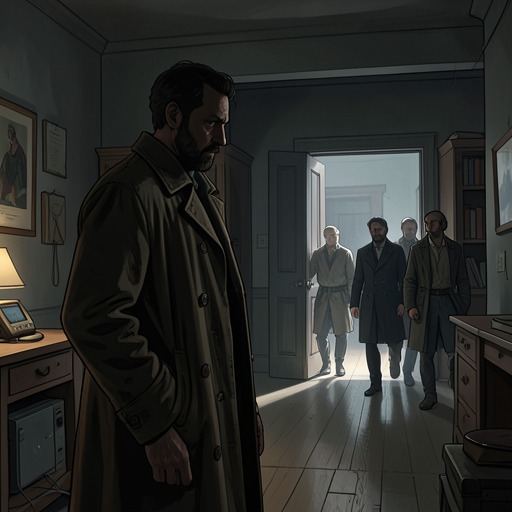
Pablo surrounded the barracks in darkness, cut its telephone wires, and placed dynamite beneath one wall. He called on the Civil Guards to surrender; they refused, so at daylight he blew open the wall. The assault killed two guards, wounded four, and left four others to surrender. The account is told by Pilar as a recollection, and its details emphasize that Pablo had prepared the attack rather than improvising it under fire.
His planning extended beyond the barracks. As Pilar explains in her account of the uprising, Pablo had already arranged for the village’s fascists to be seized in their homes at the same hour the assault began. This prevented them from attacking the insurgents from the flanks or rear while the barracks was under attack. The capture therefore belonged to a coordinated seizure of the town, not an isolated clash.
The Surrendering Guards
After the surviving guards came out, Pablo ordered four of his men to guard them against a wall while he and others went inside to deal with the wounded. The violence inside ended; Pablo then emerged carrying a Mauser pistol taken from an officer who had killed himself. He said he had never fired a pistol and asked a guard to explain its operation, then stopped him before he could demonstrate. The contrast between Pablo’s unfamiliarity with the weapon and his control over what happened next sharpens the scene’s account of responsibility: he was not merely swept along by the attack but directed its aftermath.
Pablo ordered the four prisoners to kneel and shot each of them. Pilar’s recollection gives the act a stark, deliberate sequence: the guards obey, Pablo moves from one to the next, and the men who have gathered stand watching. Afterward, he hands Pilar the pistol because he does not know how to lower its hammer. The action concludes not with a further exchange of fire but with the captives dead and the victors silent.
Victory and Its Moral Cost
The barracks was captured, and the village was in the insurgents’ hands. Yet Pilar describes the aftermath as ugly even while acknowledging the wartime argument that killing might be necessary to preserve the Republic. Her distinction is consequential: she can accept the deprivation of life as a claimed necessity in war, but the memory of the executions does not become clean or celebratory on that account.
Pilar’s account connects this episode to the subsequent violence in the village plaza. She recalls that Pablo organized the fascists’ seizure and the plaza’s arrangements, but that the crowd’s conduct later became disorderly and brutal. After witnessing the attack on Don Guillermo and the mob killing of Don Anastasio, she felt shame and distaste and withdrew from the lines. The barracks executions and the plaza killings are distinct episodes, but together they expose the danger in treating organized revolutionary violence as morally settled simply because it serves a political victory.
Significance in Pilar’s Recollection
Pilar remembers concrete details that keep the operation from becoming an abstract tale of triumph: the dust from the destroyed wall, the guards held under watch, the Mauser in Pablo’s hand, and the silence of those present after the executions. The new day and the town’s capture frame the result as victory, while the dead guards and Pilar’s remembered weakness in its aftermath refuse to let victory erase its human cost.
The episode also establishes Pablo’s double significance within the uprising. His coordination helps make the capture possible; his command over the prisoners shows how organizational authority can carry violence beyond the immediate necessities of an assault. In Pilar’s telling, the operation’s success and its moral injury remain inseparable.