Rogelio Gomez
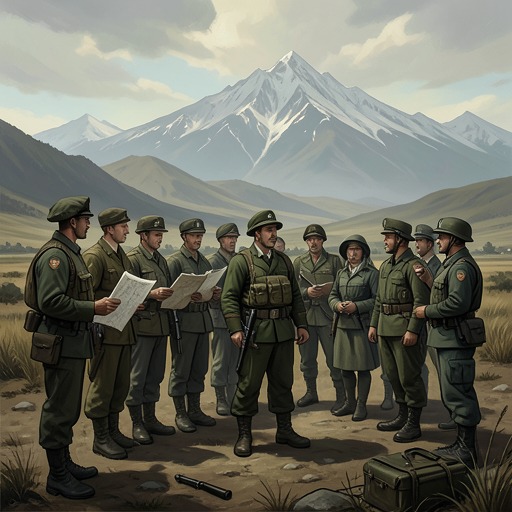
For Whom the Bell TollsRogelio Gomez is a captain of the First Battalion of the Sixty-Fifth Brigade whose brief appearance gives Andrés’s attempt to deliver an urgent dispatch its most forceful ally. A former barber who once wanted to become a guerrillero, Gomez combines exuberant solidarity with impatience toward delay; his intervention speeds the mission forward, but cannot prevent the command apparatus from holding it up.
Identity and Introduction
Gomez enters the story when Andrés reaches battalion headquarters with a dispatch he has carried through fascist lines. Unlike the suspicious company commander who first receives him, Gomez is enthusiastic about the mission. He curses the company commander for obstructing Andrés, gives the messenger a drink of bad brandy, and confesses that he himself had always wanted to be a guerrillero.
His former trade sharpens the contrast between his past and his present authority. He leaves his battalion in the hands of his adjutant, summons his orderly and motorcyclist, and decides to take Andrés to brigade headquarters himself rather than send him on alone. The decision is practical as well as personal: Gomez means to make the message move faster.
The Dispatch and the Chain of Command
The journey does not proceed as smoothly as the dispatch’s official markings promise. Andrés carries a safe-conduct bearing Robert Jordan’s signature and the S.I.M. seal, along with a dispatch carrying the same seal. Yet at the front line, suspicion and procedure slow him down. Gomez’s willingness to take charge becomes essential as the two travel by motorcycle over a shell-pocked mountain road to brigade headquarters.
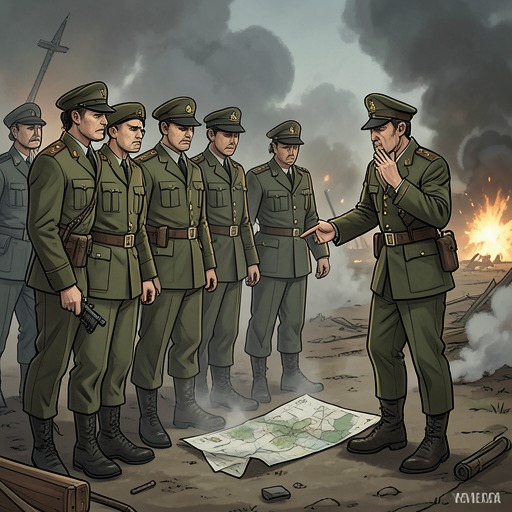
At the headquarters, Gomez encounters an officer who asks why he has come instead of using the telephone. Gomez insists on summoning the lieutenant colonel, but the officer lazily refuses. Gomez responds by drawing his heavy 9 mm. Star pistol and pressing it against the officer’s shoulder, threatening to kill him unless he wakes the commander. The confrontation is not simply an outburst: Gomez sees delay as a danger to a mission whose value depends on reaching the right authority in time.
His account of himself remains that of a loyal officer and comrade when the message faces a more consequential obstruction. At General Golz’s headquarters, André Marty takes the dispatch and its bearers for suspected traitors rather than allowing the message to reach Golz. Gomez appeals to Marty to listen and explains that Andrés has brought the dispatch through fascist lines for the general. Marty nevertheless orders the guards to take them away. Gomez’s force can push past a sleepy officer, but not the political suspicion and command authority embodied by Marty.
Character and Narrative Significance
Gomez’s conduct binds personal initiative to institutional frustration. His enthusiasm for Andrés’s mission, willingness to leave his own battalion, and direct appeal on the messenger’s behalf all make him an active ally. But the same urgency that prompts his threat against the brigade officer cannot make the dispatch arrive at its intended destination: Marty’s suspicions interrupt the chain of communication.
The novel places Gomez’s brisk, physical interventions against the larger uncertainty surrounding the Republican offensive. Robert Jordan knows the attack is difficult to cancel and worries that warnings about the preparations against it have not reached Golz. In that context, Gomez’s ride with Andrés is a concrete effort to overcome distance and delay, while its failure to secure the dispatch’s delivery reveals how military plans can be undermined by the institutions meant to execute them.