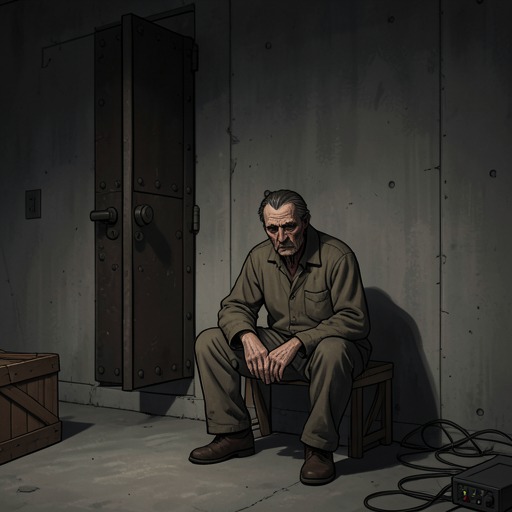
Artie's impotence
Forever...Artie's impotence is presented through Erica Small's account of their halting attempts at intimacy, not through a direct explanation from Artie or a detailed medical history. At first, Erica interprets his failure to kiss her as possible shyness. Later, after asking him directly about his sexual uncertainty and describing their limited physical contact, she identifies the problem as impotence rather than homosexuality. The distinction matters to their relationship: Erica wants Artie, believes she may be able to help him, and treats candor about the difficulty as part of building a decent relationship.
First Signs and Uncertainty
After Erica returns from a date with Artie, she tells Katherine Danziger that he is nice but may be shy because he did not try to kiss her. The episode offers a small but consequential first sign of the mismatch between Erica's expectation of romantic progress and Artie's behavior. Her concern is still framed as a question about the encounter: she wonders if something about herself, even her breath, might explain why he held back. At this point, she has not named impotence or reported any explanation from Artie.
The question becomes more explicit after a party. Artie takes Erica home and kisses her goodnight on the cheek; she then asks him directly whether he is gay. His answer, as Erica recounts it, is that he does not know and is trying to find out. This exchange records uncertainty rather than a settled explanation for his lack of sexual initiative. Erica presses the practical problem as well as the label: she objects that their time together consists of games such as Monopoly, bingo, chess, and backgammon, rather than the kind of intimacy she wants. The contrast makes clear that her frustration is not simply about what to call Artie's sexuality; she wants their relationship to move beyond activities that keep physical closeness at a distance.
Naming the Difficulty
In a later conversation, Erica says that she and Artie have not improved sexually, but that they have at least become more honest with each other. Katherine observes that Michael Wagner had recently made much the same point about honesty. The parallel places Erica and Artie's conversations within a broader concern in the narrative: honesty is described not as a cure for sexual difficulty, but as a condition of having a decent relationship while that difficulty remains unresolved.
Erica reports that she asked Artie plainly what was going on and that he said he did not know but was trying to find out. Later, she gives Katherine a more definite account: she and Artie have determined that he is not gay and that he is impotent. These statements mark a shift from uncertainty about orientation to Erica's understanding of a specific difficulty with sexual intimacy. The evidence does not supply a clinical diagnosis, cause, duration, or account from Artie himself beyond the words Erica reports. The naming therefore describes the couple's understanding of their situation, not a narrated medical assessment.
Intimacy, Care, and Erica's Commitment
When Erica discusses the relationship again, she says that they have done nothing but touch and that she is beginning to feel like a therapist. The wording captures a tension in her position: she is physically involved with Artie, but the relationship has not reached the sexual intimacy she wants, and she worries that her role has become one of helping him. Katherine raises the possibility that Erica could be doing him more harm than good. Erica acknowledges having considered that concern, while emphasizing that Artie is open about the problem and that she has been reading about it because she thinks she may be able to help.
Erica's account also makes clear that she does not stay with Artie merely because other opportunities are unavailable. She says she could have sex with someone else as soon as the next day, but that is no longer the point: she wants to have sex with Artie. She gives two reasons, believing she can help him and wanting him for reasons she cannot fully explain. That combination complicates a simple account of her as either a frustrated partner or a caretaker. Her desire remains specific to Artie, while her wish to help him is part of how she understands their continuing physical and emotional connection.
Development and Narrative Significance
The episodes form a progression from an unanswered question about a missed kiss, through Artie's expressed uncertainty, to Erica's later description of impotence and their limited contact. The progression does not show the difficulty being resolved. Instead, the relationship's change is registered in the couple's growing honesty and in Erica's increasingly active effort to understand what is happening. Her reading and her willingness to discuss the problem mark a response to it, not evidence that she has found a remedy.
The narrative presents impotence primarily through its effects on courtship: Artie does not initiate the expected kiss, Erica asks what is preventing sexual progress, and their physical relationship remains at touching. It also gives Erica room to state her own desire without reducing it to a wish to be chosen or to the availability of another partner. At the same time, the information comes through her retelling to Katherine, so Artie's inner experience remains comparatively unexplored. The result is a state that shapes the couple's negotiations and Erica's hopes, while leaving its cause and eventual outcome open.