Conservatoire des Arts et Métiers
Foucault's PendulumThe Conservatoire des Arts et Métiers is a Paris museum housed in a former priory, but in Casaubon’s account it becomes more than a collection of machines: it is a charged architectural assemblage where the claims of rational science seem to meet the older authority of tradition. Its nave, galleries, and Pendulum provide a setting for his suspicion that the museum’s exhibits form a coded message, and later for his search for evidence that anything has happened there at all.
Setting and Architectural Character
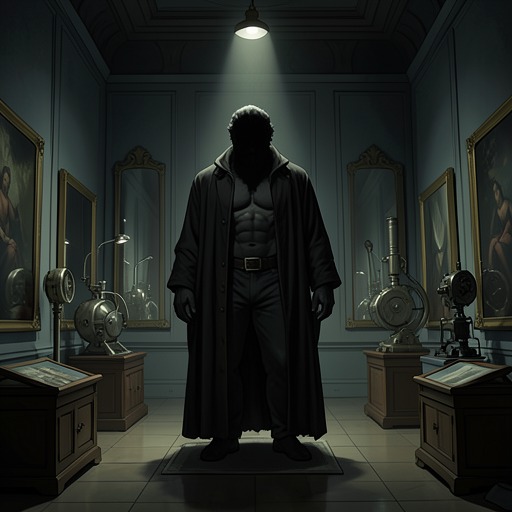
Visitors enter through an eighteenth-century courtyard and pass into an old abbey church, originally part of a priory within the later complex. Casaubon registers the building as a meeting of unlike worlds: the high forms of the church above and the practical machinery of modern industry below. Bicycles, early cars, and other vehicles line the floor, while aircraft hang overhead. Some exhibits remain intact but are worn by time; others have been reduced to frames, rods, and cranks. In the church’s ambiguous light, the collection appears less like a clean chronicle of invention than a gathering of objects whose age and altered condition make them strange.
The arrangement intensifies around the choir. A scale model of the Statue of Liberty stands on one side, a statue of Pascal on the other, and the Pendulum swings between them. Nearby are the remains of engines and electrical equipment: magnetos, transformers, turbines, converters, steam engines, and dynamos. Beyond the Pendulum, in the ambulatory, stand ancient-looking idols and instruments of punishment that were once airplane engines. To Casaubon, the result is a mechanical cemetery arranged in a posture of homage: the products of modern reason appear to guard a symbol he associates with tradition and wisdom.
Museum, Priory, and Competing Histories
The museum’s public explanation presents it as an accessible institution for displaying the arts and trades, conceived by the Convention for the education of the public. Casaubon distrusts that account. He insists on the building’s earlier identity as a priory and interprets its technological exhibits as participants in a dialogue whose meaning he has not yet deciphered. The institution’s stated purpose and its ecclesiastical inheritance therefore remain in tension: the museum can be read as a celebration of progress, but its setting and the arrangement of its objects invite Casaubon to imagine another history beneath the official one.
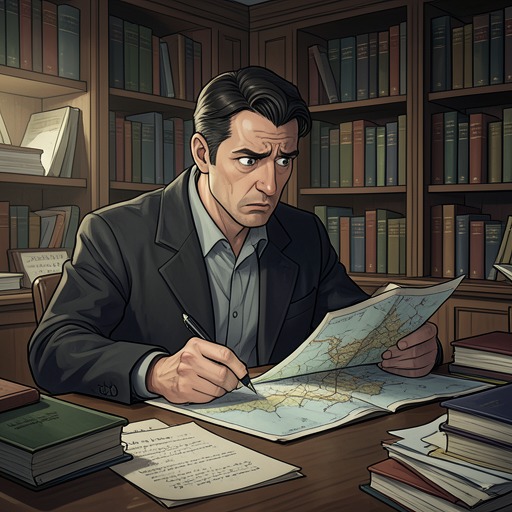
That suspicion gathers force in the Salle Lavoisier. The room’s apparatus for chemical study, including instruments associated with measurement and experiment, seems to Casaubon to undermine rather than confirm the authority of rationalism. He reads the room as a coded confession and as an emblem of the museum as a whole: its display of scientific reason appears to murmur of mysteries that the display itself cannot acknowledge. The episode develops the novel’s recurrent contrast between rational explanation and the temptation to treat objects as signs of a hidden order. Casaubon’s interpretation is evidence of his own growing pattern-seeking, not independent proof that the museum contains a secret message.
The Conservatoire as a Suspected Meeting Place
The Pendulum and the church’s surrounding exhibits lead Casaubon to wonder whether the Conservatoire has a concealed purpose beyond its ordinary public function. He considers whether the building might connect to the Paris sewers and speculates that unknown visitors could enter by a hidden route. Since he fears that leaving would prevent him from finding his way back, he decides to remain inside until midnight, when he expects that the truth might become apparent.
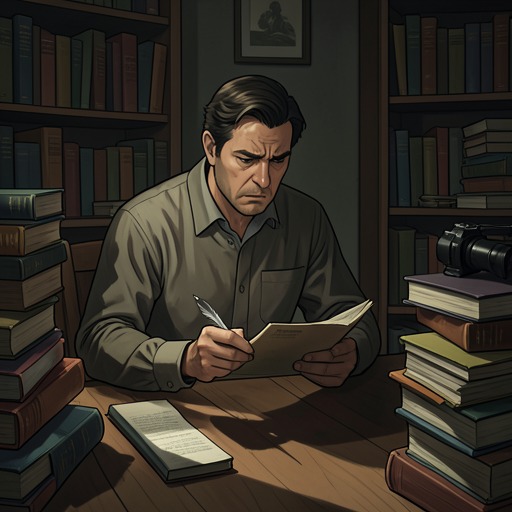
His practical problem is where to hide. The guards search the galleries at closing time, and he judges the cases in the upper halls unsuitable. The machine-filled nave, by contrast, offers the possibility of concealing a living person inside a lifeless vehicle. Casaubon frames this as another game in which he can test his suspicions, and tells himself to seek help from science rather than wisdom. The planned vigil thus turns the museum’s ordinary exhibits into potential hiding places and witnesses, while showing how thoroughly his speculative interpretation has shaped his actions.
Recurrence and Narrative Significance
The Conservatoire also forms part of a wider network of scenes in which religious practice, political explanation, and secret knowledge compete for authority. In Brazil, Amparo’s comrades debate the meaning of Afro-Brazilian religions: some see them as a return to cultural roots, others as a means of diverting revolutionary energies, and still others as a mixing of cultural traditions. At an Umbanda rite, participants enter trance and are understood to be possessed by spirits of the departed. Aglie interprets possession through a hierarchy that distinguishes the mystic, who undergoes an experience, from the initiate, who supposedly understands and controls its forces. These episodes do not take place at the Conservatoire, but they echo its central interpretive problem: whether visible objects and experiences should be accepted at face value or read as signs of a deeper system.
When Casaubon revisits the museum on a Sunday, its ordinary appearance counters the extraordinary significance he has assigned it. The facade identifies the institution as established by decree of the Convention in the former priory of Saint-Martin-des-Champs, founded in the eleventh century. Inside, the guards, visitors, and Pendulum are in their usual places. Casaubon looks for signs of what may have happened, but finds none; he cannot even settle whether the suspected event occurred. The return leaves the Conservatoire suspended between public institution and imagined secret stage, and between the evidence of an unchanged museum and the uncertainty that has come to govern Casaubon’s reading of it.