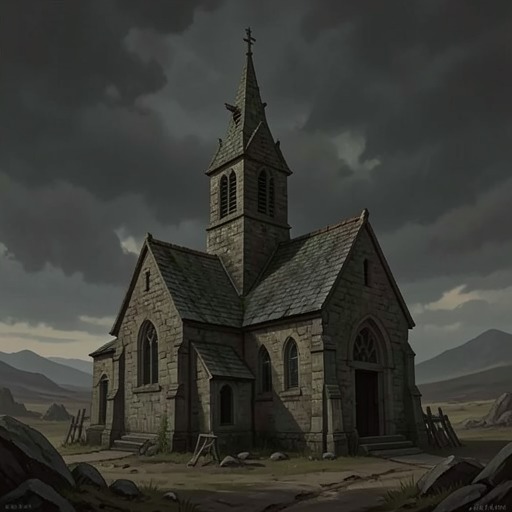
Temple of Solomon
Foucault's PendulumThe Temple of Solomon is both a historical place and a charged image in the novel’s account of the Knights Templar: the Jerusalem precincts that house the new order become, in later legends, the origin of secret traditions and the object of a longing that survives the loss of the Holy Land. Its name links the Templars’ modest beginnings to the grand, vanished world they continue to imagine.
The Templars’ Jerusalem Headquarters
In 1118, under Baldwin II, Hugues de Payns and eight companions establish the nucleus of the Poor Fellow-Soldiers of Jesus Christ. They take monastic vows of poverty, chastity, and obedience, add the duty of defending pilgrims, and receive support from the king and the bishop of Jerusalem. The order is eventually housed in the cloister of the old Temple of Solomon; from that association its members become known as the Knights of the Temple.
The account presents the site as part of the order’s practical beginnings, not as proof of an occult inheritance. The knights are founded to serve pilgrims in a Christian kingdom still struggling to hold territory, and their Jerusalem quarters give their name a concrete institutional source. The narrator describes the founders as probable idealists, while suggesting that later recruits might have been younger sons drawn by adventure and the chance to make their fortunes in the new kingdom.
A Place Recast as Secret Origin
Centuries later, the Temple’s name lends authority to stories that turn the Templars’ fate into a history of hidden survival. One legend claims that, shortly before the 1307 arrests, an ox-drawn hay wain left the Paris Temple carrying knights led by Aumont. The fugitives supposedly reached Scotland, joined a Masonic lodge at Kilwinning, and became guardians of the Temple of Solomon’s secrets. The narrator rejects this account as an unsupported story repeatedly copied across pamphlets, not as reliable evidence of continuity.
The contrast matters: the Temple of Solomon is a genuine element in the order’s foundation, while claims that its secrets passed through an unbroken chain belong to retrospective legend. The book shows how a real sacred place can become a hinge for conjecture, allowing later groups to connect themselves to a vanished past without establishing that the connection is historical.
Loss and the Remembered Temple
After the fall of Saint-Jean-d’Acre in 1291, the Christian kingdom of Jerusalem is gone. The Templars remain numerous and powerful, living in European commanderies and at the Temple in Paris, but their original purpose has lost its setting: there is no longer a Christian Holy Land in which to fight. Their material strength therefore stands beside an absence they cannot undo.
In the narrator’s recollection, their dream returns specifically to the plateau of the Temple in Jerusalem, alongside images of the church of Saint Mary Lateran, votive chapels, workshops, granaries, stables, troops, pilgrims, envoys, and the routes by which supplies once reached castles in Asia Minor. The Temple is part of a whole remembered world of service, warfare, wealth, and daily labor, not merely a repository for a secret. At Pilade’s, after telling the story with unexpected feeling, the narrator hears Diotallevi imagine the Templars as many things at once: lost souls and saints, horsemen and grooms, bankers and heroes. The vanished Jerusalem setting gives that divided legacy its focus: a real headquarters becomes the object through which later generations picture both the order’s former life and its irretrievable loss.