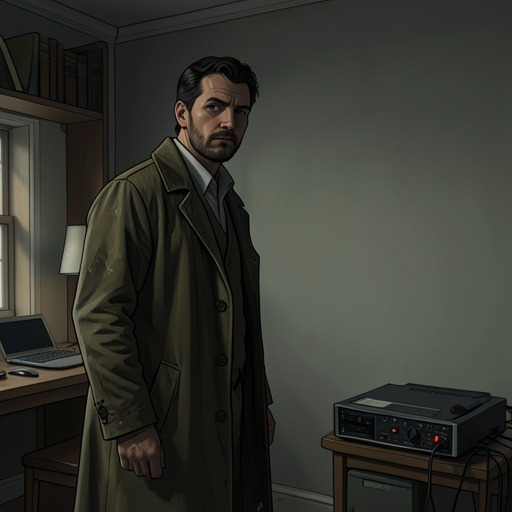
The Opportunity
Foucault's PendulumThe Opportunity is the decisive instant that gives a life its fullness, yet cannot be held, repeated, or converted into a clue to a greater secret. Jacopo Belbo once experienced such a moment without recognizing what it was; afterward he spent his life seeking something else. In the novel’s final reflections, Casaubon sees that belated recognition as both Belbo’s lost peace and a warning against turning immediate experience into another scheme of interpretation.
Meaning and Structure
The Opportunity is not a future opening that can be pursued indefinitely. A person may spend a lifetime seeking it without realizing that the decisive moment has already occurred. It does not return, and its importance becomes visible only in retrospect: it was full and dazzling while it lasted, but later recollection cannot restore it. The search therefore contains a painful reversal. What seems to be a promise ahead may in fact be a missed event behind.
The concept draws a boundary between experience and explanation. A moment can be so complete that it needs no symbolic meaning beyond itself; once it has passed, however, thought begins to interpret, annotate, and defer it. The difference is not between an ordinary event and a hidden message, but between being wholly within an instant and subsequently trying to explain that instant. The Opportunity resists the habit of treating every experience as evidence for something else.
Belbo’s Missed Moment
Belbo’s decisive experience is associated with his childhood memory of the trumpet. Casaubon’s retrospective account connects that memory to the Pendulum that haunted Belbo throughout his adult life, and to the lost addresses of a dream. These images seemed to point toward the moment, but the moment itself was not a symbol, symptom, allusion, metaphor, or enigma. It was simply what it was: an experience in which Belbo touched what Casaubon calls the ceiling of the world and seemed to arrest space and time, as if releasing Zeno’s arrow.
Belbo did not understand the experience when it happened. He did not understand it as a child, later as an adolescent writing about it, or as a man who stopped writing about it. The distinction between having the moment and knowing that one has had it is central to his tragedy: the experience was already complete, but he remembered it as something lost rather than something once possessed. His repeated return to the trumpet suggests that he may have sensed its importance, yet he could not recognize that it was enough.
Because he failed to recognize his Opportunity, Belbo spent the rest of his life searching for something else, and Casaubon connects that search to his damnation. The novel does not present the missed moment as a puzzle that can be solved by finding the right interpretation. On the contrary, the very act of seeking a further revelation turns a completed experience into an absence to be pursued. In this way Belbo’s hunger for a larger answer echoes the Plan’s compulsion to make everything connect.
Recognition at the Pendulum
As Belbo dies, swaying with the Pendulum, Casaubon hopes that he finally understands what he had missed. The hope remains explicitly uncertain: Casaubon believes, hopes, and prays for Belbo’s recognition, rather than claiming access to what Belbo knows. The scene thus offers a possible moment of peace without turning that possibility into a confirmed revelation. The instrument that had haunted Belbo’s adult life becomes the setting for the last chance to see that the decisive experience lay in the past, not in a secret awaiting discovery.
Belbo’s final breath and his single trumpet note sharpen the contrast between the instant and its aftermath. As the note decrescendos, it prepares the world for the melancholy to come; it cannot restore the lost moment, but it gives his life’s recurring musical memory a final, concrete form. The ordered Taps and the note belong to the scene of his death, while Casaubon’s interpretation reaches toward the possibility that Belbo has at last stopped seeking. Recognition, if it comes, arrives at the threshold when there is no time left to turn it into another project.
Casaubon’s Late Understanding
Casaubon interprets Belbo’s end through the maxim that the author must die for the reader to become aware of his truth. Belbo could not understand what his experience meant while living it, and Casaubon reaches his own understanding only after Belbo is dead. The truth in this account is brief; what follows is commentary. The formulation makes the Opportunity at once personal and narrative: an event may be lived before it can be read, but reading afterward cannot make the reader its possessor.
Casaubon’s final thoughts extend the concept to Giulio, his child. He imagines the boy experiencing his own Opportunity in an ordinary ball, an ant, or a blade of grass, seeing paradise and the abyss in it. The objects are small and particular, not keys to a universal code. Casaubon imagines that Giulio, too, will understand only too late, and wishes that he could simply spend his day alone in that experience. The thought preserves both tenderness and limitation: a parent can hope that the child encounters such fullness, but cannot give him advance knowledge of it or spare him the delay of recognition.
This final reflection also places the Opportunity against Casaubon’s immediate fear. He believes that his pursuers have followed him from Paris and want the Map; he knows there is no Map, yet expects that saying so will only intensify their demands. Against that insistence on a revelation to possess, the Opportunity offers no hidden document or message. Casaubon understands that there is nothing to understand in the sense the pursuers demand, but that insight cannot by itself stop them from interrogating him. His fear and his recognition coexist: intellectual clarity offers no protection from other people’s refusal to accept it.
Narrative Significance
The Opportunity provides the novel with a counterprinciple to the Plan. The Plan turns fragments into evidence and connections into an all-encompassing explanation; the Opportunity names an experience that does not stand for anything beyond itself. Belbo’s failure to recognize his moment makes the difference tragic. He treats what was possessed as what had been lost, and the resulting search carries him toward the very interpretive machinery that cannot restore it.
Casaubon’s closing account also leaves recognition open rather than claiming a final solution. He hopes Belbo found peace, and imagines the same belated knowledge awaiting Giulio, but cannot make either outcome certain. The concept’s force lies in that limit: one may speak of the moment afterward, recognize its importance, and even hope another person will find it, but one cannot return to it or turn it into a dependable possession. In a world where the pursuers will make another theory out of any words Casaubon leaves behind, the Opportunity is a truth whose fullness belongs to the instant, not to the commentary that follows.