June 23, 1984, 4 p.m.
Belbo Sees the Pendulum
[Casaubon](entity:character-recall-character-casaubon-a1696699dd59) opens his account in the choir of the [Conservatoire des Arts et Métiers](entity:location-recall-location-conservatoire-des-ar-6c4ab93a36ea), staring at the vast [Foucault’s Pendulum](entity:object-recall-object-foucault-s-pendulum-04138287ae42). He first reads its patient swing as proof of a fixed point beyond the shifting universe, and wonders whether the apparatus might reveal the truth of the Plan he and [Jacopo Belbo](entity:character-recall-character-jacopo-belbo-7377238a2145) invented.
A boy gives the ordinary scientific explanation to a girl, but Casaubon’s sense of revelation overwhelms it. Belbo’s old claims about the Pendulum now seem to him like evidence that the Plan is real, and he resolves to stay in the museum until nightfall.
June 23, 1984, late afternoon
The Museum Becomes a Message
[Casaubon](entity:character-recall-character-casaubon-a1696699dd59) surveys the museum’s juxtaposition of machines, religious architecture, laboratory instruments, and optical displays. Under the influence of Belbo’s writings, he interprets the exhibits as coded testimony: the machines seem to guard the Pendulum, the Lavoisier room appears to confess the failure of reason, and a periscope seems positioned to reveal a significant view of the streets outside.
He chooses the periscope as a hiding place and waits for the museum to close. The objects around him have not changed, but his habit of turning resemblance into evidence has begun to make an ordinary museum feel like the threshold of a conspiracy.
Two days before June 23, 1984
Belbo’s Desperate Call
While [Casaubon](entity:character-recall-character-casaubon-a1696699dd59) is in [Milan](entity:location-recall-location-milan-15a5d3d0bc36), [Jacopo Belbo](entity:character-recall-character-jacopo-belbo-7377238a2145) calls from [Paris](entity:location-recall-location-paris-c02b439ce220) and insists that the Plan is real and that the Templars are after him. He says he has been tricked into coming to Paris and has been told to appear at the [Conservatoire](entity:location-recall-location-conservatoire-b5823a93aa6e) on Saint John’s Eve.
Belbo directs Casaubon to his apartment and tells him to read the files on [Abulafia](entity:object-recall-object-abulafia-4db3da9baa21). He gives him the keys, warns him to keep the police out of it, and is cut off amid a commotion before he can finish giving Casaubon the password.
Thursday, June 21, 1984
Casaubon Enters Abulafia
[Casaubon](entity:character-recall-character-casaubon-a1696699dd59) finds Belbo’s apartment in disarray, with cigarette butts, dirty dishes, whiskey bottles, and the computer Belbo has used for days without rest. He reads the printed file in which Belbo describes [Abulafia](entity:object-recall-object-abulafia-4db3da9baa21) as a machine that can preserve, delete, and retrieve thoughts, offering a private space for experiments that feel safer than writing.
After trying several passwords, Casaubon types “NO” in response to the machine’s question. Abulafia opens. He prints Belbo’s recent files and begins to see his colleague’s private memories, desires, and fears as a story whose meaning is still uncertain.
Thursday, June 21, 1984, afternoon
A Password of Refusal
[Casaubon](entity:character-recall-character-casaubon-a1696699dd59) tries to solve the password by combining cabalistic speculation, numbers, and his knowledge of Belbo. He tests the divine name, considers [Lorenza](entity:character-recall-character-lorenza-7f7d3452c2f9)’s inscription identifying her as Sophia, and builds increasingly elaborate explanations for what Belbo might have chosen.
Frustrated, he enters “NO,” not as the answer to a riddle but as an act of irritation. The machine admits him. Only later does Casaubon understand the answer’s deeper significance: Belbo’s refusal to pretend that he possessed a secret would become the central gesture of his last days.
June 21–22, 1984
Casaubon Reads Belbo’s Life
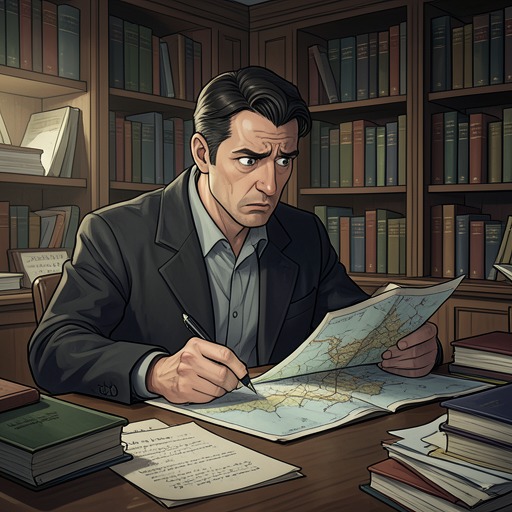
[Casaubon](entity:character-recall-character-casaubon-a1696699dd59) reads Belbo’s files in chronological order: recollections of childhood, fragments of fiction, private confessions, and quotations that had mattered to Belbo. The material recasts the man Casaubon knew as a melancholy editor whose wit concealed a longing for absolute meaning and a conviction that he had missed his chance to become a creator.
As the memories accumulate, Casaubon begins reconstructing the years that led the three friends from publishing-house jokes to the Plan. He still hopes the story may be false, but the files have made it impossible for him to remain a detached reader.
Around 1968
Casaubon’s Skeptical Youth
[Casaubon](entity:character-recall-character-casaubon-a1696699dd59) recalls arriving at university after the upheavals of [1968](entity:time-recall-time-1968-12eb8ba78e0e), distrustful of political certainty and drawn to philology because it seemed to privilege what could be documented. He participates in demonstrations but feels no lasting allegiance to any faction, and comes to distinguish simple incredulity from the credulity that connects unrelated ideas into a hidden design.
His thesis on the Knights Templar brings him into contact with the world of occult enthusiasts. He believes that primary sources can separate history from fantasy, a confidence that will later be tested by the very games he thinks he can control.
Late 1972
Casaubon Meets Belbo
At Pilade’s Bar, [Casaubon](entity:character-recall-character-casaubon-a1696699dd59) meets [Jacopo Belbo](entity:character-recall-character-jacopo-belbo-7377238a2145), a publisher known for puncturing grand claims with skeptical questions. Belbo describes four recurring types—the fool, the moron, the cretin, and the lunatic—and explains why editors learn to recognize the last: the lunatic makes everything prove everything else and sooner or later invokes the Templars.
Belbo invites Casaubon to visit [Garamond Press](entity:organization-recall-organization-garamond-press-6c833e5cf01d) and assess a manuscript about the Templars. Their talk reveals Belbo’s melancholy behind his irony and establishes the unlikely friendship that will later turn scholarly curiosity into a shared conspiracy game.
Late 1972, soon after their first meeting
Casaubon Tells the Templar Story
At Pilade’s, [Casaubon](entity:character-recall-character-casaubon-a1696699dd59) recounts the history of the Templars: their founding, military life, wealth, defeat, and eventual suppression. He describes both their failures and their lost grandeur, recognizing that they cannot be reduced to one identity or one moral judgment.
Belbo and [Diotallevi](entity:character-recall-character-6597c4e13bba) press him to explain who the Templars really were. Casaubon answers that they were many things at once, while the conversation reveals how quickly a historical account can become a source of fascination and myth.
1943–1945, recalled years later
Belbo’s Childhood Shame
Belbo describes his childhood in a [Piedmont](entity:location-recall-location-7f2be87d93d4) town during the war, where his family’s home placed him between the Fascist officialdom of his uncle Carlo and the resentment of the tenant farmer Adelino Canepa. He remembers watching events rather than shaping them, and carries a lasting fear that he would have chosen wrongly had he been forced to act.
When partisans arrest Carlo, their commander Mongo recognizes him as a fellow veteran and releases him after the two men recall fighting on the same front. The encounter complicates the divisions of the war and becomes one of Belbo’s few memories of clarity amid his later remorse.
1943–1944, Belbo’s childhood
The Gang’s Aborted Battle
[Casaubon](entity:character-recall-character-casaubon-a1696699dd59) reconstructs Belbo’s boyhood stories of the Alley Gang and the Canal Gang. After being chased and humiliated, Belbo joins the Alley Gang and accepts a ritual beating; later, when the gangs prepare for a major fight, he hangs back rather than rushing into the attack.
The anticipated battle never happens: the leaders negotiate a division of territory, and the boys withdraw without fighting. Belbo spends the rest of his life treating his hesitation as proof of cowardice, even though later violence gives him no simple chance to correct the past.
Around 1944–1945, Belbo’s childhood
Belbo Gives Up the Trumpet
Belbo longs to play trumpet because he hopes it will make Cecilia notice him. After teaching two unreliable boys to play the bombardon, he earns a place in the band’s trumpet section, but Don Tico asks him to return to the less glamorous instrument to keep the others in time.
Belbo agrees, and the chance to play trumpet passes. His story becomes a private emblem of renunciation: he can imagine triumph but repeatedly gives way before the moment when he might claim it.
During a Milan demonstration, early 1970s
Belbo Leads the Escape
At a demonstration against fascist conspiracies, [Casaubon](entity:character-recall-character-casaubon-a1696699dd59) and Belbo are caught in a sudden clash between marchers and police. Belbo steers Casaubon and his companion Sandra away from the main avenue and through narrow streets, using childhood knowledge of how to escape gunfire and police charges.
Afterward, Belbo describes himself as a spectator of the Resistance, too young to fight and condemned to wonder whether he would have chosen the right side. His practical courage in the present does not resolve his private guilt about the past.
After Casaubon’s thesis work begins, early 1970s
Ardenti Presents the Manuscript
[Colonel Ardenti](entity:character-recall-character-colonel-ardenti-f4aaa73d1651) arrives at [Garamond Press](entity:organization-recall-organization-garamond-press-6c833e5cf01d) with a manuscript claiming that the Templars survived their suppression and organized a secret plan. He describes a hidden message recovered from a tunnel at [Provins](entity:location-recall-location-provins-f7cdb50d9df0), a sequence of six groups, and an eventual quest for a powerful secret.
[Casaubon](entity:character-recall-character-casaubon-a1696699dd59) spots the speculative leaps, but Belbo keeps Ardenti talking. The colonel’s story introduces the fictional Plan into their lives and provides the seed from which their later inventions grow.
The day after Ardenti’s meeting with Garamond
Ardenti Disappears
A police inspector tells [Casaubon](entity:character-recall-character-casaubon-a1696699dd59) and Belbo that Ardenti has vanished from his hotel room. The room was searched, his briefcase is gone, and witnesses reported that two men visited him before the disappearance; no body is found.
The police identify Ardenti as a suspected collaborator and confidence man, but his disappearance leaves room for every theory. Belbo and Casaubon conceal what they know about the [Provins message](entity:object-recall-object-provins-message-d42da00af2f5), beginning a pattern of silence that turns a doubtful manuscript into a dangerous private secret.
About a year after Ardenti disappears
The Psychic Repeats the Message
Belbo attends a Picatrix séance where a young medium, in a trance, speaks of the same thirty-six invisibles and one-hundred-and-twenty-year cycle Ardenti had described. Belbo tries to approach her, but [De Angelis](entity:character-recall-character-de-angelis-aa9eb4abae91) intervenes and later reports that she and her companion have disappeared.
The police accept a mundane explanation: the medium had absorbed the material from occult publications. Belbo is relieved, but the repeated details deepen his suspicion that the Plan may have leaked into dangerous circles.
Mid-1970s, in Salvador
Casaubon Meets Aglie
In [Salvador](entity:location-recall-location-6f541c528920), [Casaubon](entity:character-recall-character-casaubon-a1696699dd59) meets the impeccably dressed Aglie, a cultivated stranger who speaks of tradition, syncretism, and the possibility that he has lived many lives. Aglie escorts Casaubon and Amparo toward Afro-Brazilian religious practices while presenting himself as both a scholar and a participant in ancient mysteries.
Casaubon learns that Aglie regards possession as a visible, public form of contact, distinct from the discreet discipline of initiation. His blend of skepticism and insinuation makes him an especially persuasive presence in Casaubon’s growing world of correspondences.
Mid-1970s, during Casaubon’s stay in Brazil
Amparo Is Possessed
At an [Umbanda](entity:concept-recall-concept-umbanda-fabb78e49947) ceremony, Amparo first rejects the idea that she might be a medium, then returns to the ritual and enters a trance associated with Pomba Gira. [Casaubon](entity:character-recall-character-casaubon-a1696699dd59) watches her lose control and is unable to intervene.
Afterward, Amparo is ashamed and says she feels like a slave to forces she had thought she had rejected. Their relationship changes; she asks for time apart and eventually leaves Casaubon, who remains in [Brazil](entity:location-recall-location-brazil-c5c26642be39) for another year, emotionally emptied.
Late 1970s
Casaubon Builds a Research Agency
After returning to [Milan](entity:location-recall-location-milan-15a5d3d0bc36), [Casaubon](entity:character-recall-character-casaubon-a1696699dd59) establishes a small cultural research agency, selling bibliographies and background information to publishers. He builds an expanding card index, following associations between subjects because he believes that information becomes powerful when all connections are available.
He meets [Lia](entity:character-recall-character-59c75363f8dd), who shares his investigative instincts and helps him trace references. Their partnership gives Casaubon a domestic life that can anchor him, even as his professional work increasingly rewards the very habit of connecting everything to everything else.
Around 1981
Belbo Hires Casaubon
Belbo, now working with [Garamond Press](entity:organization-recall-organization-garamond-press-6c833e5cf01d), hires [Casaubon](entity:character-recall-character-casaubon-a1696699dd59) to research illustrations for a popular history of metals. Casaubon becomes involved in the publisher’s parallel vanity-press operation, Manutius, and sees how [Signor Garamond](entity:character-recall-character-signor-garamond-c1813cd59237) turns aspiring authors’ desire for recognition into profit.
The work brings Casaubon back into daily contact with Belbo and [Diotallevi](entity:character-recall-character-6597c4e13bba). It also places him near the occult manuscripts that will become the raw material of [Project Hermes](entity:concept-recall-concept-project-hermes-c1be7349ff05).
July 16, 1981
Casaubon Meets Lia
At the library, [Casaubon](entity:character-recall-character-casaubon-a1696699dd59) and [Lia](entity:character-recall-character-59c75363f8dd) first clash over a book they both need. Their argument turns into an exchange of personal stories, and they discover that they work in similar fields, tracking and organizing information.
They fall in love that night. Lia becomes Casaubon’s partner in both life and research, and later their child gives him a reality that resists the abstract patterns he is learning to construct.
Early 1980s
Belbo Falls for Lorenza
Belbo watches [Lorenza](entity:character-recall-character-lorenza-7f7d3452c2f9) Pellegrini play pinball and becomes fascinated by her capacity to control the game without appearing to force it. He later writes about the machine as an erotic and cosmic mechanism, using her skill to imagine a world governed by subtle influences rather than direct control.
Lorenza’s teasing affection offers him the promise of unattainable happiness. Belbo loves her, but she continues to move among other relationships, leaving him with a recurring sense that he is only a spectator in his own desire.
After Casaubon returns from Piedmont, early 1980s
Lia Warns Casaubon
After hearing about [Casaubon](entity:character-recall-character-casaubon-a1696699dd59)’s growing fascination with occult manuscripts and ritual, [Lia](entity:character-recall-character-59c75363f8dd) tells him that the supposed archetypes and cosmic correspondences he is chasing can be explained through the body, ordinary needs, and shared human experience. Numbers and symbols, she argues, arise from the bodies and practices people have in common.
Casaubon is moved by her reasoning and by her pregnancy, but he does not abandon the pleasure of pattern-making. He continues to believe he can participate in the Diabolicals’ game without being changed by it.
Early 1980s
Garamond Launches Project Hermes
[Signor Garamond](entity:character-recall-character-signor-garamond-c1813cd59237) recognizes the market for occult writing and proposes two linked publishing lines: a scholarly series, Hermetica, and the commercial series Isis Unveiled. He recruits [Casaubon](entity:character-recall-character-casaubon-a1696699dd59), Belbo, and [Diotallevi](entity:character-recall-character-6597c4e13bba) to sort serious scholarship from material that can be redirected to Manutius’s self-financing authors.
The project turns the publisher’s commercial strategy into an engine for gathering occult enthusiasts. [Garamond](entity:character-recall-character-garamond-2297c7ecc67c)’s publicity stirs up interest, and the staff begin receiving manuscripts that repeat familiar claims about ancient wisdom, hidden societies, and universal connections.
Shortly after Project Hermes begins
Aglie Advises the Publishers
[Casaubon](entity:character-recall-character-casaubon-a1696699dd59) brings Aglie into the publishing project as a consultant. Aglie’s learning and polished skepticism make him useful in evaluating occult manuscripts, while his participation also strengthens the impression that the publishing house has access to a deeper tradition.
He tells the editors that genuine initiates hide among the noisy imitations, and that the search for tradition must remain open-ended. His advice gives the men a model for treating every error as a possible bearer of truth.
Autumn, early 1980s
The Piedmont Initiation Party
[Casaubon](entity:character-recall-character-casaubon-a1696699dd59), Belbo, [Diotallevi](entity:character-recall-character-6597c4e13bba), and [Garamond](entity:character-recall-character-garamond-2297c7ecc67c) attend an elaborate occult gathering at a wealthy Rosicrucian’s villa. Aglie guides them through symbolic gardens and a staged alchemical spectacle, where the guests witness images of death, transformation, and the creation of artificial human beings.
Casaubon believes he senses [Lorenza](entity:character-recall-character-lorenza-7f7d3452c2f9)’s presence, though she has not come. The evening leaves him more susceptible to the atmosphere of mystery, while the publishers begin to see occultism as both a spectacle and a business opportunity.
The same night as the Piedmont party
The Druid Rite in the Clearing
Aglie leads the group from the villa into a wooded clearing, where women in white perform a ritual around a dolmen. A trumpet sounds, a strange ground-hugging mist appears, and pigs wearing garlands emerge into the clearing.
Aglie ends the viewing before the ceremony is complete, insisting that the guests have seen only what they were permitted to see. Belbo’s joke about the bombardon hints at his private wound, while [Casaubon](entity:character-recall-character-casaubon-a1696699dd59) begins to associate the ritual’s symbols with his own desires and memories.
The year after Project Hermes begins
The Plan Takes Shape
[Casaubon](entity:character-recall-character-casaubon-a1696699dd59), Belbo, and [Diotallevi](entity:character-recall-character-6597c4e13bba) use [Abulafia](entity:object-recall-object-abulafia-4db3da9baa21) to combine scraps from occult manuscripts into a pseudo-history of the Templars. They feed it statements, arbitrary connections, and neutral facts, then interpret the resulting fragments as evidence that the Templars secretly influenced every major event.
At first they treat the exercise as parody. Yet the rules of their game—connect by analogy, trust a chain if it closes, and prefer links already made by others—make the Plan increasingly persuasive to them and to the people around them.
During Casaubon’s research trip to Portugal
Casaubon Reinterprets Tomar
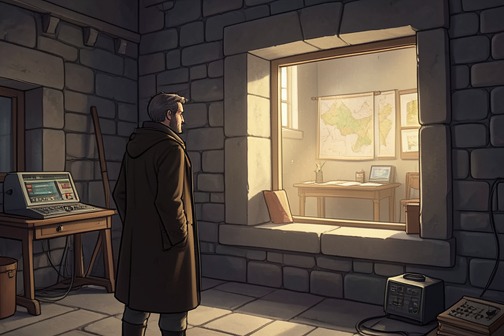
At [Tomar Castle](entity:location-recall-location-3ef28e6cca40), [Casaubon](entity:character-recall-character-casaubon-a1696699dd59) notices Templar symbols, Jewish architectural traces, roses, and references to other orders. He reinterprets the castle as the first meeting place in the Plan, arguing that the Templars who survived in [Portugal](entity:location-recall-location-f0a8d52258d6) must have preserved their secret there.
Although he reminds himself that the goal is to construct a secret rather than discover one, he returns to [Milan](entity:location-recall-location-milan-15a5d3d0bc36) excited by the apparent fit. Belbo and [Diotallevi](entity:character-recall-character-6597c4e13bba) join him in revising the route through [England](entity:location-recall-location-edbf4fdebc64), [Paris](entity:location-recall-location-paris-c02b439ce220), [Marienburg](entity:location-recall-location-c2d72a5ac11f), the [Balkans](entity:location-recall-location-5b2c5d5c163a), and [Jerusalem](entity:location-recall-location-jerusalem-8e4409a0f555).
After the Tomar research, early 1980s
The Rosicrucian Manifestos Become Evidence
[Casaubon](entity:character-recall-character-casaubon-a1696699dd59) reads the Fama Fraternitatis and Confessio Fraternitatis as coded complaints from the Templars. He concludes that the English and French groups missed each other in 1584 because they used different calendars, and that the German [Rosicrucians](entity:organization-recall-organization-rosicrucians-4992ceeec291) published their manifestos to repair the broken chain.
The historical controversy surrounding the manifestos becomes, in the trio’s hands, another stage of the Plan. Their interpretation expands the conspiracy backward and forward, making the supposed secret appear to explain the history of Europe.
Early 1980s
The Secret Societies’ Rival Histories
The three men place [Freemasonry](entity:organization-recall-organization-freemasonry-9faba02911a5), the Jesuits, the [Rosicrucians](entity:organization-recall-organization-rosicrucians-4992ceeec291), the Illuminati, and political movements into competing branches of the Plan. Each group appears to copy, distort, or attribute the same conspiracy to its enemies, while the supposed secret becomes a mechanism for explaining contradictory histories.
Their research produces a world in which every accusation is both evidence and disinformation. [Casaubon](entity:character-recall-character-casaubon-a1696699dd59) recognizes that they are no longer simply documenting the Diabolicals; they are creating a narrative that the Diabolicals may inhabit.
After the first stages of the Plan’s reconstruction
The Secret Becomes a World Map
[Casaubon](entity:character-recall-character-casaubon-a1696699dd59) and Belbo decide that the Templars’ secret must concern telluric currents and a hidden point of control beneath the earth. They connect megaliths, cathedrals, the Pendulum, the [Eiffel Tower](entity:location-recall-location-52ea49b9f8d4), and the world’s underground systems as parts of a global network.
The proposed map must be calibrated to the Pendulum rather than to accurate geography. Their construction turns scientific instruments and historical monuments into devices for locating the Earth’s navel, giving the Plan a concrete objective and a promised route to world power.
During the trio’s historical reconstruction
The Jesuits Enter the Plan
[Casaubon](entity:character-recall-character-casaubon-a1696699dd59) and his friends decide that the Jesuits learned of the Plan through [Guillaume Postel](entity:character-recall-character-guillaume-postel-eaad5262c327) and then worked to redirect or sabotage it. Their account makes Father Kircher a key figure in the supposed Jesuit effort to build a combinatorial machine capable of reconstructing the missing map.
Rather than reducing the conflicts among societies, the theory explains each new contradiction as another deliberate maneuver. [The Plan](entity:expression-recall-expression-the-plan-c22ddbacc81e) becomes a story that can absorb every opposing faction and every historical reversal.
During the trio’s reconstruction of nineteenth-century history
The Protocols Enter the Conspiracy
The three men trace the [Protocols of the Elders of Zion](entity:rule-recall-rule-3e72b378f51e) to a chain of political forgeries and accusations. They reinterpret the document not simply as antisemitic propaganda but as a false version of the same plan that each faction has attributed to its rivals.
In their framework, the Protocols become another displaced copy of the [Provins message](entity:object-recall-object-provins-message-d42da00af2f5). The exercise exposes how conspiracy theories reproduce themselves, but the men still treat the pattern as evidence that their own larger construction is true.
Early 1980s, before Diotallevi’s decline becomes unmistakable
Belbo Adds Hitler
Belbo links Nazi occultism and the hollow-earth theory to the Plan, arguing that Hitler’s campaigns were attempts to seize the Templar centers and recover the hidden map. He even explains the Holocaust as a search for the missing message.
[Diotallevi](entity:character-recall-character-6597c4e13bba) is appalled and leaves, while [Casaubon](entity:character-recall-character-casaubon-a1696699dd59) and Belbo continue the speculation. Belbo’s increasingly sweeping interpretation shows that their playful method has begun to erase moral boundaries, turning historical catastrophe into another clue.
Late 1983 to early 1984
Diotallevi Falls Ill
[Diotallevi](entity:character-recall-character-6597c4e13bba) grows thin and weak, eventually entering the hospital for treatment. [Casaubon](entity:character-recall-character-casaubon-a1696699dd59) and Belbo feel that their obsessive Plan may somehow be connected to his illness, though they know this is irrational.
Diotallevi tells them that their manipulation of texts has violated the Torah’s order and that the body, like the Book, can be altered by the misuse of its letters. His illness becomes a terrible counterpoint to the game, and he warns Belbo that the Plan may be more than a harmless fiction.
During Casaubon’s mountain vacation, shortly before June 1984
Lia Deciphers the Laundry List
[Casaubon](entity:character-recall-character-casaubon-a1696699dd59) finally tells [Lia](entity:character-recall-character-59c75363f8dd) the full story of the Plan and shows her the [Provins message](entity:object-recall-object-provins-message-d42da00af2f5). Lia checks a local history and identifies the supposed code as a merchant’s ordinary delivery list: hay wagons, cloth, roses, and deliveries to recognizable streets and buildings in [Provins](entity:location-recall-location-provins-f7cdb50d9df0).
She also demonstrates that the coded line about thirty-six invisibles was likely added much later by [Edouard Ingolf](entity:character-recall-character-edouard-ingolf-92de52dd82fd) as a cryptographic game inspired by Rosicrucian lore and Arsène Lupin. Her explanation is the simplest and most damaging account of the Plan, but Casaubon cannot quite bring himself to abandon the story.
June 1984, after his Riviera trip with Lorenza
Belbo Retreats into the Plan
Belbo drives [Lorenza](entity:character-recall-character-lorenza-7f7d3452c2f9) to the Riviera, only to be led into an embarrassing detour designed to avoid Aglie. Their day deteriorates through awkward evasions, a badly injured stray dog, and Lorenza’s sudden departure by train, leaving Belbo alone in [Piacenza](entity:location-recall-location-e6f0e0398603).
The humiliating journey revives his sense of defeat and his fear that he can never possess the people or opportunities he desires. He withdraws into the Plan, where he can control events that have escaped him in life.
Mid-June 1984
Belbo Tests Aglie with a Fake Map
Back in [Milan](entity:location-recall-location-milan-15a5d3d0bc36), Belbo tells Aglie that he holds the authentic account of the Templar Plan and a description of the secret map. He claims to have destroyed the document but insists that he remembers its essential contents, inviting Aglie to prove whether his own interest is genuine.
Aglie responds with heightened attention and later asks Belbo to carry a suitcase on a train to [Bologna](entity:location-recall-location-4cd831739ed9). Belbo thinks he has successfully drawn Aglie into a harmless fiction, but the deception gives others a way to frame him.
Wednesday, June 20, 1984
The Train Suitcase Trap
Belbo agrees to carry Aglie’s suitcase on the Intercity from [Milan](entity:location-recall-location-milan-15a5d3d0bc36) to [Bologna](entity:location-recall-location-4cd831739ed9), where a contact is supposed to collect it in [Florence](entity:location-recall-location-706cb92b9779). A bearded passenger sits beside him and makes conspicuous conversation about his clothing and work.
After Belbo leaves the train, the passenger reports the suitcase as a bomb. The media describe the absent passenger in terms that match Belbo, and he realizes that Aglie has arranged to make him appear to be a terrorist.
June 20–21, 1984
Belbo’s Appeals Fail
Belbo cannot find Aglie at his [Milan](entity:location-recall-location-milan-15a5d3d0bc36) residence and learns that the house has been rented through a false company. He tries to contact [De Angelis](entity:character-recall-character-de-angelis-aa9eb4abae91), but the inspector has been threatened through his family and refuses to help.
Belbo goes to [Signor Garamond](entity:character-recall-character-signor-garamond-c1813cd59237), who urges him to travel to [Paris](entity:location-recall-location-paris-c02b439ce220) and resolve the matter quietly. While overhearing [Garamond](entity:character-recall-character-garamond-2297c7ecc67c)’s phone call, Belbo realizes that his employer is part of the same network. With no trustworthy ally left, he turns to [Diotallevi](entity:character-recall-character-6597c4e13bba).
June 21, 1984
Diotallevi’s Final Warning
Belbo visits the dying [Diotallevi](entity:character-recall-character-6597c4e13bba) and tells him how he has been trapped. Diotallevi says their manipulation of the Book has affected both history and the body, explaining his cancer through the idea that cells have learned the disorderly transformations the friends practiced in their textual game.
Belbo insists that the illness is cellular, but Diotallevi believes the Plan has become a real force because people have begun to live by it. Their last conversation leaves Belbo with a warning he cannot fully accept: the fiction may now be shaping the world outside it.
June 21–22, 1984
Belbo Goes to Paris
Belbo remains alone in his apartment, reviewing his files and trying to understand how the Plan has taken control of his life. He decides that the map does not exist, but he cannot escape the consequences of the story he helped create.
He leaves for [Paris](entity:location-recall-location-paris-c02b439ce220), where he believes Aglie and the others will demand the secret. Before departing, he commits his memories and explanations to [Abulafia](entity:object-recall-object-abulafia-4db3da9baa21), hoping that someone—especially [Casaubon](entity:character-recall-character-casaubon-a1696699dd59)—will understand what happened.
June 23, 1984, before noon
Casaubon Searches the Bookshop
After arriving in [Paris](entity:location-recall-location-paris-c02b439ce220), [Casaubon](entity:character-recall-character-casaubon-a1696699dd59) visits the [Librairie Sloane](entity:location-recall-location-librairie-sloane-2d550279f80c), the address named by the people who threatened Belbo. He asks for Aglie and notices the shopkeeper’s suspicious reaction, then leaves before he can be drawn further into the network.
Casaubon is already beginning to interpret the city as a maze of occult signs. Even his attempt to withdraw becomes part of his imagined pursuit, and he decides to go to the [Conservatoire](entity:location-recall-location-conservatoire-b5823a93aa6e) and wait for the night’s events.
June 23, 1984, late night
The Ritual Begins
Hidden in the sentry box, [Casaubon](entity:character-recall-character-casaubon-a1696699dd59) sees a large crowd enter the choir and assemble around a newly installed Pendulum. The gathering includes occultists, self-financing authors, [Garamond](entity:character-recall-character-garamond-2297c7ecc67c), [Salon](entity:character-recall-character-salon-ee91fe244dca), [Bramanti](entity:character-recall-character-e58ada7c8b6b), Aglie, and other figures Casaubon has met during the past years.
Bramanti conducts an initiation ritual for [Riccardo](entity:character-recall-character-b21393d2ee29), who identifies himself as an adept of the Tres. The ceremony turns the fictional order into an actual organization in Casaubon’s eyes, and he watches as the crowd prepares to summon supposedly historical witnesses.
June 24, 1984, after midnight
The Mediums Produce Apparitions
[Madame Olcott](entity:character-recall-character-48c292a0e926) and the [Fox triplets](entity:character-recall-character-15fc84c1b38b) attempt to summon [Edward Kelley](entity:character-recall-character-edward-kelley-3b7cf2b214d9), [Heinrich Khunrath](entity:character-recall-character-heinrich-khunrath-8c87b232f29d), and the [Comte de Saint-Germain](entity:character-recall-character-comte-de-saint-germ-77eb65e5847e) through a séance. The mediums produce pale, unstable forms that speak fragments of texts, but Aglie recognizes the words as quotations and denounces the apparitions as fraud.
The séance collapses into violence. One medium dies, the other two are consumed or smothered by the forms they produced, and the dervishes and other participants become more agitated. The failed performance does not stop the group from demanding a different means of extracting Belbo’s secret.
June 24, 1984, before dawn
Lorenza Is Offered as Sacrifice
The crowd brings Belbo before Aglie and demands that he reveal the map. Aglie tries to persuade him to speak privately, promising that he can join the victors, while Belbo remains silent and refuses the offer.
[Lorenza](entity:character-recall-character-lorenza-7f7d3452c2f9), drugged and dressed in a white tunic, is presented as Sophia. When she tries to protect Belbo, [Pierre](entity:character-recall-character-84a98ebb61a6) attacks her with his dagger. The ritual turns to murder, and the crowd’s demand for a human sacrifice makes clear that the members’ supposed spiritual search has become a struggle for power.
June 24, 1984, near dawn
Belbo Dies on the Pendulum
In the confusion following [Lorenza](entity:character-recall-character-lorenza-7f7d3452c2f9)’s death, the table beneath Belbo is knocked away. The Pendulum swings, its wire tightening around his neck, and the magician’s repeated pushes keep the motion alive as Belbo is carried through the choir.
[Casaubon](entity:character-recall-character-casaubon-a1696699dd59) imagines Belbo’s body tracing the [Sefirot](entity:concept-recall-concept-sefirot-9a390dcd0df3) and becoming the fixed point beneath the moving universe. The others see a spectacle and an apparent omen, but Casaubon’s account also recognizes the brutal fact: Belbo has been hanged because he would not invent a secret to satisfy them.
June 24, 1984, immediately after Belbo’s death
Casaubon Escapes Through the Sewers
[Casaubon](entity:character-recall-character-casaubon-a1696699dd59) slips away through the concealed passage beneath the statue of Gramme and descends into the [Paris sewers](entity:location-recall-location-c0a1fc46c02d). He follows the channels until he emerges into an ordinary bar, carrying the image of Belbo’s death and no longer able to separate what he witnessed from the Plan that preceded it.
He wanders through [Paris](entity:location-recall-location-paris-c02b439ce220) in a state of growing paranoia, reading occult meaning into shop signs, streets, and monuments. The city seems to confirm the conspiracy at every turn, and he ends the night at the [Eiffel Tower](entity:location-recall-location-52ea49b9f8d4), convinced that it is a living instrument of the hidden network.
June 24, 1984, late morning
Wagner Calls Casaubon Mad
After sleeping briefly, [Casaubon](entity:character-recall-character-casaubon-a1696699dd59) visits Dr. Wagner and tells him the entire story, hoping for an explanation that will restore his confidence in ordinary reality. Wagner listens without interruption and then says, plainly, that Casaubon is mad.
The blunt judgment offers no further comfort or diagnosis. Casaubon leaves still unsure whether the ritual occurred as he remembers it, but the death of [Diotallevi](entity:character-recall-character-6597c4e13bba) and the absence of Belbo and [Garamond](entity:character-recall-character-garamond-2297c7ecc67c) remain facts he cannot dismiss.
June 24, 1984, afternoon
Diotallevi’s Death Is Confirmed
On his way to the airport, [Casaubon](entity:character-recall-character-casaubon-a1696699dd59) calls [Garamond Press](entity:organization-recall-organization-garamond-press-6c833e5cf01d) and reaches [Gudrun](entity:character-recall-character-gudrun-d47fc5024413). She tells him that [Diotallevi](entity:character-recall-character-6597c4e13bba) died around midnight and that only a few people attended the funeral, including a bearded stranger.
The news fixes one part of Casaubon’s experience in time while leaving the rest unresolved. He boards his flight back to [Italy](entity:location-recall-location-125be658b0d0) with no clear account of Belbo, [Lorenza](entity:character-recall-character-lorenza-7f7d3452c2f9), or the people who gathered at the [Conservatoire](entity:location-recall-location-conservatoire-b5823a93aa6e).
After returning to Milan, shortly after June 24, 1984
Casaubon Finds Belbo’s Last Key
[Casaubon](entity:character-recall-character-casaubon-a1696699dd59) reaches Belbo’s country house and searches the cupboard of juvenile writing. There he finds a long, revised story that returns to Belbo’s childhood in the war and to the trumpet he once hoped would make Cecilia see him.
The final story reveals that Belbo’s decisive moment was not a later revelation but a funeral in which he played the trumpet and held a note toward the sun. He had once possessed the moment he spent his life searching for, though he could not recognize it at the time.
Late April 1945, recalled after the novel’s climax
Belbo’s Moment of Stillness
At the funeral of two partisans, [Jacopo Belbo](entity:character-recall-character-jacopo-belbo-7377238a2145) is asked to play the trumpet for the military calls. He knows only a simple fanfare, but he sustains its final note so steadily that, in his imagination, the sun and the moment itself remain fixed.
The boy’s trance links Cecilia, the trumpet, the Pendulum, and Belbo’s lifelong search for an absolute point. He later treats the experience as something lost, not something he had already possessed, and that misrecognition drives his hunger for a larger revelation.
Near the ending, at Belbo’s country house
Casaubon Waits for the Pursuers
[Casaubon](entity:character-recall-character-casaubon-a1696699dd59) realizes that the people who believe in the Plan may come looking for him because they think he holds the map. He accepts that telling them the truth will not persuade them; they will treat even his denial as another sign of concealment.
He waits in the house, watching the hills and remembering [Lia](entity:character-recall-character-59c75363f8dd) and [Giulio](entity:character-recall-character-giulio-e2165bdebbde). His final position is not one of triumph but of lucid danger: he understands that the secret is empty, yet the people who need it may still act on their belief.