
The Templar Legend
Foucault's PendulumThe historical rise, suppression, and legendary afterlife of the Templars become the narrative foundation on which the modern characters build their conspiracy.
increasing Bearing strength in each event
 decreasing
Bearing strength in each eventdecreasingAn Order in the Holy Land
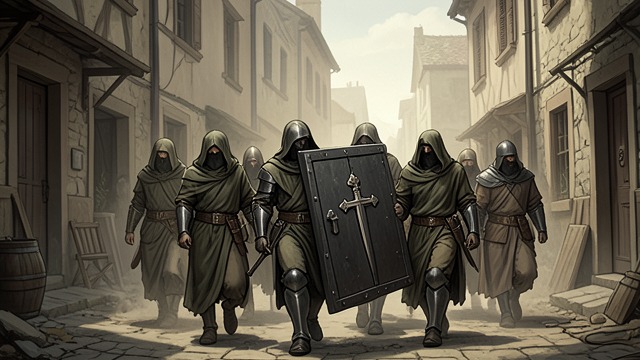
Soldiers and Monks
A new institution
Hugues de Payns and companions establish a religious military order to protect pilgrims. The order's early idealism gradually coexists with wealth, administration, and political influence.
A widening reputation
Their work in the Holy Land and growing European holdings make the Templars both useful and threatening. Casaubon first encounters them as historical subjects, not secret masters.
Power and Defeat
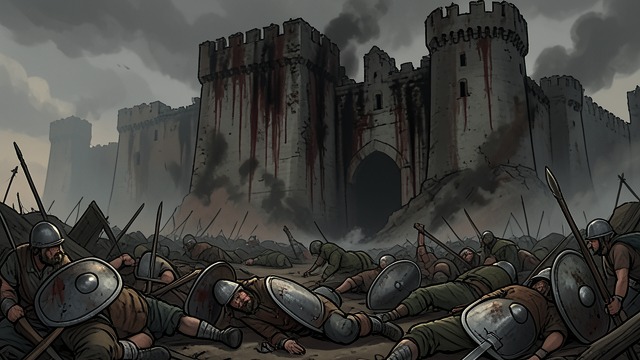
An Order Without Its Original Mission
Military reversals
The Templars fight in campaigns including Ascalon and the Seventh Crusade. Their discipline does not prevent costly failures, and the loss of Saint-Jean-d’Acre ends the Christian kingdom's hold in the Holy Land.
Prosperity after defeat
The order remains powerful in Europe, but its original purpose has faded. Its wealth and independence sharpen the conflict with monarchs who seek greater control.
Suppression and Legend
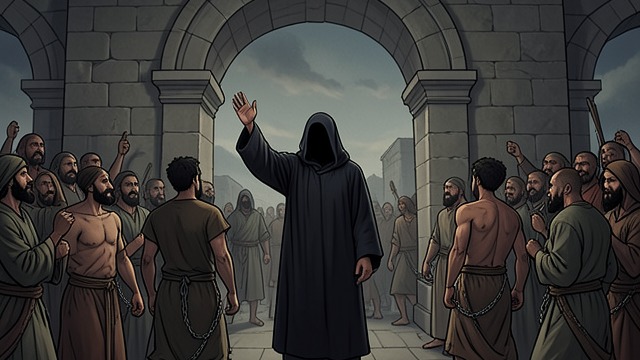
The End of the Order
Royal prosecution
Philip the Fair has the Templars arrested; torture and political pressure produce confused confessions. Clement V eventually suppresses the order, while Jacques de Molay and Geoffroy de Charnay are executed.
A story of survival
The order's disappearance leaves room for legends of secret continuities and hidden plans. Colonel Ardenti and the modern characters turn this uncertainty into the foundation of their conspiracy.
From 1118 onward
From the Crusades through 1291
1307–1314 and later centuries
