
The Plan and the Body
Foucault's PendulumThe novel contrasts abstract schemes with bodily life, showing how characters turn pregnancy, illness, desire, and death into metaphors they cannot fully control.
increasing Bearing strength in each event
 decreasing
Bearing strength in each eventdecreasingThe Body Against Symbol

Ordinary Material Life
Lia's account
Lia argues that familiar bodily structures can explain recurring symbols without invoking universal archetypes. Birth, food, and anatomy matter because people live through them.
An alternative to abstraction
Her explanation does not deny imagination but places it within embodied experience. Casaubon recognizes the force of her argument while remaining attracted to occult interpretation.
Birth as More Than a Metaphor
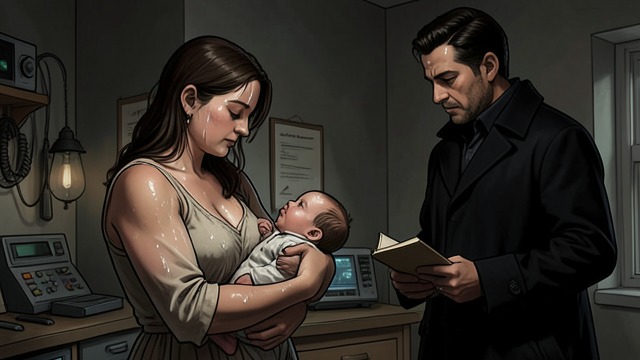
The Thing Arrives
A real child
Lia gives birth to Giulio, and Casaubon sees a living body rather than the alchemical Rebis or philosopher's stone. His earlier symbolic language meets an irreducible person.
A limited insight
The event grounds Casaubon temporarily, but he later returns to the Plan. Bodily reality offers no automatic immunity from the desire for hidden meanings.
Illness as a Text

The Cost of Interpretation
Diotallevi's theory
Diotallevi reads his cancer as a bodily result of manipulating the Torah's letters. His account links physical disease to the group's intellectual play.
Uncertainty remains
The novel does not establish a supernatural cause. The explanation nevertheless shows how the Plan colonizes even the experience of illness and death.
During Casaubon's conversation with Lia
At Giulio's birth
During Diotallevi's final illness
