Casaubon’s growing credulity and paranoia
Foucault's PendulumCasaubon's growing credulity and paranoia mark the conversion of a methodical skeptic into an increasingly unsettled interpreter of the Plan. The shift is neither a sudden revelation nor proof that the conspiracy is real: it unfolds through the narrator's oscillation between doubt and conviction, as coincidences and symbolic patterns acquire the force of evidence. That instability becomes the central danger. Casaubon knows the Plan was invented, yet finds himself reading the world through it—and eventually understands how the invention could become real through other people's belief.
From Skepticism to Credulity
Casaubon traces his skepticism to childhood. When he asked his father to subscribe to a magazine that promised to educate readers through comic-strip versions of classic literature, his father answered that the magazine's purpose was to sell as many copies as possible. Casaubon recalls that this exchange made him incredulous: he regretted having been credulous, swept along by an intellectual passion. For him, incredulity does not mean believing nothing. It means believing one thing at a time, and accepting another only when it follows from the first. Credulity begins when a person believes two things that do not fit and assumes that some hidden third thing must connect them.
This distinction explains both Casaubon's attraction to patterns and his vulnerability to them. He enjoys the collision of ideas as a kind of intellectual music, but says that he need not believe those ideas for their combination to please him. The Plan turns that playful habit into a test of belief: if no fact is allowed to remain outside the mystery, every mismatch becomes an invitation to discover a further connection. A later maxim in the group's conversations makes the escalation explicit: if even one fact does not reveal a mystery, Hermetic thought has been violated. The rule leaves no natural stopping point.
The Pendulum and the Museum
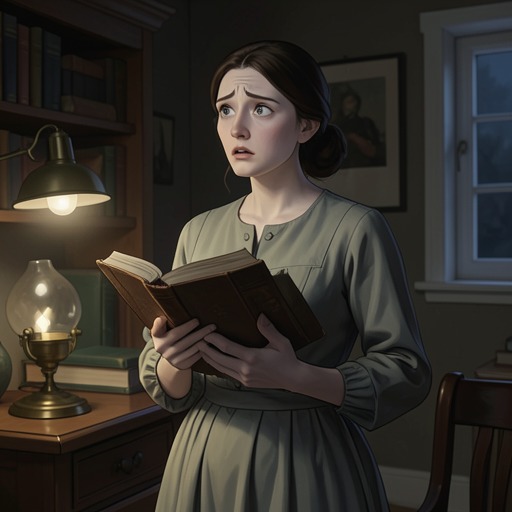
At the Conservatoire, an encounter with the Pendulum shifts Casaubon's position. He watches a couple fail to recognize the significance he sees in the instrument and, in the intensity of that moment, becomes convinced that Belbo was right about the Pendulum. Previously, he had treated Belbo's interpretation as aesthetic extravagance, a sign that the game was taking hold of him. Now Casaubon reasons that if Belbo was right about the Pendulum, perhaps the Plan and the universal plot are true as well. He concludes that he was right to come to the museum on the eve of the summer solstice, and that Belbo was not crazy but had reached truth through play.
The conviction does not settle into certainty. Casaubon immediately recognizes that an experience of the numinous can unhinge the mind, and later tries to recover a skeptical explanation. Moving through the technology museum, he tells himself that he is in a harmless, rational place and that Belbo's writings have influenced him because he has spent so long trying to decipher inventions he knows were invented. Yet the collection keeps turning into a coded landscape. In the Salle Lavoisier, instruments associated with scientific reason appear to him to confess, in code, to mysteries beyond reason; he concludes that Belbo was right and Reason wrong. A glass sculpture of a lion attacked by a serpent prompts a further reading of the Conservatoire as an image of cosmic decline and evil. Casaubon interprets that image as a sign that his initiatory journey has ended and that he will see the world as it is. The museum's exhibits have not changed; his interpretive frame has.
His fear rises with the approaching hour and the prospect of being expelled from the building before he can witness the supposed nocturnal revelation. He retreats to an exhibit periscope, whose view of the streets outside makes him imagine himself looking from the upper part of the church apse, swaying with the Pendulum like a condemned man. At the same time, he can still doubt what he has read. He considers that he may have come to Paris and hidden in a museum only because he was taken in by a performance staged for credulous visitors. The scene sustains both explanations: the Plan may be disclosing itself, or Casaubon may be interpreting ordinary surroundings under its spell.
Ritual, Memory, and Interpretive Doubt
Casaubon's memory of Brazil supplies another source of uncertainty. He recalls Afro-Brazilian cults amid arguments among Amparo's comrades about their political meaning: some saw a return to cultural roots and resistance to the white world, others a means of containing revolutionary energy, and still others a mixture of traditions whose purpose was unclear. Amparo herself condemned religion as an opiate, despite her deep bodily attachment to the world of samba and its rhythms. For Casaubon, these competing explanations show how readily an observer can impose a theory on practices whose significance remains contested.
At a later rite, Casaubon sees a German psychologist who has participated for years but does not enter a trance, while other participants do. The scene does not give him a simple rule by which to distinguish performance, psychological effect, and religious experience. When Amparo becomes unwell and the ritual leader tells her that she has the qualities of a medium, Casaubon is again confronted with a claim that could be understood as either a religious interpretation or evidence of something beyond his ordinary account. Aglie later tells him that Amparo has discovered that the orixas she had rejected still live within her. He distinguishes the mystic, who undergoes an experience, from the initiate, who claims a disciplined understanding of what reason cannot explain. This distinction complicates rather than resolves Casaubon's position: the ritual may be meaningful without proving the universal conspiracy that he is tempted to see in it.
The same tension governs his recollection of the night in the periscope. He says that, while waiting between five and ten, he reconstructed the events that had led him there, using the recollection to keep his spirits up. Two days later, he frames that anxious reconstruction as a story assembled from documents and from twelve years of experience between Pilade's and Garamond Press. He can narrate the chain of events with greater calm, but the existence of a retrospective account does not erase how uncertain he was while living through it.
How the Invented Plan Becomes Real
Casaubon's understanding of the Plan is sharpened by the group's own account of its method. In their meetings, he, Belbo, and Diotallevi traded fantasies and initially understood their leaps between pieces of evidence as parody: they were imitating the Diabolicals' habit of linking everything to everything else. But gathering material over long intervals trained their minds to connect facts automatically. Casaubon later recognizes that there may be little difference between repeatedly pretending to believe and forming the habit of belief. He describes the three men's diverging degrees of involvement: he was becoming addicted, Diotallevi corrupted, and Belbo converted. Casaubon thought himself the game's master, partly because his domestic life with Lia and their baby kept him in contact with ordinary life, but he did not remain untouched.
The Plan's social force becomes unmistakable when people identify their own confused mythologies with the pattern the three men fabricated. They do not merely accept that the Plan exists; they recast themselves as participants in it, joining fragments into what seems to them an irrefutable web of analogy and suspicion. Casaubon draws the consequence sharply: if someone invents a plan and other people carry it out, then the Plan exists in practice. The map that began as a game can therefore produce the very search and action that appear to confirm it.
This is also why Casaubon can describe a secret society whose plot is to spread the rumor that a universal plot exists. The proposition turns conspiracy thinking back on itself: belief in a hidden design can explain events, but it can also provide an answer to frustration and failure by assigning responsibility elsewhere. In his later reflection, Casaubon calls the desired secret one that would dispel frustration or offer salvation. Yet a disclosed secret disappoints, and the search for a deeper one begins again. The secret's power lies in remaining unavailable.
The Closed Circle of Belief
Casaubon finally sees this logic at work in Belbo's confrontation with the people gathered around the Plan. Belbo's refusal to reveal a secret makes his captors more certain that he possesses one; his insistence that he has no secret is treated as further evidence, since they reason that a false secret would have been disclosed. Their search has held them together despite divisions and conflict, but fulfillment threatens the group as much as failure: a secret that proves disappointing would disillusion them, while a secret known to everyone would cease to bind them.
This episode clarifies the movement from Casaubon's initial skepticism to his growing paranoia. The pattern feeds on doubt as readily as on assent. Evidence can be taken as confirmation, while denial becomes concealment; coincidence becomes a clue, and an invented connection gains force because people act as though it were true. Casaubon can recognize the trap and still be caught in its interpretive habits. His account therefore presents credulity not simply as a mistaken conclusion, but as a process in which repeated pattern-making transforms play into conviction and conviction into a self-reinforcing world.