The Torah as the Book of Creation
Foucault's PendulumThe Torah as the Book of Creation is Diotallevi’s account of language as a force that makes and sustains reality, not simply a record of it. In his final conversation with Jacopo Belbo, he links the Torah’s letters to the structure of the world and the human body, and names the trio’s irreverent rewriting of books as an attempt to create a golem. The concept gives their intellectual game a grave consequence: words can alter what they describe, and manipulating them without love or reverence can damage the maker as well as the world.
The Book and the Body
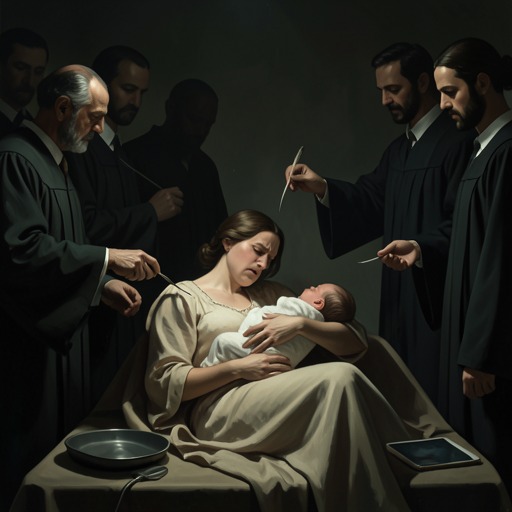
Diotallevi begins with a correspondence between the human body and the Torah. Just as a person has limbs, joints, and organs, he says, so the Torah has parts; conversely, the human body can be understood through the Book. The comparison makes reading more than an activity of the mind. The reader’s body participates in the text, and the text supplies a pattern through which bodily life is understood.
To make the danger of textual alteration concrete, Diotallevi recalls Rabbi Meir learning from Rabbi Akiba. Meir mixed vitriol into the ink, and Akiba did not object; when Meir later asked Rabbi Ismahel whether he was working properly, the warning was that one omitted or extra letter could destroy the whole world. Diotallevi applies that principle to himself and his companions: they tried to rewrite the Torah without attending to the exactness its divine work demands. Their failure was not just a bad interpretation or a literary joke. They treated a world-bearing text as material that could be rearranged without consequence.
Letters as World-Making
For Diotallevi, the Book founds the world, and manipulating its letters therefore means manipulating reality. He extends the claim beyond the Torah: any book, even a primer, is woven into the world’s order. The analogy reaches everyday language as well as sacred scripture. He cites psychoanalysts who treat anagram-making and the violation of language as signs of inner ugliness or hostility toward one’s father, then dismisses the distinction between their authority and that of rabbis: all are, in this respect, saying the same thing.
The passage shifts the meaning of the trio’s work. Their anagramming of historical books had seemed like play with other people’s writings; Diotallevi now insists that every book is interwoven with the name of God. Reordering words without prayer is therefore not a neutral experiment in interpretation. Because the body and the world correspond, altering the Book alters the world, and altering the world alters the body. The chain of consequences makes language at once a means of understanding and a material power that can turn back upon its users.
Love, Reverence, and the Hidden Word
Diotallevi describes the Torah’s word as something that emerges briefly from its coffer and then hides again. Its revelation is selective: it appears only momentarily and only to the one who loves it. He gives this principle the shape of a woman hidden in a distant chamber of her palace, waiting for a lover unknown to others. She opens the door only slightly to the one she recognizes, then conceals herself again; anyone who approaches with dirty hands is dismissed.
The image distinguishes attentive reading from extraction. Sacred meaning is not a prize that can be seized by technique alone, nor does rearranging letters guarantee access to truth. Love and piety are conditions of approach. Diotallevi’s accusation that the companions came to books in mockery therefore identifies not merely a tone but a fundamental error: they sought to command meanings that, in his account, disclose themselves only through a relation of devotion.
The Golem and the Failure of the Plan
Belbo’s practical gesture of moistening Diotallevi’s lips with a damp cloth frames the conversation as an intimate, urgent exchange. After explaining the bodily and textual correspondences, Diotallevi concludes that the companions attempted what they were not permitted or prepared to do: by manipulating the words of the Book, they tried to construct a golem. The image gives their work a creator’s ambition and a creation’s potential to escape its makers.
The golem is the consequence that gathers Diotallevi’s warning into a single figure. The trio did not simply misread history; they assembled language as if it were a tool for remaking the world, without the reverence that might make such work permissible. The concept thus reframes their Plan as a dangerous act of textual creation. Their failure lies in believing that books could be rearranged as a joke while remaining separate from the bodies and reality those books, in Diotallevi’s account, help constitute.