
Appearance and Reality
Great ExpectationsThe novel repeatedly contrasts social surfaces with hidden character, revealing how Pip, Estella, Magwitch, and the lawyer are misread by their appearances.
increasing Bearing strength in each event
 decreasing
Bearing strength in each eventdecreasingA Tombstone’s Portrait
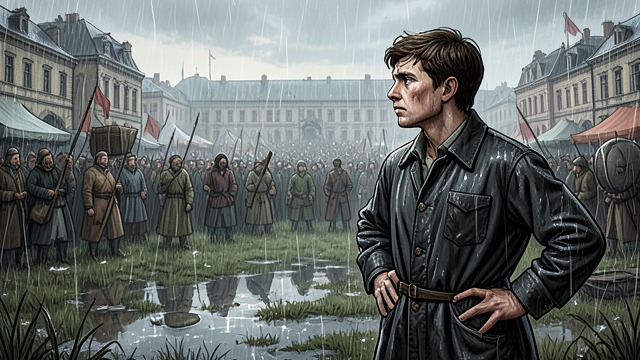
A Tombstone’s Portrait
Imagined parents
Pip reads his parents’ tombstones and invents their appearance from the lettering. The child’s interpretation shows how readily a surface becomes a story when knowledge is absent.
A narrative habit
The opening memory anticipates Pip’s later mistakes about Miss Havisham, his benefactor, and his own prospects. He often confuses evidence with the meaning he wants it to carry.
The False Benefactor
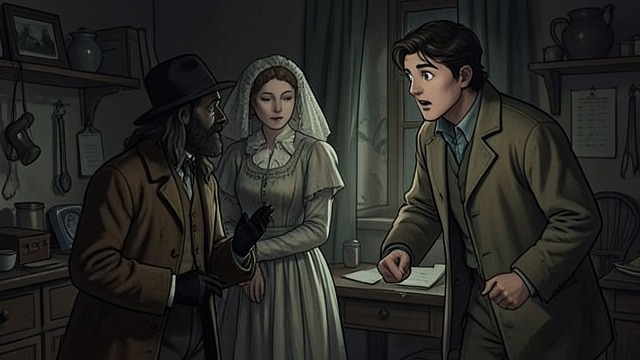
The False Benefactor
A convincing appearance
Pip assumes Miss Havisham is arranging his fortune and future with Estella. His belief draws support from the timing and atmosphere of his visits, not from a promise.
Evidence replaces conjecture
Magwitch’s revelation exposes the difference between the story Pip has constructed and the facts. His disappointment arises partly from his own willingness to treat appearances as proof.
The Respectable Criminal
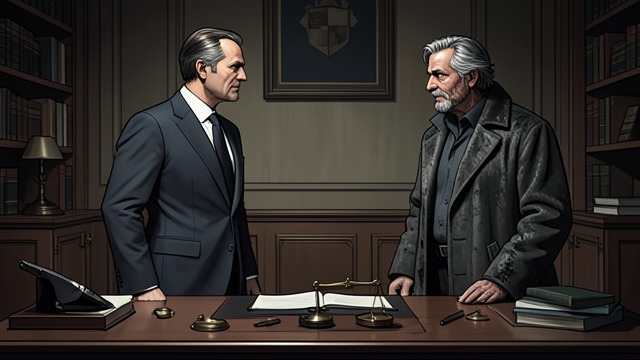
The Respectable Criminal
Different social surfaces
Compeyson’s education and polished dress make him appear more respectable than Magwitch, although both are involved in criminal schemes. Magwitch’s record and rough appearance make him easier to condemn.
A biased judgment
The case reveals how the appearance of gentility can be mistaken for virtue. The legal outcome helps explain why Magwitch sees social rank as a power that has worked against him.
The Clerk and the Castle

The Clerk and the Castle
Two outward manners
Wemmick appears hard and acquisitive at Mr. Jaggers’s office, but becomes playful and tender at Walworth. Neither manner is false; each belongs to a different context.
Character beyond performance
His divided life shows that professional severity need not exhaust a person’s identity. Pip’s understanding of Wemmick deepens when he sees the care hidden behind the clerk’s public face.
The Gentle Heart
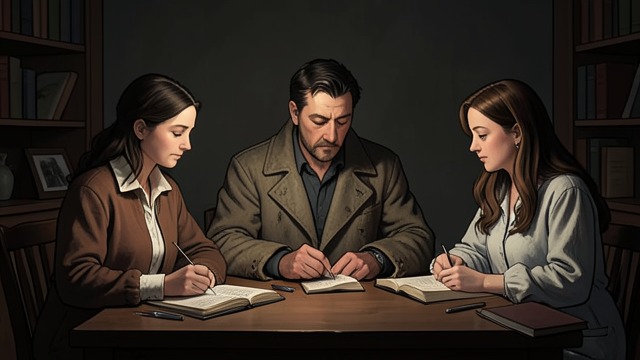
The Gentle Heart
Status stripped away
Pip’s fortune disappears, but Joe, Biddy, and Herbert continue to treat him with affection. Their conduct proves more enduring than the social distinctions he once pursued.
A truer measure
The story’s final judgments rest on loyalty, compassion, and work. The people who possess the least social polish often demonstrate the clearest moral gentility.
Pip’s earliest memories
from Pip’s first visit to Satis House until Magwitch’s return
during Magwitch and Compeyson’s trial
Pip’s visits between Little Britain and Walworth
after Pip’s return from abroad
