Bow Street Runners
Great ExpectationsThe Bow Street Runners are London police officers who join the investigation into the attack on Pip’s sister. Their brief appearance shows the reach of metropolitan law enforcement into the countryside, while the failure of their inquiry contrasts official authority with the uncertainty surrounding crime, evidence, and the lives of transported convicts.
Role in the Investigation
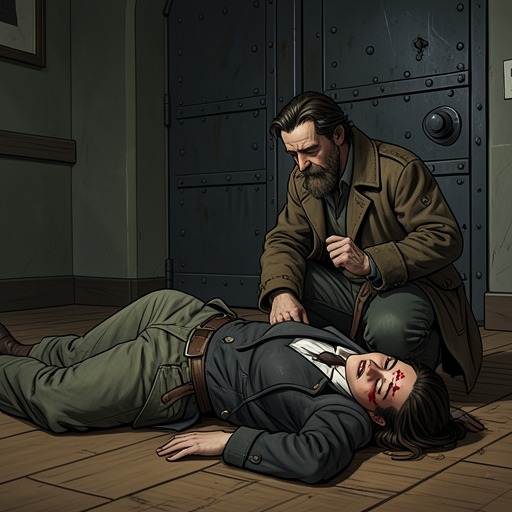
After Pip’s sister is attacked, constables and the Bow Street Runners remain around the family home for a week or two. Their efforts include taking several people who are plainly innocent into custody and pursuing mistaken theories, trying to make circumstances fit their ideas rather than drawing explanations from the circumstances. They also gather outside the Jolly Bargemen, where their knowing, reserved manner impresses the neighbourhood without bringing them closer to identifying the assailant.
The investigation ends without a culprit being found. Pip, who has concealed his own connection to the events surrounding the convict’s escape, considers whether to tell Joe the story, but repeatedly postpones confession. He resolves to speak only if a new opportunity to help identify the attacker arises. The officers’ failure therefore leaves both the crime and Pip’s private knowledge unsettled.
Policing and the Limits of Authority
The narrator recalls that the episode occurred in the days of the “extinct red-waistcoated police.” This retrospective detail places the Bow Street officers within an earlier form of policing, but the account offers no institutional description beyond their methods in this particular case. Its emphasis falls instead on the gap between their air of expertise and their practical inability to distinguish sound inference from preconceived ideas.
Elsewhere, the novel shows the broader legal machinery within which criminal status operates. At the landing-place for the prison ships, a sergeant makes a report and enters information in a book before a prisoner is sent aboard. A benefactor’s identity is kept secret under instructions communicated through Mr. Jaggers, while the returned convict understands that coming back to England after transportation for life exposes him to the death penalty. These scenes do not establish that the Bow Street Runners take part in those later proceedings; rather, they place the failed local search alongside a system whose consequences for a known convict are severe and far-reaching.
Convicts, Evidence, and Narrative Significance
The convict who once received food and assistance from Pip later remembers that he promised to find the boy who had helped him and give him two one-pound notes. He says he kept that promise after his release, despite having been tried again for prison-breaking and made a lifer. Much later, the escaped convict returns from New South Wales, knowing that discovery in England could mean death, yet says he came to see Pip regardless of the danger. The Bow Street investigation belongs to the earlier background of these intertwined histories: it fails to expose Pip’s concealed involvement, but the novel’s subsequent events make clear how persistent the legal consequences of a convict’s past can be.
The officers’ unsuccessful search also develops a recurring distinction between authority and knowledge. Their presence commands local attention, but display and confidence do not amount to reliable understanding. In contrast, the novel’s later legal scenes turn on identity, testimony, and the availability of witnesses: the returned convict cannot immediately be committed for trial because an old prison-ship officer must be brought forward to identify him. Together, these episodes show that law acts through procedures and evidence, while its agents remain fallible and its judgments can carry consequences far beyond the original investigation.