Dolge Orlick
Great ExpectationsDolge Orlick is Joe Gargery’s powerful, ill-tempered journeyman, a presence at the forge whose resentment toward Pip runs beneath the routines of village life. He is introduced as an antagonist formed through daily proximity: Pip works beside him, suspects that he sees the apprentice as a threat to his place, and later takes deliberate steps to keep him away from Biddy. The narrative gives Orlick a distinctive physical manner and a series of consequential encounters, but does not provide a full account of his later fate in this evidence.
Identity and Work at the Forge
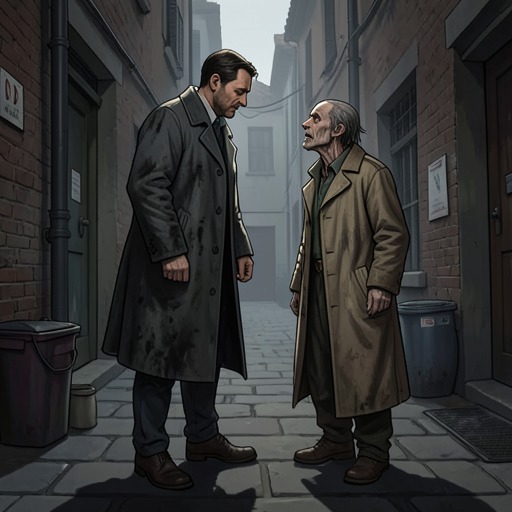
Orlick is employed by Joe Gargery for weekly wages and lodges with a sluice-keeper out on the marshes. His name itself is treated as part of his obstinate character: he claims that his Christian name is Dolge, which Pip regards as an impossibility and as a deliberate affront to the village’s understanding. Orlick is broad-shouldered, loose-limbed, swarthy, and strong. He moves slowly, with a persistent slouch, and seems to arrive at work or leave it without any evident purpose. His dinner is tied in a bundle around his neck and hangs down his back; on Sundays, he commonly lies on the sluice-gates or stands by ricks and barns. When someone makes him look up, his expression seems half resentful and half puzzled.
This habitual slouch distinguishes Orlick from Joe’s steadier presence at the forge. It also gives his entrances and departures a quality of reluctance: even when going to the Jolly Bargemen to eat or leaving for the night, he seems not to know where he is bound. The account establishes him as a worker within Joe’s household economy, but not as someone welcomed into its emotional life.
Antagonism Toward Pip
Orlick dislikes Pip from the time Pip is small. He frightens him with stories that the Devil lives in a black corner of the forge and that a live boy must be used to build up the fire once every seven years, suggesting that Pip might serve as fuel. When Pip becomes Joe’s apprentice, Pip suspects that Orlick’s hostility sharpens because Orlick thinks he may be displaced. Orlick does not openly declare this enmity, but Pip notices that he beats sparks in his direction and, when Pip sings the forge song Old Clem, comes in out of time.
The hostility becomes harder to miss when Pip’s sister objects to Joe’s conduct and Orlick joins the dispute. He complains about people “up-towning” and challenges Joe to show him no favour. Joe asks him not to lose his temper, but Orlick answers that he will if he wishes and insists that Joe should be a man. Rather than continue the argument verbally, Orlick draws a red-hot bar from the furnace, advances toward Pip with it, then swings it around his head and hammers it on the anvil. The act turns the forge’s ordinary work into a threat: Pip interprets the sparks as if they were his own blood. Orlick eventually leans on his hammer and calls for Joe’s attention again, while Joe first asks whether he is now calm.
Conflict with Joe and Place in the Household
The confrontation escalates when Mrs. Joe, angered by Orlick’s interference between her and her husband, works herself into a frenzy. Joe responds to the challenge Orlick has made and asks whether he is man enough to fight. Orlick goes on the defensive, and the two men fight in their singed and burnt aprons. Joe quickly overcomes him. The encounter ends not with a lasting break in their working arrangement but with a startling return to routine: after Joe carries his unconscious wife indoors, Orlick and Joe are found sweeping up together, sharing a pot of beer from the Jolly Bargemen. A slit in Orlick’s nostril is the only visible trace of their altercation.
That quick change from violence to shared work does not make Orlick’s hostility disappear. Instead, it underscores his continuing position in the forge: he remains Joe’s paid journeyman and part of the household’s daily surroundings even after the quarrel. Joe’s parting counsel to Pip, that people may be on or off the rampage and that such is life, puts the episode into a wider reflection on anger’s passage without suggesting that Orlick and Pip have reconciled.
Mrs. Joe’s Sign and Orlick’s New Role
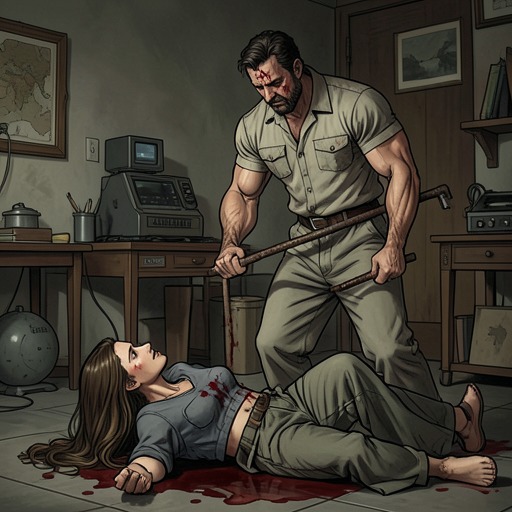
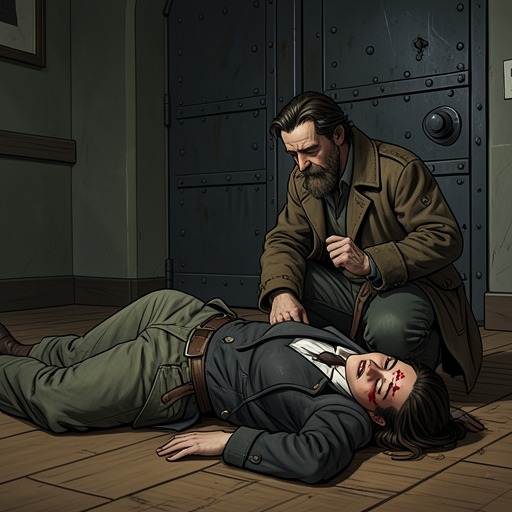
After Mrs. Joe is injured and can no longer communicate as before, she repeatedly makes a sign that Biddy recognizes as a reference to Orlick. The sign is his hammer. Once Biddy identifies the clue, the others bring Orlick in from the forge. He lays down the hammer, wipes his brow first with his arm and then with his apron, and comes into the kitchen in his familiar slouch.
Pip expects Mrs. Joe to denounce Orlick, but she instead appears anxious to be on good terms with him. She is pleased that he has been brought to her, asks through her gestures that he be given something to drink, and watches to see whether he accepts this welcome. Her manner seems to Pip like a child trying to placate a hard master. After that day, she draws the hammer on her slate nearly every day, and Orlick regularly slouches in to stand before her. The evidence records this repeated interaction but does not explain what Mrs. Joe intends by it or what passes between them.
Biddy, Pip, and Narrative Significance
Orlick’s recurring visits matter to Pip because he fears that Orlick may pursue Biddy. Pip keeps an eye on him and, whenever he sees an opportunity for Orlick to make advances, steps in to obstruct him. Pip says that Orlick has become rooted in Joe’s household because of Mrs. Joe’s sudden liking for him; otherwise, Pip says, he would have tried to have him dismissed. Orlick understands and returns Pip’s hostile intentions, as Pip later has reason to know. Their conflict therefore persists beyond the fight at the forge, shifting into a rivalry conducted through watchfulness and interference.
Orlick also sharpens Pip’s divided feelings about his future. At moments Pip can see Biddy as better than Estella and his inherited working life as a sufficient ground for self-respect and happiness; he imagines becoming Joe’s partner and keeping company with Biddy. But memories of Miss Havisham and the possibility that she may make his fortune undo that resolution. Orlick is not the cause of this larger uncertainty, yet Pip’s vigilance toward him belongs to the same period in which Pip is struggling to accept his place in Joe’s world. In the available episodes, Orlick functions as both a concrete workplace adversary and a persistent reminder that the domestic life Pip might choose remains entangled with resentment, status, and uncertain attachment.