Estella
Great ExpectationsEstella is Miss Havisham’s adopted daughter, raised amid the frozen grief of Satis House to enact a revenge she did not choose. Her beauty and pride first captivate Pip, while her contempt for his humble appearance deepens his shame and ambition. Later, she describes herself as incapable of tenderness, marries Bentley Drummle, and endures a cruel and unhappy marriage. In the novel’s final encounter, she tells Pip that suffering has changed her and asks whether they can be friends: a hard-won possibility of mutual recognition after his youthful idealization has passed.
Identity and upbringing
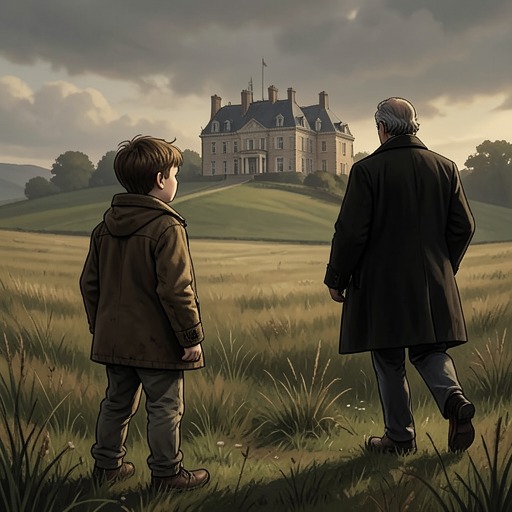
Estella enters Pip’s life as a very pretty, proud young girl at Satis House. When she is introduced to him, she recognizes him by name and invites him in, but their meeting soon becomes a lesson in rank. At the card table she mocks his coarse hands, thick boots, and unfamiliarity with the names of the cards. The scorn is not an incidental flourish: it gives Pip a lasting awareness of how he appears to someone he admires, and helps turn his dissatisfaction with his common background into a desire to become a gentleman.
Miss Havisham presents Estella as both beloved child and instrument. She tries a jewel against the girl’s hair and bosom, telling her that it will one day be hers, then asks her to play cards with Pip. As Estella grows, Miss Havisham watches her moods with relish, repeatedly asking Pip whether she grows more beautiful and encouraging her to break hearts. Estella therefore receives affection within a design that makes her beauty and emotional power serve another person’s grievance.
That design is not the same as an ordinary maternal upbringing. Estella later compares her education to keeping a child in darkness and then expecting her to understand daylight: she argues that Miss Havisham cannot fairly demand emotions she never taught her to know. Asked how Miss Havisham has injured her, Estella says she is what her adoptive mother made her, accepting both praise and blame for the resulting person. The exchange makes her upbringing a cause of conflict rather than a simple explanation that erases her agency.
Pip and the making of an ideal
Pip’s attachment begins in childhood, when Estella treats him with a mixture of contempt and calculated familiarity. She sometimes tolerates him coldly, sometimes condescends to him, and sometimes says that she hates him. When she serves him bread and meat, she does so without looking at him, and his humiliation is intensified by her apparent pleasure in having caused it. On another visit, she strikes him after questioning him. Pip’s response is not to withdraw from her but to turn the hurt into a private ideal.
He later confesses that he wants to become a gentleman on Estella’s account. The admission gives his social ambition a personal focus: he hopes to be worthy of the girl whose judgment has taught him to despise the signs of his own background. Yet Miss Havisham’s encouragement of his visits and her interest in Estella’s beauty encourage a hope that the available evidence does not warrant. Estella’s attention remains changeable, while Pip interprets the arrangement through longing.
When Pip sees her again as a young woman, he finds her more beautiful and more composed, and feels that she has advanced while he has not. Her appearance renews the sense of distance that began in childhood. She makes that distance explicit, warning him that she has no heart and has never bestowed tenderness on anyone. Pip’s devotion and her declared emotional incapacity thus stand in sharp contrast: the love he has built around her is not a feeling she claims to return.
Independence, marriage, and conflict
Estella’s life remains entangled with Miss Havisham’s plans even as she moves into adult society. Travelling in a furred dress, she seems more winning toward Pip than before, a change he associates with Miss Havisham’s influence. Estella explains that she is expected to write regularly to Miss Havisham, visit her, and report how she is doing; she adds that nearly all the jewels are now hers. The arrangement joins material inheritance to continuing obligation, showing that departure from Satis House does not mean a clean break from the role assigned to her there.
Pip eventually tells her plainly that he has loved her for a long time. Estella answers that she is going to marry Bentley Drummle. Her choice overturns Pip’s hope but does not resolve his attachment. As time passes, he suspects that the marriage has taken place, avoids the newspapers rather than confirm it, and asks Herbert not to speak of her. The narrative presents his refusal to know as an effort to preserve a remnant of hope even when he believes it has already been destroyed.
Estella’s marriage brings the consequences of her earlier formation into a harsher life. Pip hears that she has been deeply unhappy and separated from her husband, who treated her cruelly and was known for pride, greed, brutality, and meanness. He also hears that Bentley Drummle died after an accident connected with his ill-treatment of a horse. The account establishes Estella’s suffering and eventual release from the marriage, but does not make that suffering an easy or instantaneous cure.
Family history and recognition
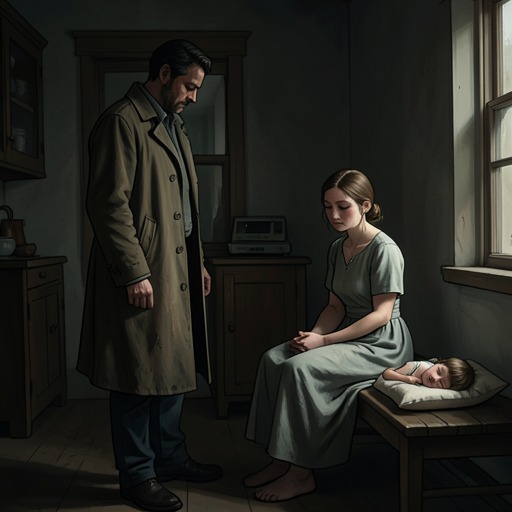
The truth of Estella’s birth emerges through the history of two people whose pasts had been concealed from Pip. Miss Havisham recounts that, after she had been shut away at Satis House, she told Jaggers she wanted a little girl to rear and love, and to save from her own fate. Jaggers promised to look for an orphan and brought a sleeping child to the house one night; Miss Havisham named her Estella. The story establishes that Estella was adopted, not born into the household that shaped her.
A later revelation identifies the child as the daughter of Magwitch and a woman who had been acquitted of a crime. Magwitch had loved his little daughter, but the child’s mother threatened to destroy her and disappear with her. Pip tells Magwitch that the child he once loved was found, is alive, has become a lady, and is very beautiful; he then says that he loves her. This disclosure connects Estella’s unknown origins to the criminal history surrounding Pip’s expectations, while also revealing why Magwitch’s lost child is not merely a story of the past.
Pip’s recognition of Estella’s identity also makes earlier impressions fall into place. He recalls seeing a housekeeper whose features reminded him of Estella, and connects that impression with other fleeting encounters and with a face seen in a carriage. These recollections do not change Estella’s history, but show how the discovery reorganizes Pip’s understanding of details he had previously been unable to explain.
Change and ending
In the novel’s closing encounter, Pip learns that Estella has led an unhappy life and has since been released from her marriage. When she appears before him, he recognizes her, but she says that she is greatly changed and wonders that he knows her. Her changed manner is not presented as a return to the proud girl of Satis House or as a promise that their past can simply be undone. Instead, she describes the long period in which she kept the memory of what she had thrown away at a distance, and the later decision to give that memory a place in her heart.
Estella asks Pip to remember that he once wished her well and forgave her. She says suffering has taught her to understand what his heart had been, and describes herself as bent and broken, but in the hope of having been shaped into something better. Her request is modest and specific: she asks him to be considerate and good to her, and to tell her they are friends. The ending leaves their future open while marking a real change in her understanding of feeling and in the terms on which she approaches Pip.
Narrative significance
Estella’s story exposes the cost of turning a person into an instrument of revenge. Miss Havisham’s design gives Estella wealth, beauty, and social access, but it does not equip her to recognize or return tenderness. Estella herself names the central injury: she was expected to understand emotional life without having been taught it. That explanation reveals how her coldness was formed, even as her decisions—including her marriage—remain part of her own life rather than mere extensions of Miss Havisham’s will.
For Pip, Estella is at once a real person and the focus of a self-deceiving ideal. His childhood shame and adult ambition become attached to winning the regard of someone who repeatedly warns him that she cannot offer the love he wants. Their final meeting reverses the relation without erasing its history: after Pip’s expectations and romantic certainty have fallen away, Estella can speak of regret, acknowledge the heart he once offered, and ask for friendship. Her arc moves not toward a guaranteed romance but toward a more honest recognition of injury, responsibility, and the capacity to feel.