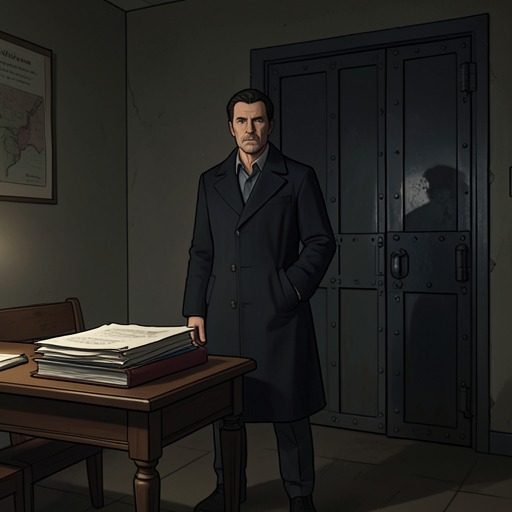
I've made a gentleman on you
Great Expectations“I've made a gentleman on you” names the reversal at the heart of Pip’s great expectations: the wealth that seemed to promise an elegant, respectable future came from Abel Magwitch, the fugitive Pip once helped on the marshes. Magwitch presents Pip’s advancement as the fulfillment of a vow, while Pip experiences the revelation as a shock that turns gratitude and presumed gentility into fear and revulsion.
The words and their promise
Magwitch explains that he had earned money for Pip from the moment Pip kept him alive. He describes a life of hard labor and rough living set against the smooth, privileged existence he intended for the boy: he worked so Pip could rise above work. His repeated contrasts make the gift sound like a personal sacrifice converted into a social transformation. The declaration is also practical and possessive: Magwitch calls himself Pip’s second father and regards Pip as a son for whom he has put away money to spend.
Magwitch’s account gives the phrase its force. While working as a shepherd in an isolated hut, he says, he repeatedly imagined Pip beside him and renewed his vow beneath the open sky. The gentleman Pip has become is therefore not an accidental beneficiary of an anonymous fortune but the intended result of a promise Magwitch carried across years and continents.
A secret made public
The revelation overturns Pip’s assumption about the source of his prospects. Magwitch says the arrangement was his own undertaking, with Mr. Jaggers as the only other person involved. He had come by sea to Portsmouth and used a letter to Wemmick to obtain Pip’s address; his arrival makes the distant benefactor physically present in Pip’s rooms.
The phrase changes meaning as soon as Magwitch identifies himself. What Pip had understood as an elevation into respectable society is revealed as the work of a man pursued and stigmatized by the law. Magwitch celebrates the achievement, pointing to Pip’s lodgings and imagining him among lords, with horses for riding and driving. His picture of gentility is expressed through visible comforts and status, while the source of those comforts makes Pip recoil.
Devotion and repulsion
Magwitch insists that he is not telling the story to make Pip feel obliged. He wants Pip to know that the hunted man he once saved has become powerful enough to make a gentleman. Yet his tenderness does not dissolve the distance between them: he holds Pip’s hands and relishes looking at what he has made, while Pip releases himself as soon as he can and struggles to comprehend his new condition.
Pip’s response sharply contradicts Magwitch’s pride. He recalls feeling abhorrence, dread, and repugnance toward the man, shrinking from him as if he were a terrible beast. The declaration thus exposes a moral irony: Pip’s polished life rests on Magwitch’s labor and loyalty, but the benefactor’s convict identity initially makes him seem more frightening than the gentility he financed can make Pip feel grateful.
Repetition and significance
Magwitch returns to the claim while holding Pip’s hands, calling him the gentleman he made and the genuine article. The repetition turns the phrase from a disclosure into a refrain of paternal pride. It also fixes the scene’s central conflict: Magwitch sees love made visible in Pip’s advancement, whereas Pip sees the human source of his fortune and feels himself bound to a truth he had neither expected nor welcomed.
The expression condenses the novel’s reversal of appearance and worth. Pip’s gentlemanly status is not evidence of an independent or honorable inheritance; it is the outcome of Magwitch’s sacrifice. The words join a father’s devotion to a social aspiration, while the gap between Magwitch’s celebratory language and Pip’s recoil reveals how class respectability can conceal the relationships and obligations on which it depends.