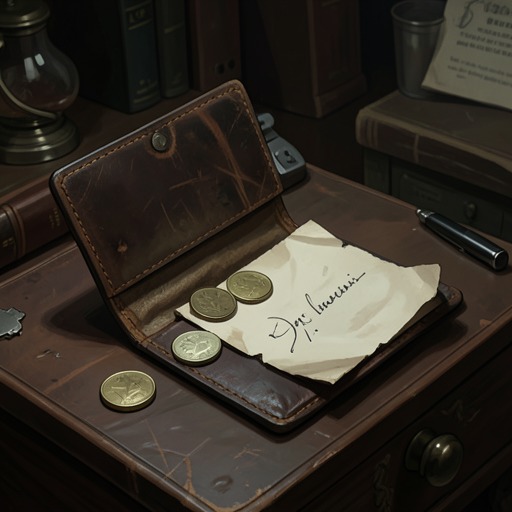
Joe Gargery’s file
Great ExpectationsJoe Gargery’s file is a working tool from the forge that acquires an extraordinary place in Pip’s memory: as the means by which he responds to an escaped convict’s demand, and later as a silent clue that reconnects the stranger to his childhood. Its practical use carries a moral and narrative weight. The file first draws Pip into secrecy, then helps disclose the past, while the older Pip’s recollections connect that early choice to his later estrangement from Joe and his shame about the person he has become.
Identity and First Use
When the convict orders Pip to bring him a file along with food, the request makes Joe Gargery’s workshop part of Pip’s perilous morning. Pip goes into the kitchen, opens the door communicating with the forge, and takes the tool from among Joe’s tools. He then restores the door’s fastenings, leaves by the entrance he had used the previous night, and runs toward the misty marshes. The object is ordinary and specific: it belongs to Joe’s work, but Pip removes it without permission to satisfy the escaped man’s demand.
The file’s first function is therefore practical, but the act of taking it also makes it evidence of Pip’s divided loyalties. The boy has to leave home secretly, carry provisions, and take a tool from the forge; an everyday implement becomes bound to a concealed encounter and the fear of discovery. The file does not itself explain Pip’s motives or decide his future, but it fixes the encounter in material detail: the convict asked for it, and Pip brought Joe’s tool.
The Convict and the Marshes
At the marshes, the convict’s attention turns to the other escaped man. He asks where that man has gone, indicates that he will pursue him, and demands the file. Pip points out the direction in which the mist has hidden the other fugitive. The convict then works at his own fetter with the file, concentrating on it despite his injured leg. Pip, frightened by the man’s renewed urgency and anxious to return home, slips away; the last sound he hears is the continued filing.
The tool’s use joins two strands of danger in the scene. The convict wants it to work on his iron, while Pip’s act of supplying it ties the child to the fugitive’s attempt to free himself. The file enables the convict to work at the fetter, but the evidence does not say whether he succeeds in freeing himself. What remains is Pip’s memory of the man bent over his leg, the tool still in use as Pip retreats through the mist.
A Secret Clue in the Kitchen
Years later, a strange visitor at the forge-side household makes the file recognizable again without openly explaining its history. While drinking rum and water, the man pointedly stirs and tastes the drink with a file rather than the spoon brought to him. He takes care that nobody but Pip sees the tool, wipes it, and puts it into a breast-pocket. Pip recognizes it as Joe’s file and understands that the visitor knows the convict from his earlier life.
The recognition turns a familiar implement into a private signal. Its meaning depends on Pip’s knowledge of where it came from and on the visitor’s deliberate concealment of it from everyone else. The stranger does not announce the connection in front of the household; the file conveys it through an action Pip alone can read. Afterward, the man talks principally about turnips, leaving Pip to absorb the significance of what he has seen. The small, matter-of-fact gesture makes the past present without interrupting the ordinary conversation around it.
Memory, Shame, and Consequence
The file belongs to an early day that Pip later calls memorable because it made great changes in him. His retrospective reflection describes lives as bound by links of iron or gold, thorns or flowers, and identifies a single day as the first link in a chain that would otherwise never have existed. The file is one concrete detail from that day: an object taken from Joe’s forge and delivered to a convict, subsequently recalling how a childhood act became part of Pip’s longer moral history.
As Pip grows ashamed of his home and of Joe’s working life, he looks back on the change in himself without claiming that its causes can be cleanly assigned. He says that the change was made, whether excusably or inexcusably, and remembers the apprenticeship he had once expected to welcome as dusty and burdensome after his aspirations shifted. These later reflections do not make the file the cause of his class shame. They place it instead within a chain of recollections through which the adult narrator measures how far he has moved from the home and person connected to it.
When Pip learns that his expectations were not what he had imagined, his pain includes the knowledge that he had deserted Joe while the convict was in his rooms and exposed to the possibility of arrest and execution. The file’s earlier delivery is not the whole source of that later guilt, but it belongs to the history that makes the convict’s return so consequential: Pip once encountered him as a frightened child and later faces the human consequences of his own distance from Joe. During Pip’s illness and recovery, Joe and Biddy treat him with tenderness. Joe tactfully avoids dwelling on childhood secrets, and Pip is deeply moved by the kindness with which Biddy had prepared him for that conversation. As Pip becomes stronger, Joe grows less easy in his old intimacy; Pip recognizes that his own conduct has given Joe reason to fear he might again grow cold and cast him off. In these later passages, the file is not mentioned anew, but its association with Joe’s forge and Pip’s secret childhood action lends the object its lasting significance: it connects the tool, the household Pip once rejected, and the conscience of the adult who remembers.