Kent County Wetlands
Great ExpectationsThe Kent marshes are the landscape of Pip’s childhood, the setting of his earliest encounter with death and fear, and a recurring measure of the distance between his origins and his ambitions. Their low, exposed ground—marked by churchyard, dykes, cattle, river, and sea—first gives Pip his sense of the world; later, its familiar paths become the backdrop against which he imagines escape, social ascent, and a return to the life he has learned to despise.
Landscape and First Impressions
The marsh country lies by a river that winds through the landscape, about twenty miles from the sea. From the churchyard, Pip’s first vivid impression arranges the world in distinct bands: the graves, the dark flat wilderness cut by dykes and mounds, the river’s low line, and, beyond it, the distant sea from which the wind rushes. The landscape is bleak and exposed, but it is also the first geography he can name. His childhood understanding of place begins with this view and with the realization that his parents and five infant brothers are buried in the churchyard.
That scene joins physical orientation to personal vulnerability. The small, frightened child in the vast marsh setting is Pip; an escaped convict rises among the graves and threatens him. The landscape is not merely a home ground but the location of an encounter that links Pip’s earliest memories of the marshes to crime, fear, and obligation. Its open ground offers little concealment, while its churchyard gives the meeting an intimate proximity to death.
A Measure of Pip’s Changing Prospects
During his apprenticeship, Pip returns in memory to the churchyard on Sunday evenings, comparing his own future with the marsh view. Both seem flat and low; in either, an unknown way leads through dark mist toward the sea. The comparison gives the marshes a double force: they are the familiar world he inhabits, but their horizon also figures a future whose direction and outcome remain unclear.
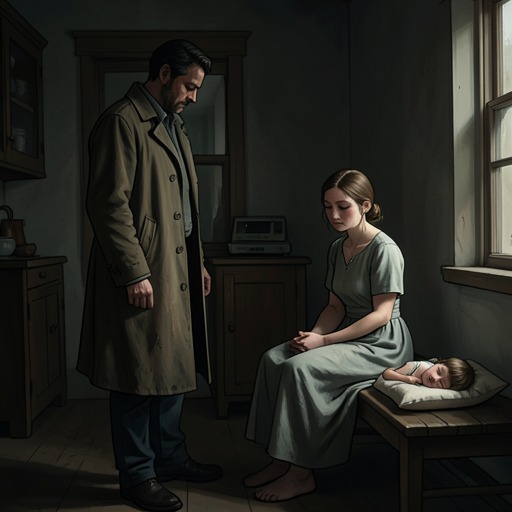
At the same time, Pip’s experience of the forge changes the meaning of home. He had once expected to be happy when he became Joe’s apprentice, but the reality of coal dust and work feels burdensome. He fears that Estella will see him performing the dirtiest tasks and despise him for it. The marsh landscape remains outwardly familiar while his view of himself alters: he begins to experience his birth and working life as limitations, not as a secure place in which he might find contentment.
Pip’s visits to the Old Battery, a place of study on the marshes, bring these competing feelings together. He and Joe meet there with a broken slate and a short slate pencil, while Joe adds his pipe. Beyond the earthwork, sails move along the river; at low tide, they can look like sunken ships still sailing beneath the water. Watching vessels head out to sea, Pip associates the prospect with Miss Havisham and Estella. They and the strange house seem to him to belong wherever the landscape becomes picturesque, so that his attraction to them spreads across the scenery of his home country.
The riverbank also becomes a place for confession. On a summer walk with Biddy, after they have passed the village, church, and churchyard and reached the water, Pip tells her that he wants to be a gentleman. The marshes hold both a quieter alternative and the desire to leave it behind: at moments he recognizes that Biddy is better than Estella and that an honest working life with Joe could offer self-respect and happiness. Those resolutions are repeatedly unsettled by memories of Miss Havisham’s world and the hope that she may make his fortune.
Departure and the Wider Geography
When Pip learns that he is to leave for London, the marshes become the country he imagines himself surpassing. He bids farewell to the low wet ground, dykes, sluices, and grazing cattle, casting his childhood surroundings as monotonous acquaintances and turning toward what he calls London and greatness. He goes to the Old Battery to consider whether Miss Havisham intends him for Estella and falls asleep there. Joe follows him, knowing it is their last time together in that place. Pip’s departure is therefore not just a change of residence: it is a separation from Joe and the landscape in which their life together took shape.
The journey to London takes about five hours by stagecoach. The contrast between the marsh country and the metropolis enlarges the novel’s geography from village and open land to dense streets and urban traffic. Yet the marshes do not disappear from the story when Pip leaves. They remain the remembered point of comparison for later places and choices, while the river provides a route through which characters move between London and the coastal reaches.
Estella’s journey to Richmond offers one such passage into a different landscape. She tells Pip that her destination is Richmond in Surrey, ten miles away, and that he is to accompany her and pay the carriage charges from her purse. Her words present both of them as acting under instructions rather than freely choosing their course. The marshes are no longer the immediate setting, but the journey’s measured distance and constrained movement echo the way place and social direction shape Pip’s life.
River Routes, Concealment, and Return
The waterways connect the marsh country to the risks and movements of the larger plot. In London, Pip and Herbert communicate with Wemmick cautiously after Pip discovers that a man has been following him. To avoid compromising Wemmick, Pip sends his information by letter; he and Herbert agree to take care and Pip keeps away from Chinks’s Basin, passing Mill Pond Bank only when rowing by. The river and its banks serve as routes of observation and possible danger, not simply picturesque scenery.
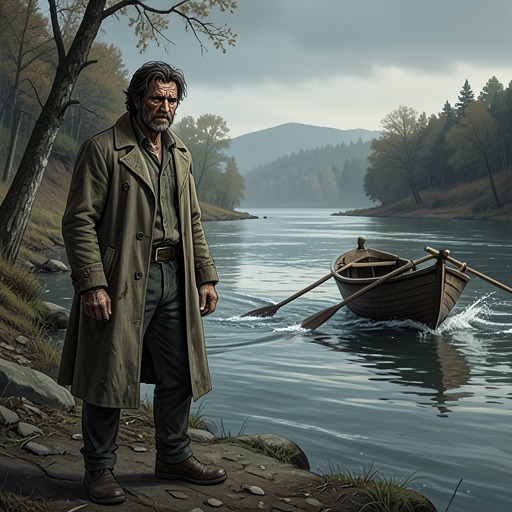
Later, the river becomes the proposed escape route for Provis. Pip and Herbert plan to row downriver with the tide, continue against it after it turns, and reach the long, solitary stretches below Gravesend between Kent and Essex. They intend to rest overnight at a waterside public house and then hail either the Hamburg or Rotterdam steamer leaving London on Thursday morning. The plan depends on tides, distance, recognizable vessels, and the relative solitude of the lower river. The same broad geography that once opened Pip’s imagination toward the sea now offers a precarious route out of England.
The marshes’ significance lies in this contrast between rootedness and passage. Their churchyard and forge establish the world Pip tries to outgrow; their horizon gives form to his uncertain expectations; and their river belongs to a network of routes shaped by social ambition, surveillance, and attempted escape. As Pip’s understanding changes, the landscape stays recognizable, but it no longer means only confinement or only home: it records what he leaves behind and helps define the reach, cost, and uncertainty of every departure.