Magwitch's fugitive status
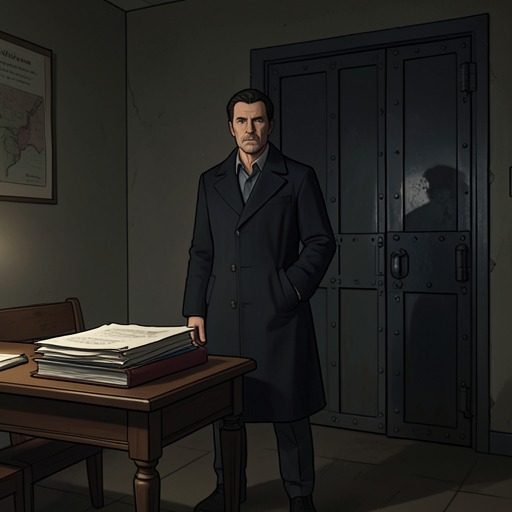
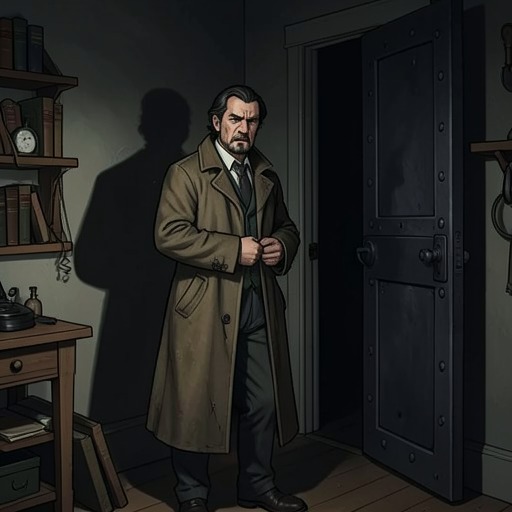
Great ExpectationsMagwitch’s fugitive status begins when he returns to England despite lifelong exile, driven by his desire to see Pip and unwilling to leave again. His hidden presence makes every meeting, river journey, and protective arrangement precarious; the prohibition that once seemed like a distant legal condition becomes the immediate threat governing both men’s choices. His eventual recapture exposes the limits of concealment and brings the law’s threatened punishment into effect.
Identity and Legal Condition
Magwitch’s status is not simply that of an escaped prisoner hiding from immediate arrest. He had been transported to New South Wales for life, and his return to England was itself an offence carrying the extreme penalty of the law. Mr. Jaggers had warned him that he was unlikely to obtain a pardon and that presenting himself in England would make him liable to death. Magwitch nevertheless crossed back, so his attachment to Pip placed him beyond the ordinary protections available to a free resident.
The distinction between his earlier escape from a prison ship and his later return from exile matters. When first seen in custody, he is taken from a guarded hut to a prison ship, where he disappears below its barred structure. Years later, the fugitive is not seeking merely to escape confinement: he has lived overseas and accumulated wealth, but his legal status follows him across the distance. The sentence of lifelong exile makes his return a new crime, however successful his life abroad may have been.
Return and Concealment
In New South Wales, Magwitch made a fortune through sheep-farming, stock-breeding, and other trades. He told Pip that he had done better than the other men who went out with him, but prosperity did not loosen his sense of obligation to the boy who had fed him and kept his secret. He had earlier arranged for two one-pound notes to reach Pip through another convict, recalling the promise made behind a pile of timber in the Dockyard. His later return carries that old debt of gratitude further: he comes to see Pip in person, despite the danger.
Magwitch insists that the risk would not have deterred him. He believes few people are likely to recognize him and does not intend to advertise his return under his initials, but these precautions do not change the legal fact of his presence. When Pip tells him that returning means death, Magwitch confirms that he was sentenced for life and expects to be hanged if caught. He nevertheless says he has come to stay. Pip responds by shutting the shutters and securing the doors, while the sight of Magwitch eating and drinking recalls the convict Pip once saw on the marshes. The past is no longer a childhood memory: it is inside Pip’s rooms, dependent on his protection.
The Hidden Life and Its Risks
Magwitch stays in hiding while Pip and Herbert seek advice and prepare a means of getting him out of England. At the house where he is lodged, he occupies two airy cabin rooms at the top of the building. He appears calm, and Pip notices that he has become softened, though he cannot explain precisely how. That change does not make the danger less real. Pip withholds the information that Compeyson may be involved, fearing Magwitch’s hostility could provoke him to seek the man and expose himself to destruction.
Pip conveys Wemmick’s warning that Magwitch is under suspicion and that Pip’s chambers have been watched. He advises Magwitch to keep close and proposes taking him abroad, with Pip accompanying or following as Wemmick judges safest. Magwitch accepts the caution as a reasonable response to a venture he knew was dangerous. Meanwhile Pip refuses to take further money from his benefactor and returns the unopened pocket-book to be kept by Herbert. The fugitive’s concealment thus changes Pip’s conduct as well as his own: gratitude becomes a commitment to protect Magwitch, while uncertainty about the future leads Pip to reject the continuing benefit of the fortune.
The river becomes both their proposed route and an image of the pursuit they fear. Pip rows in changing weather and along stretches of the Thames, training so that the boat will not seem unusual among the watermen. He watches for signs that the hidden man is safe, yet imagines pursuers moving silently downriver toward him. In the weeks of waiting, Pip is restless and alert for news; Magwitch’s danger dominates his thoughts even as no immediate new alarm arrives. The escape plan is carefully timed: the party considers foreign steamers, including one bound for Hamburg, prepares passports, and agrees on where and when Magwitch should come to the stairs. Each precaution reflects the same constraint: he must get beyond England before his identity or location is established.
Exposure and Capture
The plan is broken by Orlick, who reveals that he knows Magwitch’s name and that Pip has been trying to smuggle him away. Orlick’s threat makes clear that Magwitch is not endangered only by official surveillance; his secret can be used by anyone who discovers it. The party’s attempt to get him abroad ends in a struggle on the river. Magwitch is taken to the Police Court the next day, and his identity is not in practical doubt, though the authorities must summon an old officer from the prison ship to give the required evidence. Compeyson, who had intended to identify him, is dead, so the prosecution depends on obtaining the remaining witness.
The ensuing proceedings close the gap between Magwitch’s personal history and the state’s account of his crimes. At the sentencing, the judge describes a man whose offending began in youth, who endured repeated imprisonment, escaped after being transported, and was then sentenced to exile for life. The court also frames his return and his resistance during capture as aggravating circumstances. Magwitch is sentenced to death alongside thirty-one other men and women. His fugitive status, once held in secrecy and managed through private warnings and plans, becomes the formal basis of the sentence.
Meaning and Consequences
Magwitch’s condition binds the novel’s plot of expectation to its penal system. Pip had accepted the money and the prospect of becoming a gentleman under strict instructions not to inquire into the identity of his benefactor. Once Magwitch discloses himself, the concealed source of Pip’s advancement is also a man legally forbidden to return. The secret does not merely revise Pip’s understanding of his fortune; it requires him to decide what he owes the person who risked everything to give it to him.
The narrative also sets Magwitch’s life abroad against the permanence of his exclusion from England. He has worked, prospered, and formed a powerful attachment to the boy he once met in the marshes, yet none of this cancels the sentence of exile. His return is at once an act of devotion and an exposure to punishment, and the authorities ultimately reduce that complicated history to the legal consequences of his escape, return, and capture. The fugitive status therefore governs more than where Magwitch can live: it determines the danger of his presence, shapes Pip and Herbert’s attempted rescue, and brings the story’s moral debt into conflict with the law.