Memory and return to the past
Great ExpectationsMemory and return to the past is a governing pattern in Pip’s story: the past persists not as a world he can recover, but as a chain of impressions that shapes his choices and is repeatedly reinterpreted by the older narrator. Childhood scenes at Satis House, estrangement from home, the discovery of his benefactor’s identity, and a late visit to the ruins all show memory exerting power while correcting the fantasies built upon it.
Memory as a Chain of Consequences
Looking back, Pip calls the day he first visited Satis House memorable because it changed him. He imagines a life as a chain whose first link, formed on one particular day, determines which later links will bind a person. The image gives memory a double function: an ordinary moment may acquire decisive force only in retrospect, yet the older narrator can recognize its consequences without pretending that the child understood them at the time.
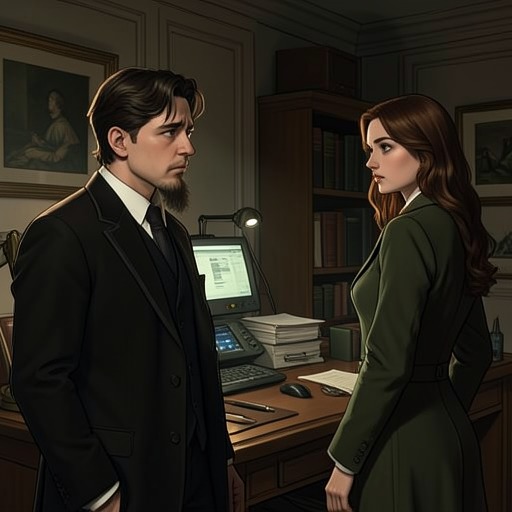
That distinction is central to Pip’s account. The boy leaves his first visit thinking about how Estella might judge Joe’s coarse hands and boots, and falls asleep as if the brief encounter had already become a long-standing memory. The adult narrator identifies this as the beginning of a change in his sense of himself. He refuses to reduce responsibility to a single cause: Miss Havisham, his sister, and Pip himself may all have contributed to his shame, but the change happened, and its consequences could not simply be argued away.
Home Recalled Through Shame and Loss
The alteration in Pip’s memory of home is especially stark. Before his visits to Satis House, he had imagined the parlour as a fine saloon, the front door as a ceremonial entrance, the kitchen as respectable, and Joe’s forge as a bright road to adulthood and independence. Within a year, he sees the same domestic world as coarse and common, and dreads the possibility that Miss Havisham and Estella might see it too. What changes is not the forge or kitchen, but the standard by which he remembers and judges them.
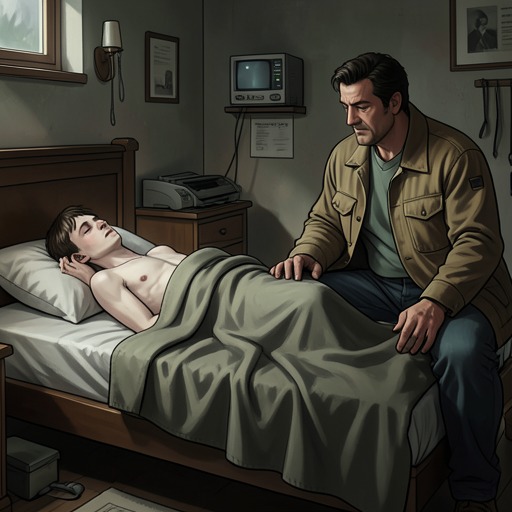
Later, when Pip’s expectations collapse and he recognizes that he has deserted Joe, memory turns from social embarrassment to moral pain. He understands that the convict whose arrival has overturned his imagined future is the benefactor for whom he abandoned the people who had cared for him. His retrospective account makes this recognition a measure of the gulf between the identity he aspired to and the loyalties he neglected. When Joe nurses him through illness, Joe’s tact and kindness impress him; Pip also comes to see that his own past conduct has given Joe reason to fear that renewed prosperity will again make him cold and distant.
Satis House as a Place of Repeated Memory
Satis House stores childhood memory in its physical details. On Pip’s early visits, he enters through a side door while chains bar the great front entrance; dark passages and a single candle lead him through the house. In Miss Havisham’s room, both the watch and a clock have stopped at twenty minutes to nine. In another darkened chamber, a neglected feast table, a cobweb-covered centerpiece, dust, mould, and creeping insects make the house seem suspended at the instant its life ceased. The setting makes the past palpable, but it does not make it recoverable.
When Pip later returns and spends the day with Miss Havisham and Estella, the old place reactivates his earlier attachment. In the garden, he is still trembling and devoted to Estella, while she remains composed. The visit also brings back the unresolved emotional history between Miss Havisham and Estella: after their confrontation, Pip cannot sleep in the separate building across the yard. In the night he sees Miss Havisham move through the passage with a bare candle, hears her low cry and footsteps overhead, and remains trapped in the dark until daylight. Later visits do not revive the quarrel, though Pip believes that fear has entered Miss Havisham’s manner. The house thus preserves both repeated appearances and signs of change; its atmosphere is not proof that its inhabitants can return to their former lives.
Revising the Past and Its Fantasies
Pip’s memories of Estella reveal how recollection can carry an old illusion into the present. As a boy, he turns Satis House in his imagination into a scene for romantic rescue: he pictures himself restoring the dark rooms, restarting the clocks, clearing away cobwebs, and winning the princess. The adult narrator explicitly separates that fantasy from the truth of his feeling. He says he loved Estella because he found her irresistible, even while knowing that the attachment worked against reason, hope, peace, and happiness. Retrospection does not erase the youthful idealization; it exposes its limits.
The same self-correction appears when Pip recognizes what his expectations had concealed. Miss Havisham had not intended him for Estella: in his later understanding, he had been used as an instrument in her hostility toward her relatives and as a model on which Estella could practise emotional indifference. Yet the sharper wound is Pip’s awareness that his pursuit of an imagined future had led him away from Joe. The past becomes more painful as its moral relations become clearer: what seemed like advancement had carried a debt of gratitude that Pip failed to honor.
Return, Recognition, and What Remains
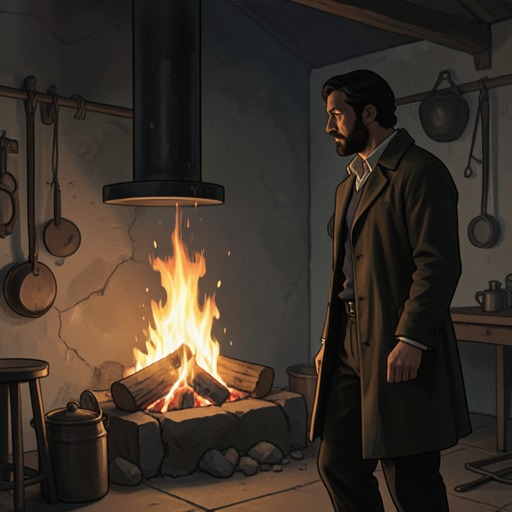
After eleven years without seeing Joe or Biddy, Pip returns to the old kitchen on a December evening. He looks in unseen and finds Joe by the fire, older only in his grey hair, with a small child sitting beside him on Pip’s old stool. Joe explains that the boy has been named Pip for his sake. The scene gives memory a living continuation: the remembered kitchen remains recognizable, but family life has gone on without the returning visitor at its center.
The next morning, Pip takes the child for a walk and brings him to the churchyard, where the boy points out the gravestone of Philip Pirrip and Georgiana. The return joins the present child to the names and losses embedded in Pip’s childhood, but it does not make the dead recoverable. When Pip later says that he has forgotten nothing that ever held a foremost place in his life, he distinguishes remembering from remaining trapped: the old dream, he tells Biddy, has passed. At the same time, he privately intends to visit the site of Satis House for Estella’s sake.
That final return is not to a standing mansion. The house and brewery are gone; only the garden wall remains, and old ivy has rooted again among the low mounds of ruin. Pip can still trace where the house, brewery, gate, and casks once stood. There he meets Estella, changed by suffering and no longer bearing the same proud hardness he remembers. Sitting together on a bench, they recognize that they have both returned to the place of their first meeting, though neither has visited it since. Memory here is neither simple nostalgia nor a reversal of time. It makes change legible: the childhood landscape has vanished, Estella has changed, and Pip can encounter the past without mistaking its remembered form for a future still waiting to be claimed.