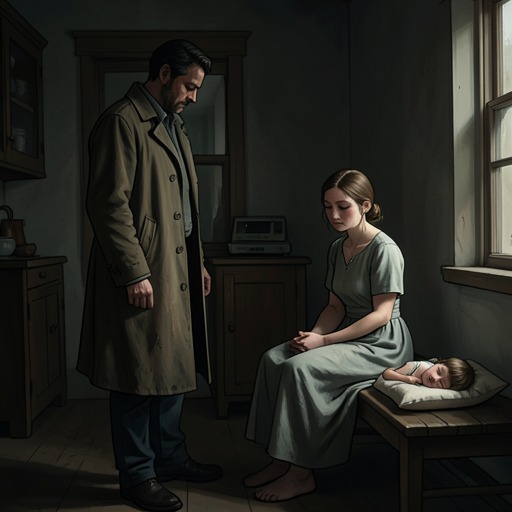
Pip (Philip Pirrip)
Great ExpectationsPip (Philip Pirrip), born Philip Pirrip and named for the shortened form his infant speech made of his full name, is the novel’s central character and retrospective first-person narrator. Orphaned before he can remember his parents, he first understands his identity through their tombstones in a churchyard on the marshes; the novel then follows how an early sense of vulnerability becomes entangled with social ambition, class shame, and a lasting capacity for moral self-correction.
Identity and Background
Pip explains that he called himself Pip because his infant tongue could not make either of his names longer or clearer. His father’s family name comes to him through the tombstone and his sister, Mrs. Joe Gargery, who married the blacksmith. Having never seen his parents or any likeness of them, he imagines their appearance from the lettering on their graves. Five small grave markers for his infant brothers likewise become the basis of a child’s fanciful ideas about them.
His first vivid awareness of the world arrives on a raw afternoon in the marsh country. He identifies the churchyard, the graves of his parents and brothers, the flat marshes, the river, and the distant sea; at the end of this first landscape of memory, he recognizes the frightened child himself as Pip. The opening places his personal identity among absence and loss, while grounding his childhood in the particular geography of churchyard, marsh, river, and sea.
Childhood, Class Shame, and Apprenticeship
An early visit to Miss Havisham’s house sharpens Pip’s sensitivity to rank. When Miss Havisham asks Estella to play cards with him, Estella objects that he is a common labouring-boy. Pip later tells Joe that he has been called common, knows that he is common, and wishes he were not. He also connects his lies to the shame and confusion stirred by the visit, though he cannot yet explain that connection clearly.
The adult narrator links this susceptibility to his childhood upbringing. He recalls a long-running sense that Mrs. Joe’s harsh treatment was unjust, and argues that children perceive injustice intensely because their world is small. His recollection presents that sensitivity as part of the reason he became morally timid and easily wounded. The episode at Miss Havisham’s does not create his responsiveness to humiliation from nothing; it gives that old vulnerability a new social vocabulary.
Pip’s shame then alters his understanding of home. Although it had not always been pleasant because of Mrs. Joe’s temper, Joe had made it feel sanctified: the parlour, front door, kitchen, and forge had once carried promise and dignity for him. Within a year, he sees them as coarse and common and does not want Miss Havisham or Estella to see them. He later admits that he cannot settle how much of the change was his own fault and how much belonged to the influence of Miss Havisham or his sister; what he can acknowledge is that the change in him was real.
When he enters his apprenticeship to Joe, the future he had once imagined as happy and distinguished feels instead like a life of drudgery. He says that he never complained to Joe during his indentures, a restraint he counts among the few things he is glad to remember about that period. The adult account makes this a crucial contrast: Pip’s outward path toward a trade is steady, but his inward sense of class and belonging has already been unsettled.
Expectations, Love, and Self-Deception
Pip’s hopes of social advancement take on a romantic shape around Estella and Miss Havisham’s house. He imagines Miss Havisham intends to bring him and Estella together, and casts himself as the young knight who will restore the darkened, neglected house. He recognizes in retrospect that this fantasy was his own construction: Estella inspired it, but he did not imagine her possessing qualities she did not have. His adult narration distinguishes the force of his attachment from any reasonable basis for it.
He remembers loving Estella despite knowing that the attachment worked against reason, promise, peace, hope, and happiness. The retrospective voice does not present his love as proof that Estella was ideal, but as evidence of how little his recognition of its costs could restrain him. That distinction also clarifies his wider pattern: he could see some of the facts of his situation while continuing to invest his hopes in an imagined future.
The narrator similarly revises his earlier certainty about his expectations. After learning of his fortune, he becomes gloomy even as Joe and Biddy return to their cheerful ease; he suspects that dissatisfaction with himself may lie beneath his dissatisfaction with them. He also remembers feeling offended by their kind attention, as though their looks expressed mistrust, though he acknowledges they did not say or signal anything of the sort. His adult account exposes the misreading as his own, rather than evidence of their disloyalty.
Crisis and Moral Recognition
When Pip learns that Miss Havisham’s supposed plans for him were a dream and that Estella was not intended for him, his expectation collapses. More painful still, he realizes that in pursuing his imagined rise he has deserted Joe. He cannot take comfort in returning to Joe and Biddy, because his awareness of his own conduct stands between him and the simplicity and fidelity he had once taken for granted.
This recognition changes the meaning of his expectations. The fortune and gentlemanly future had seemed to promise an escape from his origins; the crisis reveals the relationships and responsibilities that the pursuit has damaged. The adult narrator’s account repeatedly places his earlier assumptions beside the knowledge gained afterward, making self-correction—not social advancement alone—the measure of his development.
Work, Relationships, and Ending
Pip’s later life takes shape through work and renewed connection rather than the grand social ascent he once pictured. After selling his possessions, he sets aside what he can toward an agreement with his creditors, who give him ample time to repay them. He leaves England, joins Herbert, and becomes a clerk at Clarriker and Co. Within four months he assumes his first undivided responsibility, taking charge of the Eastern Branch while Herbert is away to marry Clara. In time Pip becomes a partner in the firm.
Pip describes the business as respectable and successful without being grand or immensely profitable. He lives frugally, pays his debts, and keeps up a constant correspondence with Joe and Biddy. When Clarriker eventually reveals to Herbert that Pip had secretly enabled his partnership, Herbert is deeply moved and surprised; the concealment does not damage their friendship. Pip also reassesses his old judgment of Herbert’s ability, concluding that the supposed inaptitude may have been his own mistake.
At the novel’s close, Pip meets Estella in the ruined place. They agree that they are friends and will remain friends while apart. They leave together as evening mists rise; the narrator recalls the morning mists that rose when he first left the forge and sees no shadow of another parting from Estella. The ending offers neither the fulfillment of his youthful romantic fantasy nor a return to his former ambition. Instead, Pip’s final outlook rests on friendship, remembered loss, work, and a more sober understanding of what he owes to others.
Narrative Role and Significance
Pip’s retrospective narration creates a sustained contrast between the boy who misunderstands his circumstances and the adult who can name the consequences. He recalls how a single day changed the course of his life, imagining its first link as the start of a chain that might be made of iron or gold, thorns or flowers. That image suits a narrative in which early experiences lead toward outcomes the child cannot interpret, while the adult narrator can identify their lasting effects.
His story complicates the idea that personal advancement amounts to moral growth. Class aspiration makes Pip ashamed of Joe and his home, and his imagined future with Estella encourages him to misread both her and the people who care for him. His later acknowledgments of those errors, repayment of debts, work alongside Herbert, and continuing correspondence with Joe and Biddy shift the terms of success from status toward responsibility and loyalty.