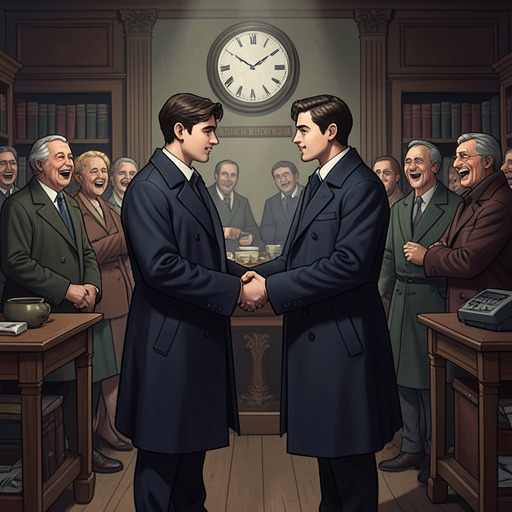
Pip and Herbert plan to get Magwitch out of England
Great ExpectationsPip and Herbert Pocket plan to get Magwitch out of England after recognizing that his return has placed his life, Pip’s freedom from the arrangement, and their own choices under immediate pressure. The plan is an ethical turning point: although Pip is distressed by Magwitch’s presence and had imagined withdrawing from him, he accepts that he must first try to protect the man who risked everything to find him.
Causes and Stakes
Magwitch’s return is not merely a private revelation. He is a transported convict who has come back to England despite the danger, driven by the long-held purpose of making Pip a gentleman. Pip understands that Magwitch’s appearance has tied his own fortunes to a fugitive’s fate, and he finds the proximity frightening and repellent. Yet the threat is not only that Magwitch may be discovered. Herbert identifies a second danger: if Pip rejects Magwitch and destroys the purpose for which he returned, Magwitch might deliberately put himself in the way of capture.
Herbert’s warning gives shape to a fear Pip has already carried since the night Magwitch arrived. Pip has imagined Magwitch getting himself caught, and recognizes that he would feel responsible even if the arrest happened without his consent. The prospect makes him pace rather than sit still. His dilemma is therefore not simply how to escape an unwanted benefactor; he believes that abandoning Magwitch could help bring about his death, while keeping him nearby leaves both men exposed.
The legal risk makes delay consequential. Magwitch had been warned that he was banished for life and that returning to England would be a felony carrying the severest punishment. Pip also recalls an earlier encounter with another convict, which he relates to Herbert as evidence of Magwitch’s determined and dangerous past. The memory helps Herbert assess the risk of Magwitch’s response to disappointment, but it also underlines how little Pip actually knows about the man whose fortune has shaped his life.
The Decision to Get Him Away
Herbert names the first priority: Magwitch must be taken out of England. Pip, he says, will have to go with him, because Magwitch may be persuaded to leave if Pip accompanies him. The proposal does not resolve Pip’s fear that Magwitch could return, but Herbert argues that making him reckless in England, with Newgate close by, would be more dangerous than getting him away first. If a pretext for departure could be found in the other convict or another part of Magwitch’s life, it might help make the plan possible.
Pip responds by exposing the personal cost of the scheme. He says he knows almost nothing of Magwitch’s life and has been driven nearly to distraction by seeing him before him, so closely bound to his fortunes and misfortunes yet known to him mainly as the frightening figure from his childhood. His wish to be free of the situation remains real. He says he would rather have worked at Joe Gargery’s forge all his life than have come to this. But the wish to escape cannot settle the immediate question of what should be done.
Herbert presses the moral sequence of their response: they must first save Magwitch from throwing away the life he risked for Pip; only after getting him out of England should Pip try to extricate himself. Pip accepts this order of duties. The decision does not mean that his fear or aversion has vanished. Rather, he agrees to act despite them, treating Magwitch’s safety as the first obligation and his own release as a later problem.
Learning Magwitch’s History
Once they have agreed on the goal, Pip turns to the gap in his knowledge. He tells Herbert that the only course he can see is to ask Magwitch directly about his history. Herbert approves, and they arrange to ask him at breakfast the following morning, since Magwitch has said he will come.
The next morning’s circumstances sharpen the contrast between Magwitch’s hopes and Pip’s plans. Magwitch arrives with a jack-knife, eats breakfast, and speaks eagerly of plans for his gentleman’s advancement. He urges Pip to begin using a pocket-book he has left with him and treats their present rooms as temporary, recommending that Pip seek fashionable lodgings near Hyde Park. Against this forward-looking vision, Pip and Herbert have resolved to get Magwitch out of the country. Their planned question is a first attempt to understand the man as a person, not only as the convict from Pip’s childhood or the source of his expectations.
What the Plan Means
The escape plan is shaped by the novel’s reversal of Pip’s expectations. The identity of his benefactor had been kept secret under a strict prohibition against inquiry; now Pip knows that the fortune came from a returned convict whose presence makes the future perilous. The secrecy that once allowed Pip to imagine a different, more genteel origin for his rise gives way to direct responsibility for Magwitch’s safety.
Herbert’s role is practical and moral at once. He does not dismiss Pip’s fear or tell him that separation is impossible. Instead, he identifies the danger in abandoning Magwitch, proposes a concrete first objective, and promises that the two friends will face Pip’s own predicament together afterward. Their handshake brings temporary relief because it converts an overwhelming problem into an agreed course of action. The plan thus marks a change in Pip’s relation to his expectations: he cannot simply take the benefits while refusing the human consequences attached to them.
The decision leads into an attempted escape by river. Pip and Herbert arrange to travel with Magwitch toward the lower reaches of the Thames, hoping to meet a steamer bound for Hamburg or Rotterdam and get him abroad. That later attempt does not secure his freedom: he is captured, and the return-to-England law results in his death sentence. The failed outcome gives the plan its tragic weight, but does not erase the choice at its center: before trying to free himself, Pip undertakes to do what he can for the life Magwitch has risked on his account.