Pip—Orlick antagonism
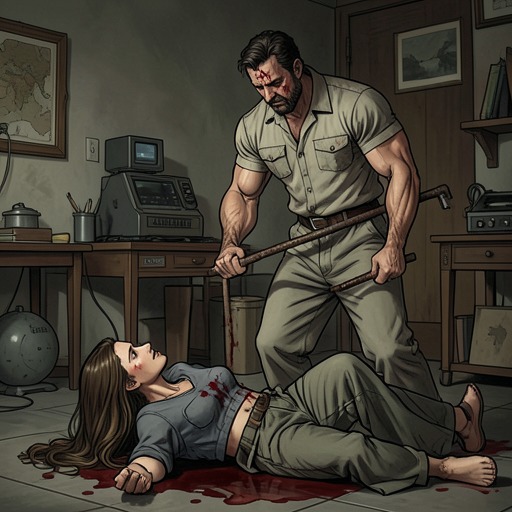
Great ExpectationsPip—Orlick antagonism grows out of their shared place in Joe Gargery’s forge: Orlick is the older, resentful journeyman, while Pip becomes Joe’s apprentice and a rival for the master’s attention. Their conflict is marked by intimidation and suspicion rather than an openly declared feud. After Pip’s sister is attacked, Pip considers Orlick a possible culprit but cannot establish his guilt. The relationship therefore links the forge’s everyday rivalries to a more serious, unresolved fear, while also showing how Pip’s shame about his working-class home and his shifting ambitions color his judgments of those around him.
Origins at the Forge
Orlick works for Joe at weekly wages and is described as broad-shouldered, strong, slow-moving, and habitually slouching. His manner makes him seem isolated from the forge’s ordinary rhythms: he appears to drift in and out without purpose, and spends Sundays lying on sluice gates or standing by ricks and barns. The account also notes his habit of claiming the name Dolge, which the narrator regards as a deliberate affront to the village’s understanding. These details establish Orlick as an abrasive presence before the conflict with Pip becomes explicit.
Orlick had disliked Pip since Pip was small and timid. He frightened the child with stories about a devil in a dark corner of the forge and a live boy being needed as fuel for the fire. When Pip became Joe’s apprentice, Orlick’s dislike apparently sharpened; Pip suspects he may have feared being displaced. Orlick does not openly announce such hostility, but Pip notices that he directs sparks toward him and deliberately comes in out of time when Pip sings the blacksmiths’ song Old Clem. The narrator presents these acts as the evidence from which the boy infers antagonism, rather than as a formal declaration of rivalry.
A Dispute over the Half-Holiday
The tension becomes more visible when Pip asks Joe for a half-holiday. Orlick is at work beside Joe, with a piece of hot iron between them and Pip at the bellows, when he protests that Joe should not favor the younger apprentice. Although Orlick calls himself Old Orlick, the narrator estimates that he is about twenty-five. His complaint turns a small workplace decision into a contest over whose claim to Joe’s consideration will prevail.
When Joe tells him not to lose his temper, Orlick insists that he may do so if he likes and complains about people who are getting above themselves. He then draws a red-hot bar from the furnace, swings it threateningly toward Pip, and hammers it on the anvil. The act makes his resentment physically alarming, even though the scene ends without an actual attack on Pip. Joe refuses to discuss the holiday until Orlick is calmer, and asks whether he is all right afterward.
Pip’s sister, who has been listening from the yard, condemns Joe for giving holidays to idle workers and declares that she wishes she were Orlick’s master. Orlick retorts that she would be everybody’s master if she dared. Her anger then turns on both Joe and Orlick, whom she insults. This exchange broadens the antagonism beyond the two men: the dispute reveals how easily authority, wages, and perceived favoritism can ignite hostility within the household and workplace. It also gives Orlick an openly confrontational exchange with Pip’s sister, a fact that later figures in Pip’s suspicions.
Suspicion after the Attack
After Pip’s sister is assaulted, a filed convict’s leg-iron is found beside her. Joe examines it as a blacksmith and judges that it had been filed some time earlier; the authorities confirm that it came from a prison ship but was not worn by either of the two convicts who escaped the previous night. Pip recognizes it as the iron he had seen and heard his childhood convict filing on the marshes. He does not believe that convict used it in the attack. Instead, he privately considers two possible possessors: Orlick or the strange man who had shown him the file.
The evidence does not settle the question. Orlick had gone into town, had been seen in several public houses, and returned with Pip and Mr. Wopsle. Pip recognizes that nothing directly implicates him beyond the quarrel with Pip’s sister, who had often quarreled with people around her. Pip also considers whether the strange man might have returned for his banknotes, but notes that Pip’s sister had been ready to give them back and that the assailant acted without a preceding argument. In retrospect, Pip calls the possibility that he had supplied the weapon—unintentionally—a source of distress, but he cannot bring himself to tell Joe the whole story. His inability to disclose what he knows leaves the suspicion alive without turning it into proof.
The relationship is consequently shaped by an evidentiary gap. Orlick’s earlier hostility gives Pip reason to suspect him, and the weapon links the attack to Pip’s own secret history, but the account does not confirm that Orlick committed the assault. Pip’s retrospective narration distinguishes suspicion from knowledge: he recounts both the grounds for his inference and the facts that prevent him from treating it as certain.
Continuing Distrust
After Pip’s sister loses the ability to speak, she communicates by drawing signs on a slate. When Biddy works out that a hammer represents Orlick, she and Pip bring him into the kitchen. Orlick lays down his hammer, wipes his brow, and comes in with his characteristic loose, slouching gait. Pip expects his sister to denounce him; instead, she appears anxious to please him and offers him a drink. She repeatedly draws the hammer on her slate in the days that follow, and Orlick continues to come in and stand before her. The scene complicates Pip’s expectation of a simple confrontation: his sister’s conduct toward Orlick is conciliatory, while Pip remains alert to the history that makes the hammer troubling to him.
Later, near the churchyard, a sluice gate, and the rushes, Orlick suddenly appears as Pip and Biddy are making their way home. He offers to see them home, but Biddy whispers that she does not like him and asks Pip not to let him accompany them. Pip shares her dislike and declines the offer. Orlick laughs and falls back, yet continues after them at a distance. Biddy explains that she fears Orlick likes her; Pip says he would think poorly of her if she welcomed his advances. The incident shows Pip’s hostility operating not only as a theory about the past attack but also as active vigilance over Orlick’s conduct toward Biddy.
Pip keeps an eye on Orlick thereafter and steps between him and Biddy when circumstances might allow Orlick to approach her. He says that Orlick has become established in Joe’s household because of Pip’s sister’s sudden fondness for him; otherwise, Pip would have tried to have him dismissed. Pip believes Orlick understands and reciprocates his interference. The mutuality is important: Pip is no longer simply a frightened child responding to an older worker’s intimidation. He deliberately monitors Orlick and intervenes, while Orlick recognizes that Pip is acting against him.
Class Aspirations and Narrative Significance
Pip’s antagonism with Orlick belongs to a period when he is torn between pride in the ordinary life available to him and the hope that Miss Havisham may make him wealthy. At moments he can see that Biddy is better than Estella and that a working life with Joe could offer self-respect and happiness. Then thoughts of Miss Havisham and the prospect of a fortune disrupt that resolution. The conflict at the forge thus unfolds alongside Pip’s growing estrangement from his home and his uncertainty about what sort of future to value; it is not merely a rivalry over workplace privileges.
The retrospective account also makes the antagonism part of a larger pattern of revision. Pip later acknowledges that his changed state of mind was real, without claiming that responsibility can be assigned simply to Miss Havisham, his sister, or himself. When he discovers that Miss Havisham’s imagined plans for him were a dream and that Estella was not intended for him, he also recognizes the pain of having deserted Joe for a condemned stranger. These later judgments do not resolve Orlick’s role in the assault, but they place Pip’s earlier suspicions within a life shaped by secrecy, mistaken expectations, and the consequences of distancing himself from Joe.
When Pip returns ill and impoverished, Joe treats him with the old kindness, and Biddy has prepared Joe to approach him tactfully. Pip is deeply moved by their care. He also comes to understand that Joe’s hold on their old intimacy begins to loosen as Pip regains strength, because Joe has reason to fear that Pip may again grow cold and cast him off. This later recognition sharpens the contrast with Orlick: the forge contains both the hostility Pip remembers and the loyalty he once failed to value. Orlick’s antagonism remains unresolved in the evidence for this relationship, but it helps frame the moral and emotional distance Pip must come to recognize between himself and Joe.