Pip’s apprenticeship indentures
Great ExpectationsPip’s apprenticeship indentures bind him to Joe’s forge, marking the end of his hopes for a different life and the beginning of a duty he comes to regard as humiliating. The document passes through several hands, is signed in a public setting that makes Pip feel like a criminal, and is finally burned when he is free to leave. Its changing meaning charts the distance between Joe’s loyalty and Pip’s aspirations, and the regret with which the adult narrator revisits his younger self’s shame.
The Binding and Its Public Ceremony
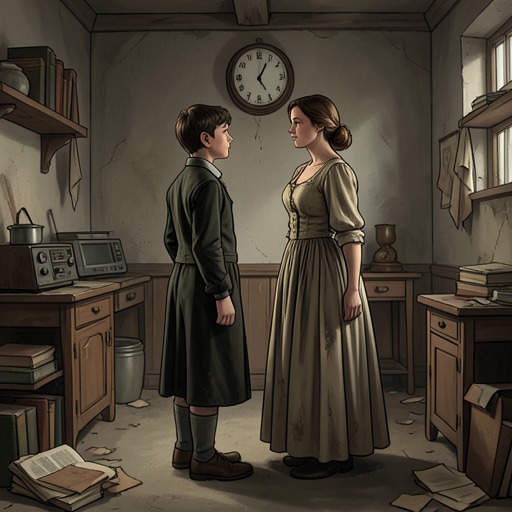
When Joe visits Miss Havisham, she asks whether he has brought Pip’s indentures. Joe explains that Pip had seen him put them in his hat, then takes them out and hands them to Pip rather than to Miss Havisham. Pip is ashamed as he accepts them, acutely aware that Estella stands behind Miss Havisham’s chair and is laughing at Joe. He then passes the papers to Miss Havisham, a small transfer that exposes how the presence of Estella has changed his feelings about Joe and himself.
The indentures are signed and attested in the Town Hall before the Justices, formally binding Pip as Joe’s apprentice. The ceremony is less a private agreement than a public spectacle in Pip’s experience: Pumblechook pushes him through a crowd, and onlookers assume he has been caught committing a crime. The Hall itself seems to him like a strange courtroom, with raised pews, spectators leaning over them, and Justices sitting among newspapers and snuff. The official act makes his apprenticeship legally real while surrounding it with an atmosphere of accusation and punishment.
A Changed Idea of Home and Work
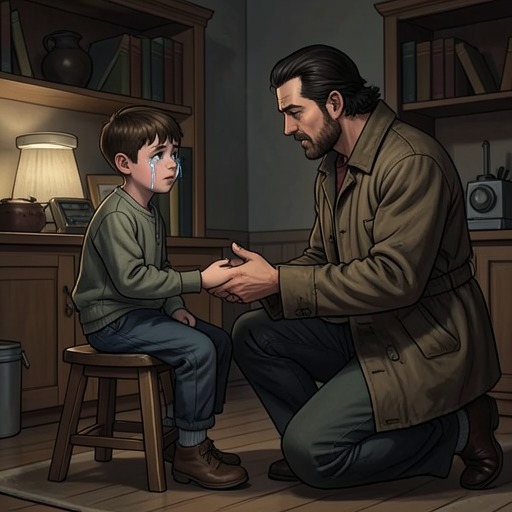
Pip had once imagined becoming Joe’s apprentice as a distinction that would make him happy. Once the indentures take effect, however, he sees only the coal dust and the weight of a future stretching straight ahead. The forge, which had seemed a road to manhood and independence, now represents a life he fears will be dull and confining. Though he feels deeply dejected on the first working day, he does not complain to Joe during the period of his apprenticeship; the adult narrator identifies this restraint as one of the few things about that time of which he is glad.
The change extends beyond work to Pip’s idea of home. He had once regarded the parlour, front door, kitchen, and forge as places of dignity and promise, with Joe lending the household its warmth. After visiting Miss Havisham and Estella, he judges the same surroundings coarse and common, and does not want them to see it. Looking back, he refuses to settle whether his altered outlook was his own fault, Miss Havisham’s influence, or a consequence of his sister’s temper. What matters to him is that the change took place, and that the indentures now signify the life he has learned to despise.
Separation and Release
As Pip prepares to leave, Joe and Biddy respond sympathetically when he speaks of their approaching separation, though they raise the subject only when he does. After breakfast, Joe takes the indentures from the press in the best parlour, and the two of them put them in the fire. Their destruction marks Pip’s emancipation from the apprenticeship and clears the way for his departure. The physical ending of the document therefore comes at a moment when the emotional distance between Pip and Joe has already grown.
Pip’s changing fortune does not make that distance simple. When Joe and Biddy congratulate him on his expectations and the prospect of becoming a gentleman, their cheerful ease leaves Pip gloomy; he suspects that his dissatisfaction may be with himself rather than with his good fortune. Later, after learning that Miss Havisham’s supposed designs for him and Estella were only an illusion, he recognizes that he had deserted Joe for a future that was never promised. The adult narrator recalls the indentures not merely as a contract that ended, but as part of the chain of choices through which one memorable day altered his course and estranged him from the home he had once valued.