Pip’s encounter with the escaped convict
Great ExpectationsPip’s encounter with the escaped convict is the formative meeting that turns a lonely walk through the marshes into a fearful secret and an act of assistance. The fugitive’s threats compel the child to steal food and a file, yet the episode is more than a simple coercion: it sets Pip’s conscience against his terror and introduces the convict as a vulnerable, hunted man as well as a danger. Its images of mist, hunger, iron, and pursuit return in Pip’s memory, linking the marshland encounter to later reckonings with his past.
The churchyard encounter
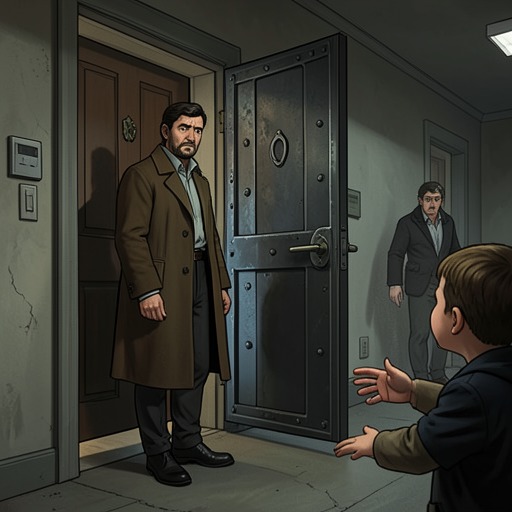
Pip is alone among the graves on a raw afternoon, discovering the names of his dead parents and siblings on the tombstones, when a man rises beside the church porch and orders him to keep quiet. The fugitive is dressed in coarse grey, hatless, mud-soaked, and lame, with broken shoes, a rag tied around his head, and a great iron on his leg. His body bears the marshland’s injuries: he has been soaked, cut by flints, stung by nettles, and torn by briars. His teeth chatter as he seizes Pip by the chin, making the encounter’s physical imbalance immediate: a frightened child is in the grip of an exhausted adult who can still hurt him.
The man threatens to cut Pip’s throat, and Pip begs him not to. The scene begins with terror, but the fugitive’s needs soon shape the threat into a demand. He orders Pip to bring a file and food early the next morning and to meet him at the Old Battery, a place Pip knows across the marshes. He warns the boy not to speak or signal about having seen him, and makes the consequence of disobedience grotesquely explicit: he threatens to tear out Pip’s heart and liver. The image is terrifying partly because it fastens an adult’s violence onto a child’s own body and imagination.
The fugitive amplifies the threat by claiming that a second, hidden young man is with him. He describes this supposed companion as even more dangerous, able to find a boy wherever he might hide and reach him even in bed. Whether this warning is meant to intensify Pip’s fear or reflects the fugitive’s own alarm, it makes the marsh feel occupied by unseen danger. Pip agrees to bring what he can, and the man makes him swear by calling on the Lord to strike him dead if he fails. The child’s promise is therefore extracted under threat, but it will also become a lasting obligation in his memory.
The stolen provisions and meeting at the Old Battery
At dawn, Pip slips downstairs through a house whose creaking boards seem to call after him to stop and alert Mrs. Joe. The pantry is unusually well supplied for the season, and he steals bread, cheese, mincemeat, brandy, a meaty bone, and a pork pie. He hesitates over the pie because it has been carefully put away in a covered earthenware dish, but takes it in the hope that it will not be needed soon or missed. From the kitchen door that connects with the forge, he obtains a file from among Joe’s tools, then restores the fastenings and runs toward the misty marshes.
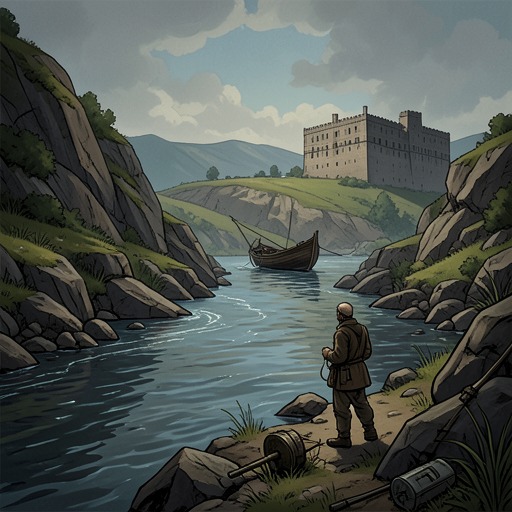
The morning’s heavy wet and thick mist sharpen Pip’s sense of guilt. A direction post is invisible until he is almost beneath it, while the damp on the hedges and grass resembles webs. To his troubled conscience, the mist seems to consign him to the prison hulks. The landscape thus does not merely conceal the fugitive; through the child’s frightened perception, it also gives shape to his fear that his own secret act will lead to punishment.
On the way, Pip encounters another convict, likewise dressed in coarse grey and wearing an iron on his leg. This man is lame and hoarse, swears at Pip, and makes a weak blow that nearly knocks him over before stumbling away into the mist. Pip identifies him as the young man the first fugitive had warned about. The sight seems to confirm the threat, while the second man’s sudden disappearance leaves Pip with no time to learn more.
At the Old Battery, Pip finds the first fugitive waiting, hugging himself and limping back and forth in the cold. The man looks so hungry that Pip imagines he might eat the file if he had not noticed the food. This time he does not turn Pip upside down to search him. Pip opens the bundle and empties his pockets, handing over what he has stolen. The fugitive asks what is in the bottle; Pip answers that it is brandy. His practical assistance is still the product of a promise made under duress, but the scene also gives the reader a view of the man’s immediate physical desperation.
Hunger, suspicion, and the changed balance of the encounter
The fugitive eats the mincemeat, bone, bread, cheese, and pork pie all at once. Even while gobbling down the food, he watches the mist distrustfully and repeatedly stops, sometimes pausing with his jaws still. A clink from the river or a sound like an animal breathing on the marsh is enough to startle him. He asks whether Pip has deceived him or brought anyone along. The man who had threatened a child at the churchyard is himself alert to capture, listening for danger in a landscape where sound and sight offer uncertain warning.
The food and file answer an immediate need, but they do not end the encounter’s unease. Pip has had to take supplies from his home and Joe’s forge without permission, conceal the reason, and carry the possibility of being discovered across the marshes. The fugitive’s demands and his suspicion make the meeting a compact drama of unequal power: Pip can choose only within limits imposed by threats, while the starving man depends on the boy’s compliance. The act is simultaneously frightened obedience and real material help.
Memory and narrative significance
The episode is narrated by Pip as a memory of childhood, so its terror is presented through the boy’s limited understanding and the older narrator’s retrospective awareness of how the scene mattered. The child sees the fugitive’s iron, injuries, hunger, and threats before he can understand the full history behind them. In that first meeting, the convict is at once a frightening stranger and a person exposed by cold, hunger, and the risk of capture. Pip’s response begins in panic, but the promise he makes and the provisions he brings give the encounter consequences beyond the moment itself.
The landscape’s mist becomes part of that remembered moral atmosphere. It hides the second convict, obscures the direction post, and turns Pip’s unease about theft into an image of impending punishment. The file links the marsh episode to Joe’s forge, while the stolen food carries the fugitive’s need into Pip’s home and kitchen. Domestic space and the open marsh are joined by the boy’s secret passage between them.
The meeting also establishes a recurring pattern of fear and recognition. Years later, when Pip returns to Satis House, the old rooms and their influences revive the memories of his childhood expectations; during his walk in the neglected garden, he and Estella approach the spot where he once fought the pale young gentleman, now known as Herbert. The recalled fight belongs to the larger history of Pip’s first visit, but it shows how places encountered in childhood remain charged with later knowledge. More starkly, during a sleepless night at Satis House, Pip sees Miss Havisham moving with a bare candle through the passage and hears her continual low cry until daybreak. The vision of the house’s arrested grief is not the marsh encounter itself, but it belongs to the same retrospective pattern: places and images from Pip’s earlier life return with renewed force as he comes to understand what those experiences concealed.
The decisive significance of the convict encounter lies in this combination of coercion and care. Pip does not approach the man freely, and the threat is real; nevertheless, he carries food and a file into the marsh and gives them to someone cold, hungry, and hunted. The child cannot yet interpret the whole meaning of that act, but the narrative makes the first meeting a source of lasting moral and emotional consequence. Its opening image is a man gripping Pip by the chin; its remembered force extends beyond that moment, as fear, secrecy, and the obligation created at the Old Battery become part of Pip’s history.