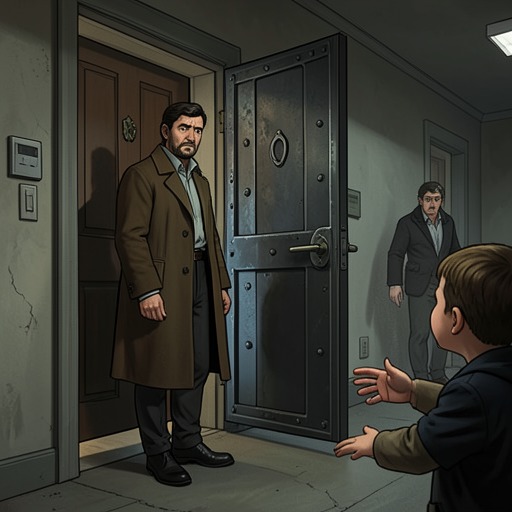
Pip’s obligation to the convict
Great ExpectationsPip’s obligation to the convict is a promise extracted from a frightened child and the first consequential secret he keeps from Joe. He agrees to bring food and a file to an escaped prisoner at the Old Battery, and follows through the next morning by taking provisions from the pantry and a tool from Joe’s forge. The promise begins in fear, but its effects last well beyond that first errand: it shapes Pip’s guilty silence, resurfaces when the prisoner’s identity is revealed, and helps expose the moral debt hidden beneath Pip’s expectations.
The demand at the churchyard
The obligation begins when the escaped prisoner asks Pip whether he knows what a file is and whether he can get one. He then demands both a file and food, instructing Pip to bring them early the next morning to the Old Battery. His threats make the promise feel compulsory: Pip is warned not to tell anyone he has seen the man, and is told that failure or even a small deviation will bring severe consequences. The prisoner also invokes a second, supposedly more dangerous young man hiding nearby, using the threat to intensify Pip’s fear.
Pip answers that he will bring the file and whatever broken pieces of food he can obtain. The prisoner requires him to swear that he will do so, then repeats the terms as Pip leaves: he must remember what he has undertaken and get home. The promise is therefore not a considered bargain between equals. It is a frightened child’s submission to an adult’s demands, reinforced by secrecy and threats.
The morning errand
At first light, Pip takes food from the unusually well-stocked pantry, including bread, cheese, mincemeat, brandy, a meat bone, and a pork pie. He also enters the kitchen’s communicating door to the forge and takes a file from among Joe’s tools. He replaces the door’s fastenings and leaves for the misty marshes, carrying out both parts of the undertaking rather than merely agreeing to it.
The errand binds two kinds of wrongdoing together in Pip’s mind. He has stolen provisions from his home and taken a tool from Joe, while the threat of exposure and punishment has made him feel that he cannot simply refuse. The promise is fulfilled in secret, but fulfillment does not bring relief: it leaves Pip responsible for concealment and fearful of what his actions may mean.
Discovery and the burden of silence
When the escaped prisoners are later taken to a hut by the landing-place, Pip’s convict explains that he stole food from the blacksmith’s. He identifies the source as Joe’s, and the sergeant’s response turns Joe’s attention to Pip. The disclosure connects the convict’s account directly to the theft Pip has been hiding, though the immediate scene does not make Pip confess.
After the theft is unexpectedly pardoned, Pip remains unwilling to tell Joe the truth. He does not recall feeling tenderness of conscience toward Mrs. Joe once the fear of being caught has passed, but his attachment to Joe makes silence harder. Pip imagines that a confession would permanently alter the easy intimacy they share: ordinary moments by the fire, or Joe’s passing remarks about food and drink, would become occasions for suspicion in Pip’s mind. He recognizes, in retrospect, that fear of losing Joe’s confidence keeps him from doing what he knows is right. The obligation thus continues as an inward burden even when its practical task is over.
The secret transformed by the return
Years later, Pip learns that the person behind his expectations is the escaped convict himself. The revelation recasts the early promise: the frightened child who supplied food and a file has grown into a young man whose life and supposed fortune have been shaped by the same person. Pip had accepted strict instructions not to inquire into the benefactor’s identity, and the secret had been held by the benefactor and Mr. Jaggers. Once the convict returns to England, Pip understands that his belief in a different source for his rise in fortune was mistaken.
The return also turns an old act of assistance into a new responsibility. The convict explains that he had been sentenced to life and that returning to England could bring the death penalty. Pip recognizes that the man’s presence in his rooms places his safety in Pip’s keeping. His first response includes shock and painful disillusionment: Miss Havisham’s supposed plans for him and his imagined future with Estella collapse, while Pip understands that he had deserted Joe for the sake of those expectations. The promise made at the Old Battery has not simply vanished with childhood; it now sits within a larger reckoning about loyalty, class aspiration, and the people Pip has wronged.
Law, consequence, and moral debt
The convict’s return is constrained by the legal consequences of his life sentence. Mr. Jaggers later confirms that he warned the convict in New South Wales that he was exiled for life, unlikely to receive a pardon, and liable to the law’s extreme penalty if he came back to England. The story’s legal framework turns Pip’s private obligation into a perilous undertaking: the man who once demanded food and a file is now a returned exile whom the law can condemn.
After the convict is captured, the prosecution depends on establishing his identity. He is taken to the Police Court, but commitment for trial is delayed while officials seek an old prison-ship officer to testify. Mr. Jaggers, acting for the prisoner, admits nothing; he believes that once the witness is present the case will be decided against them. The convict is eventually sentenced to death alongside other prisoners. In court, Pip stands beside him, holding his hand as the judge recounts his history of repeated punishment, exile, escape, return, and capture.
The convict’s wealth is also subject to forfeiture. Because he had made no written settlement in Pip’s favour before his arrest, Pip understands that he has no recognized claim to the inheritance. Mr. Jaggers considers whether they should petition for some of it, but makes clear that this case offers no grounds for expecting an exception. Pip resolves not to pursue a hopeless claim. That decision completes an important reversal: the fortune that once seemed to justify Pip’s separation from home cannot be secured as his property, while the obligation to the person who provided it persists as a matter of conscience.
Pip’s conduct toward the convict also acquires a distinct moral meaning after the expectations dissolve. The boy’s promise began under threat, but the adult Pip’s response to the man’s return is no longer explained by the original fear alone. He protects him and later keeps him from learning that his hopes of enriching Pip have failed. Joe’s kindness during Pip’s illness deepens the contrast between the loyalty Pip had taken for granted and the loyalty he now tries to offer the convict. Pip understands that the convict’s generosity had not made his own earlier abandonment of Joe right.
The episode therefore joins a childhood act of frightened obedience to the novel’s later questions about responsibility and gentility. Pip’s early assistance is concrete: food from the pantry and a file from the forge. Its lasting significance lies in how the secret expands. It first separates Pip from honest confession to Joe; later, the convict’s identity overturns Pip’s story about his own social rise and brings the law, forfeited wealth, and the possibility of death into the same moral reckoning. The obligation does not erase Pip’s fear or past disloyalty, but it becomes one of the circumstances through which he recognizes the difference between imagined status and care for another person.