Revenge and Heartbreak
Great ExpectationsRevenge and Heartbreak connects Miss Havisham’s abandoned marriage to the retaliatory upbringing she imposes on Estella. Its central irony is that a private heartbreak, preserved rather than worked through, becomes a program for hurting others: Estella is shaped into its instrument, while Pip is drawn into the emotional consequences. The theme’s force lies not only in Miss Havisham’s anger, but in how a wound is repeated across relationships and generations.
The Wound Behind the Revenge
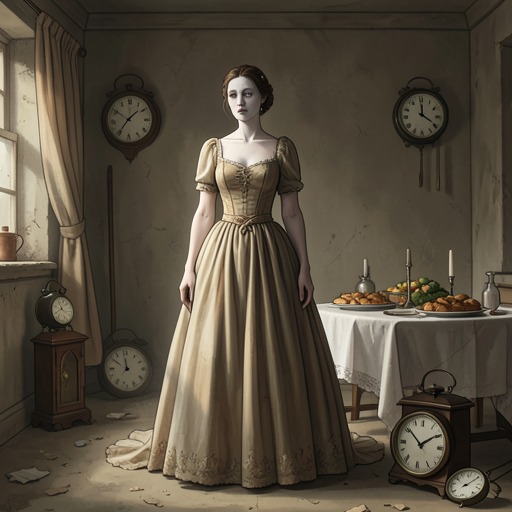
Herbert recounts the history behind Miss Havisham’s isolation. Her wedding day had been arranged down to the dresses, the wedding tour, and the invited guests, but the bridegroom did not appear. A letter ending the marriage reached her at the hour she was dressing for the ceremony: twenty minutes to nine. Miss Havisham later stopped every clock at that same time, making the moment of abandonment a fixed point in the house as well as in her life.
After recovering from a serious illness, she laid the place waste and ceased to look upon daylight. The ruined household and stopped clocks give heartbreak a material form: the past is not merely remembered but kept in place. Herbert adds that the bridegroom may have acted in concert with Miss Havisham’s half-brother, in a conspiracy whose participants shared the profits. He presents this as a supposition, not a confirmed account, and acknowledges that he pieced together what little he knows because his father avoids the subject.
Revenge Passed to Estella
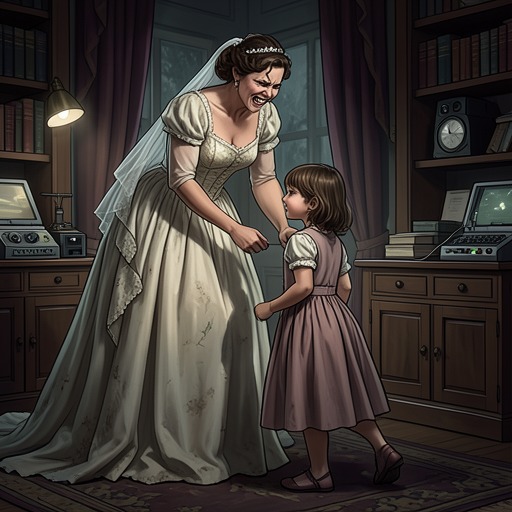
The theme becomes active when Miss Havisham’s old grievance is transferred to Estella. Herbert explains that Estella is Miss Havisham’s adopted daughter, not her blood relation, and says Miss Havisham brought her up to wreak revenge on the male sex. Estella’s hardness and pride are thus presented not simply as personal traits but as qualities cultivated within a retaliatory scheme.
Pip witnesses the pattern during his visits to Miss Havisham. Estella’s treatment of him shifts between cold tolerance, condescension, familiarity, and open declarations of hatred. Miss Havisham watches these changes as they play cards, asking Pip in a whisper whether Estella grows prettier and seeming to take greedy pleasure in his agreement. When Estella’s contradictory moods leave Pip unsure how to respond, Miss Havisham embraces her and urges her to break hearts without mercy. The scene makes revenge intimate and habitual: it is encouraged through private words, approval, and the repeated spectacle of Estella’s changing conduct toward Pip.
Repetition and Consequences
Miss Havisham’s injury is preserved through repetition. She has Pip push her in a garden chair around her room and the adjoining room, often making the same journeys again and again over visits that continue every other day for eight or ten months. The repeated circuit belongs to the broader pattern of a life arrested after abandonment; within it, the instruction to wound others also returns as a refrain. The quiet, enclosed routine contrasts with the harm its purpose is meant to produce beyond the house.
Pip is not simply an observer of this design: Estella’s changing treatment of him places him among its targets, while Miss Havisham’s pleasure makes clear that his responses matter to her. The evidence does not establish that Pip’s experience is the sole or final consequence of Estella’s upbringing, but it does show how the intended revenge reaches beyond its original source. The person who was abandoned preserves her pain by arranging for another person to inflict pain in turn.
Thematic Significance
The theme turns on the difference between explanation and justification. Miss Havisham’s heartbreak explains the origin of her grievance, and the frozen clocks make its persistence visible; neither makes the retaliatory education of Estella harmless. By presenting Estella as adopted and deliberately shaped, the account emphasizes how Miss Havisham’s response converts personal suffering into a repeated social and emotional pattern.
The narrative also marks the limits of what can be known. Herbert’s account is partial, assembled from fragments, and uncertain about the alleged conspiracy behind the failed marriage. The abandoned wedding and its aftermath are clear; the exact design of the betrayal is not. That gap leaves the original wound partly inaccessible, even as its consequences are plainly visible in the household’s arrested life and in the deliberate cultivation of heartbreak as revenge.