River Thames
Great ExpectationsThe River Thames is both a defining feature of Pip’s geography and a working route through the novel’s central changes of place and fortune. First glimpsed as the low line beyond the marshes of Pip’s childhood, it later runs beside his London chambers and becomes the planned escape route for Magwitch. Its changing scale—from distant boundary to urban waterway to a passage toward the coast—connects the story’s landscapes to movement, concealment, and the possibility of departure.
The River in Pip’s Early Landscape
In Pip’s first clear childhood impression, the river lies beyond the dark marshes, with the sea farther off. The order of that landscape matters: the churchyard and marshes establish Pip’s immediate world, while the river and sea mark widening distances beyond it. The Thames is present first as a geographical boundary rather than a route Pip can command.
London and the Urban River
Years later, Pip’s arrival in London begins a new stage of his expectations. The journey from his town takes about five hours, and the coach enters the city’s traffic near Cheapside. By the time Pip is three-and-twenty, he lives with Herbert in chambers in Garden Court, beside the river; the Thames is no longer a remote line but part of the daily setting of his unsettled London life.
The river also gives shape to Pip’s anxieties about money and obligation. When he admits to Wemmick that he may anticipate some of his expectations to fund a business venture, Wemmick counts six bridges as possible places from which to throw money into the Thames. The grim joke sets reckless spending against the alternative of helping a friend: the river becomes an imagined endpoint for money wasted, while service to another person offers a more worthwhile use of it.
During the violent storm that precedes Magwitch’s arrival, the Thames intensifies the isolation of Pip’s rooms in the Temple. Wind rushing up the river shakes the house, and the lamps on the bridges and shore shudder while fires on barges are carried away by the weather. The river’s urban presence, normally part of the city’s movement and commerce, becomes a channel through which the storm makes Pip’s surroundings feel exposed and precarious.
A Route for Departure
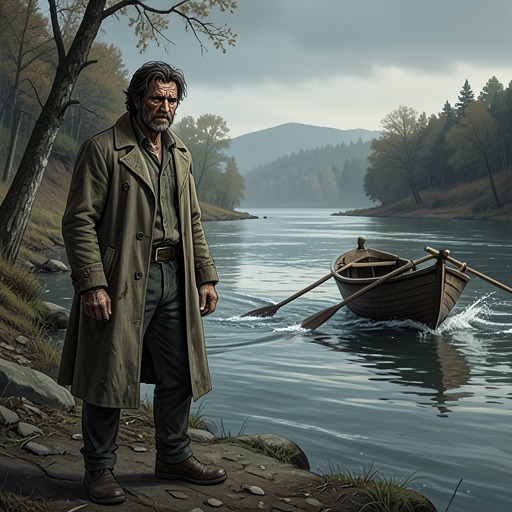
The Thames takes on a more urgent role when Pip and Herbert plan to get Magwitch out of England. They leave the Temple by boat at about half-past eight, near high water, intending to use the falling tide until three and then row against it until dark. Their route leads toward the long, comparatively solitary reaches below Gravesend, between Kent and Essex, where they plan to stay overnight before trying to hail a steamer bound for Hamburg or Rotterdam on Thursday morning. Knowing the vessels’ distinguishing marks gives the plan a practical, conditional shape: if one opportunity fails, they hope for another.
The expedition turns the river from setting into means of action. Pip takes little with him because his attention is fixed on Magwitch’s safety; Herbert rows in the bow while Pip steers. The journey depends on timing the tide, navigating the traffic, and reaching a stretch of river where an escape may be possible. But the Thames offers a route, not a guarantee: the plan’s hope rests on the possibility of reaching a steamer and leaving the country.
Narrative Significance
Across these episodes, the Thames connects the limits of Pip’s childhood view to the wider geography of adult life. It borders the marshes, accompanies his London years, and becomes part of a high-stakes attempt to escape England. Its bridges, currents, traffic, and open reaches make it materially useful, while its changing narrative roles give the river a larger significance: movement along it can suggest freedom, but every passage remains subject to circumstance and risk.