The Hulks
Great ExpectationsThe Hulks are prison ships stationed in the marshes, where they serve as a local extension of the criminal justice system and a recurring image of confinement. For Pip, they first exist as a frightening answer to a childhood question; later, he sees one receive the escaped convict whose pie he stole to help. The prison ships connect the marshes to the law’s power to capture, transport, and punish, while the returning convict’s story shows that exile does not end when a prisoner leaves England: the stigma and legal restrictions of his sentence continue to govern his life.
Definition and Setting
The Hulks are prison ships lying across the marshes from Pip’s home. Mrs. Joe explains their name to him when he asks where the firing comes from, identifying them as prison ships across the marshes. In his childhood understanding, this answer makes the water and open marshland part of a world organized by punishment: people are put aboard for murder, robbery, forgery, and other crimes, and even asking questions seems to bring Pip closer to that fate.
That fear is sharpened by the language of inevitability in Pip’s account. His sister tells him that prisoners are sent to the Hulks because they commit serious offenses and adds that they begin by asking questions. Already frightened by the escaped convict’s demand for food and a promise, Pip concludes that he is on his way to the prison ships because he has asked questions and intends to steal from the pantry. The threat is not a measured understanding of criminal law but a child’s anxious fusion of curiosity, disobedience, and punishment.
The Capture and Removal of the Convicts
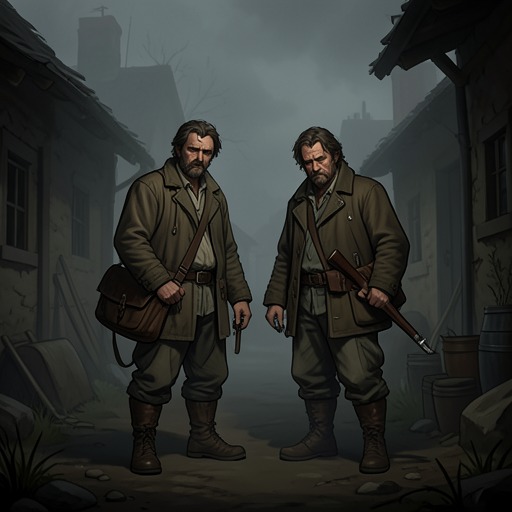
The prison ships become a real destination when soldiers organize a search for two convicts believed to remain on the marshes. Pip is present as the search party closes in. After the men are found, torches mark the route through the dark landscape, and the prisoners, kept apart under separate guards, are led toward a rough hut and landing place. The journey takes about an hour; the convicts are so exhausted that the party must stop to let them rest.
At the hut, the soldiers record their report, and the other convict is sent ahead under guard. Pip’s convict stands by the fire and speaks to the sergeant about the escape, wishing to prevent suspicion from falling on anyone who helped him. When the party reaches the landing, Joe tells him that the stolen pie was given willingly insofar as it was ever Joe’s to give. The convict acknowledges having eaten it, then boards a boat rowed by other convicts. The black prison ship waits offshore, moored with heavy chains; the prisoner is taken aboard and disappears from view. For Pip, the extinguished torches mark the end of the scene, but not the end of the convict’s connection to him.
Punishment, Exile, and Return
The Hulks belong to a larger system of imprisonment and transportation that shapes the convict’s history. Years later, Pip overhears him recalling that, after being discharged, he had promised another convict to find the boy who fed him and kept his secret, and to give that boy two one-pound notes. The other man mocks the promise, but the story makes the earlier encounter consequential: the convict remembered Pip and carried gratitude across years and distance.
The convict later tells Pip that he made his fortune in the new world as a sheep farmer, stock breeder, and through other trades. His success overseas does not restore his freedom to return. He explains that he was transported for life and that coming back to England is punishable by death. Despite the danger, he says he has come to stay, having returned to see Pip. The prison ships therefore signify more than confinement aboard vessels: they stand at the beginning of a punishment whose restrictions follow a transported person across the sea and remain in force even after he has built a prosperous life abroad.
Mr. Jaggers confirms the legal stakes when he explains that the convict had been warned in New South Wales that he was exiled for life and that appearing again in England would constitute a felony carrying the extreme penalty. He also emphasizes that the warning was given before the return. The law’s reach is thus represented through a chain of instructions, surveillance, and threatened punishment extending from the prison ships to the colony and back to England.
Legal Consequences and Narrative Significance
After the convict is captured, his case depends on formal identification. At the Police Court, he would have been committed for trial immediately if an officer from the prison ship he had previously escaped from had been available to confirm his identity. No one doubts who he is, but the required witness is absent, temporarily delaying the proceedings. The detail makes the prison ship part of the machinery of legal proof as well as the visible place of custody: the prisoner’s earlier escape must be established through an officer connected to that institution.
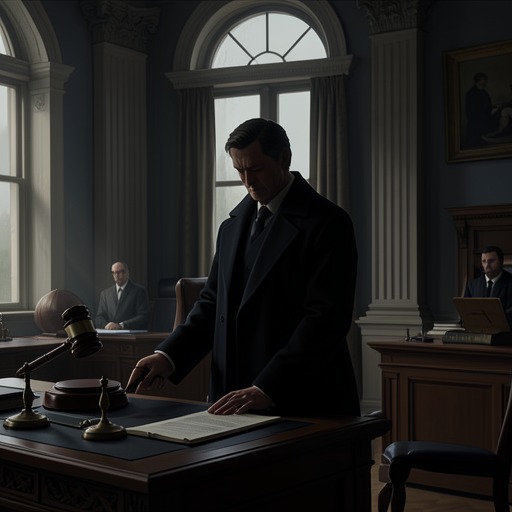
At his sentencing, the court presents his life as a sequence of offenses, imprisonments, exile, escape, apparent reform abroad, and unlawful return. Having come back to the country from which he was banished, he is denounced, later seized while trying to flee, and sentenced to death under the law governing his return. The account places his case among those of thirty-two men and women sentenced together, making his punishment part of a public judicial spectacle rather than a private reckoning.
Across Pip’s life, the Hulks recur as both an early object of terror and the origin point of a relationship he initially misunderstands. The child who imagines that a question and a stolen pie have placed him on the road to punishment grows into the beneficiary of the man he helped. Yet the benefactor’s wealth and gratitude cannot erase the legal status created by transportation. In that contrast, the prison ships give concrete form to the novel’s account of punishment: an institution anchored in the marshes can determine the possibilities of a life far beyond them.