Trabb's boy
Great ExpectationsTrabb's boy, the overgrown young assistant at Trabb's shop, is an unlikely rescuer in Pip's encounter with Orlick: his chance presence in town leads Herbert Pocket and Startop to the sluice-house, where their arrival interrupts Orlick's attempt to kill Pip. His brief intervention turns a comic reputation for being everywhere into a practical, if unknowing, act of rescue.
Identity and Introduction
Pip recognizes Trabb's boy only after regaining consciousness in the sluice-house. He is lying unbound on the floor, his head supported by someone, and the first face that comes between him and the ladder is the young assistant's. Trabb's boy soberly tells the others that Pip seems all right, though very pale. His understated assessment helps mark the transition from the confusion of the attack to Pip's return to awareness.
By the time he is guiding the rescue party, he has grown from Trabb's boy into Trabb's overgrown young man. The narrator recalls his old habit of happening to be everywhere he had no business, a comic description that also explains how he becomes involved in the night's danger without setting out to do so.
How He Finds the Rescue Party
Herbert becomes alarmed after finding Pip's open letter in their chambers. The letter's tone troubles him, particularly because it conflicts with the hurried note Pip had left behind. When his concern persists, he and Startop set out for the coach-office, discover the afternoon coach has already gone, and continue by post-chaise. They reach the Blue Boar expecting to find Pip or news of him, then search at Miss Havisham's house and return to the hotel.
Under the Blue Boar's archway, Trabb's boy happens to be among the loungers. He has seen Pip go from Miss Havisham's in the direction of his dining-place, and so can point Herbert and Startop toward him. He guides them out to the sluice-house by the town route to the marshes, rather than the way Pip had avoided. The party's search thus depends on a chance meeting and on the young man's recollection of Pip's movements.
The Rescue at the Sluice-House
As they approach, Herbert considers that Pip may have gone to the house on a genuine errand concerning Provis, and that an interruption could put Provis in danger. He leaves Trabb's boy and Startop at the edge of the quarry and circles the house alone, listening for signs of what is happening inside. When Pip cries out, Herbert answers; Trabb's boy and Startop follow him as he rushes through the door.
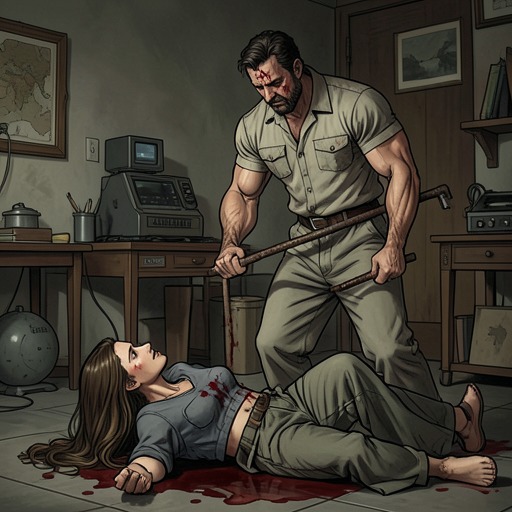
The men arrive amid the struggle. Pip, able to move only his head and legs, summons the last of his strength to resist. He sees figures and light come through the doorway, and Orlick breaks free of the group, leaps over the table, and escapes into the night. Trabb's boy's role is not to overpower Orlick or understand the full danger, but his guiding has brought the others to the scene in time to prevent Pip from being left alone with him.
Aftermath and Narrative Role
Once Pip has recovered enough to leave, the party binds his badly swollen, inflamed arm with torn handkerchiefs and makes for town. Trabb's boy goes ahead with a lantern, the light Pip had seen at the door. Pip's gratitude is shaped by what he learns afterward: Herbert's unease over the letter brought him and Startop to the Blue Boar, and Trabb's boy's chance observation supplied the route to the sluice-house.
Herbert wants to report the attack to a magistrate and obtain a warrant, but Pip fears that staying in town or being required to return could endanger Provis. They therefore abandon the immediate pursuit of Orlick and decide not to tell Trabb's boy how consequential his intervention has been. Pip believes the young man would have been disappointed to learn that he had saved Pip from the limekiln, not from malice but from a taste for excitement at someone else's expense. When they part, Pip gives him two guineas and apologizes for having held a poor opinion of him; the money seems to satisfy him, while the apology makes no impression.
The party returns to London that night, before the adventure can become the subject of local talk. Trabb's boy remains a sharply drawn supporting figure: his restless, indiscriminate presence first reads as comic self-insertion, yet it places him where his observation can make rescue possible. The episode does not turn him into a deliberate hero; instead, it makes circumstance, attention, and the consequences of a seemingly trivial habit decisive.