Sergeyich and Vitalina’s relationship
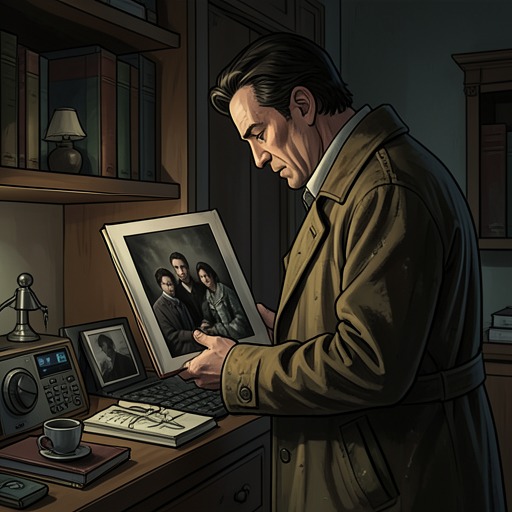
Grey BeesSergey Sergeyich and Vitalina’s relationship survives in his memories as a marriage shaped by affection, embarrassment, and conflict—and as a loss he can neither undo nor remember without revising. After Vitalina leaves, her red-ant dress remains in his wardrobe as a deliberate reminder of her. In dreams, Sergeyich replays their life together, sometimes changing what happened: the man who once stopped at the gate imagines himself walking beside her, while old quarrels return with their original sting. His recollections connect the marriage’s end not to a single garment or disagreement but to the habits of anger and intolerance he later wonders whether he could have changed.
Marriage and the Ant Dress
The dress is one of the clearest material traces of Vitalina’s departure. Sergeyich finds it among the empty hangers in his wardrobe and understands that she left it on purpose, as a transparent hint and one reason for leaving. Its powder-blue fabric is covered in thick columns of red ants. He knows the pattern by heart; its conspicuousness makes the dress a condensed reminder of the difference between Vitalina’s taste and his own.
Sergeyich recalls the first time she wore it in the village, shortly after moving from Vinnytsia. Before she had unpacked all her bags, she found the dress, ironed it, put it on, and set off toward the church at the end of their street. He begged her to wear something else, but she refused. Vitalina expected Sergeyich to walk with her. Instead, embarrassed by her outfit and its ants, he stopped at the gate and let her go alone.
Vitalina’s walk drew the neighbours to their fences, windows, and gates. Little Starhorodivka was then full of life, and for several days the dress made her the subject of village talk, much of it unkind. Sergeyich’s memory marks the scene as an early public expression of a private divide: Vitalina stepped confidently into view, while her husband recoiled from being seen beside her.
Affection, Conflict, and Family
Sergeyich insists to himself that the dress was not why he fell in love with Vitalina or married her. He recalls that she seemed better to him without it, when she was “all his,” and regrets that their marriage did not last as long as he had hoped. The thought reveals the possessiveness within his affection: the woman he loved was also someone whose appearance and choices he wanted to control.
A later dream alters the remembered promenade. Instead of remaining at the gate, Sergeyich walks beside Vitalina holding her hand, greeting the neighbours as their eyes fix on her dress. The dream does not erase his awareness of their judgement; it gives him the companionship he failed to offer in the remembered scene. They reach the church but do not enter. Instead, he leads her around it to the cemetery, showing her the graves of his parents and other relatives. The imagined route places Vitalina beside him among the dead, as if the dream were trying to make her part of the village and family history he knows so intimately.
The cemetery scene has a real counterpart, but memory corrects the dream: they went there on Vitalina’s second or third day in the village, and she wore black, not the ant dress. Sergeyich remembers thinking she looked very good in that colour. The contrast between the two versions—her vivid public entrance and her appropriately dressed visit to his family graves—shows how his recollections mix factual correction with longing. The dream stages the closeness he desires, while memory keeps the actual occasions distinct.
Replayed Domestic Life
Vitalina returns to Sergeyich in another dream as a voice calling him to dinner. He enters the kitchen as he had many times when they lived together, and the room is filled with the smell of borscht. At the table, he sees the dish topped with five golden-brown dumplings, boiled and then pan-fried in sunflower oil. He had asked for them several times and had never received them before. In the dream, the ordinary meal becomes an intimate domestic fulfilment: a small request is finally answered in the home they once shared.
The warmth of the scene does not last. The dream shifts to an argument over the name Angelica, which Sergeyich opposes because he fears the child will be mocked in the village. Vitalina answers that if people laugh at her, they will pack up and leave. Sergeyich finishes his borscht without enthusiasm, telling himself that she cannot register the child without him. The remembered quarrel exposes a struggle over a consequential family decision: his insistence on authority meets Vitalina’s readiness to leave rather than accept his terms.
The dream’s supper gives way to waking life when its bowl is empty and Sergeyich smells borscht again. He opens his eyes to find old Nastasya bringing a full pot to the table. The abrupt return to a real meal makes the dream’s domestic abundance both vivid and irretrievable: the food is present, but Vitalina is not. Elsewhere, the ant dress performs a similar function in waking memory, remaining physically in his house while its owner is gone.
Separation and Retrospective Regret
When Sergeyich passes Vera’s boarded-up home, he reads the inscription she painted on it: “THE OWNERS ARE ALIVE.” The words please him, and his thoughts turn to Vitalina. He asks himself why she comes to mind more readily than their daughter, who was only four when her mother took her away and left him alone. He wonders whether the child had too little time to bond with him and whether he himself was partly responsible.
His self-questioning becomes specific. Perhaps, he thinks, he should have smiled more instead of twisting his lips at Vitalina’s outfits; perhaps he should have talked less and played the fool. He considers whether, within a family, love or tolerance matters more. These thoughts do not establish that a different manner would have saved the marriage, but they show how Sergeyich revisits his own conduct as a possible cause of the separation.
He also imagines the family that might have remained together: all three of them living in one home. Yet the possible homes divide along the same geographic and personal fault line. He would not have moved to Vinnytsia to live with Vitalina’s parents, and he believes she would not have stayed in the village, even if they had managed to get along before the war. His final assessment is fatalistic: what happened, he concludes, was bound to happen. The thought sits uneasily beside his earlier counterfactuals, which keep asking whether his anger and his treatment of Vitalina helped bring about the end he now calls inevitable.
Memory and the Absent Family
The relationship is narrated through returns rather than reunion. A dress left deliberately in a wardrobe, a meal replayed in sleep, and a walk reconstructed with a hand held all make the absent marriage present for a moment, but none restores it. Sergeyich’s memories also preserve its imbalance: Vitalina appears vividly through her clothes, decisions, and replies, while much of the account of their marriage comes through his embarrassment, possessiveness, and later remorse.
His remembered and dreamed scenes therefore carry two truths at once. He loved Vitalina and hoped their marriage would last; he also tried to restrain what she wore, opposed her choice of a name, and failed to accompany her on a walk when she expected him to. His recollections do not resolve whether their separation could have been avoided. Instead, they show Sergeyich living with that uncertainty—revising the past in dreams, correcting himself with memory, and finding the traces of his former family in a garment still hanging in his house.