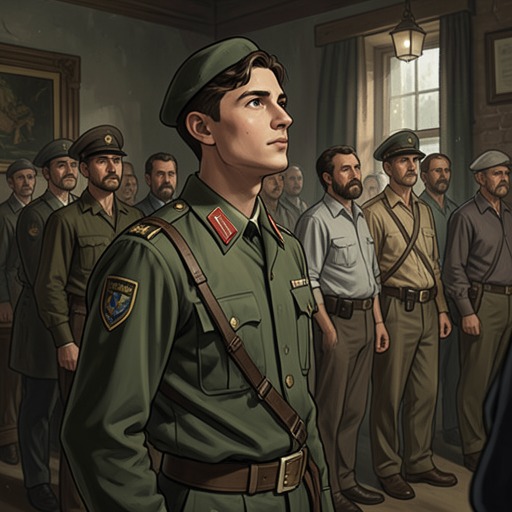
Event 1
Preble County move

At about nine years old, [J.D. Vance](entity:character-recall-character-j-d-vance-9fc68b5aa691) moved with [Mom](entity:character-recall-character-mom-15bf8f337f4b) and [Bob Hamel](entity:character-recall-character-bob-hamel-9dc9e02c6247) from [Middletown, Ohio](entity:location-recall-location-middletown-ohio-211fd18a5bf4), to [Preble County, Ohio](entity:location-recall-location-preble-county-ohio-4bd2a9646cdf). The relocation took him into a sparsely populated farming area roughly thirty-five miles from his former home and, more consequentially, away from [Mamaw](entity:character-recall-character-mamaw-c66ebbf60ef8) and [Papaw](entity:character-recall-character-papaw-4ce8b873129f). Vance remembered the move as the worst thing that could happen to him: his grandparents were his best friends, helped him with homework, and gave him treats when he behaved well or completed difficult assignments. Their distance removed a familiar source of care and protection at the moment the household was becoming less secure.
## Relocation and Separation
Mom and Bob wanted to leave Papaw’s constant presence and what they regarded as Mamaw’s interference. For Vance, however, those grandparents were not an unwelcome intrusion but the people who made the family’s chaotic life feel manageable. The family had been organized around a wide network of aunts, uncles, grandparents, and cousins; moving to Preble County changed that daily arrangement. Mamaw and Papaw were now more than forty-five minutes away, rather than close at hand.
The move also placed Vance in a home where conflict between Mom and Bob had already begun. Bob was Mom’s third husband, and their marriage was short-lived. Vance’s account presents the relocation not as a clean break from family tension but as a change of setting that left its underlying problems intact. Before and around the move, arguments could lead Mom to take the children to a local motel until Mamaw or Papaw persuaded her to return and confront the problems at home. In Preble County, that nearby intervention was harder to reach.
## Conflict and Its Effects at Home
In the new home, many arguments became screaming matches, often about money. The family had a combined income of more than one hundred thousand dollars, yet spent on items they did not need, including new cars, new trucks, and a swimming pool. By the time the marriage fell apart, they were tens of thousands of dollars in debt and had little to show for those purchases. The financial disputes were therefore not simply a matter of insufficient income; they took place alongside spending that intensified the household’s instability.
The conflict also became physically charged. Vance woke one night to breaking glass and found Mom and Bob fighting in the kitchen. When Mom fell to the floor, he moved toward her; when Bob came closer, the boy punched him, then covered his head in expectation of a return blow. Bob did not hit him, and the intervention brought the confrontation to an end. The adults separated without further violence, but Vance absorbed a troubling picture of how disagreements were handled: raised voices, insults, physical escalation, and retreat from the home seemed to form a usable set of responses.
The nights affected his days as well. He lay awake listening to arguments and movement in the house, then went to school tired and depressed, preoccupied with what might be waiting when he returned. He wanted silence but felt too embarrassed to tell anyone what was happening. His grades began to slip, offering the first visible sign that the household conflict was affecting him. Over time, he found himself listening more closely to the fights instead of avoiding them. The anticipation came to resemble the excitement of a basketball game, and he later recognized that the drama had acquired an addictive pull.
## Crisis and Return to Middletown
The family’s time in Preble County ended after Mom attempted suicide. When Vance came home from school and saw Mamaw’s car in the driveway, he recognized the unexpected visit as an ominous sign. He was eleven. Mom was in the hospital after intentionally driving her new minivan into a telephone pole, following a confrontation with Bob, who had discovered her affair with a local fireman and demanded a divorce. Mom said the crash was an attempt to kill herself; Mamaw suspected it was also connected to the affair and financial troubles. Vance and Lindsay largely accepted Mamaw’s interpretation and felt relief that Mom had not been seriously hurt and that the move might be over.
Mom spent only a couple of days in the hospital. Within a month, the family had returned to Middletown, one block closer to Mamaw than before and without Bob. The return restored the grandparents’ physical closeness, but it did not restore the earlier family life. Mom’s behavior became increasingly erratic; she was more like a roommate than a parent, came home late, and cycled through boyfriends. The [Preble County move](entity:event-recall-event-preble-county-move-acef4ca8f852) thus ended geographically while the instability it had exposed continued in a different form.
## Retrospective Significance
Vance later connected the move and its surrounding crises to a multigenerational pattern of responding to conflict by leaving. He remembered Mom taking him and the family’s toy poodle to a Middletown motel after a fight with Bob, and recalled that Mamaw eventually urged her to return and face the problem. He also thought of Mom’s childhood escapes from a frightening home with her mother and sister. In [Washington, D.C.](entity:location-recall-location-washington-d-c-2a63ac520a1d), during law school, after he stormed out of a hotel room following an argument with [Usha Vance](entity:character-recall-character-usha-vance-7ab468b8101b), these memories helped him recognize that he was repeating the family’s flight from conflict. He called himself a [third-generation escaper](entity:expression-recall-expression-third-generation-e-7c9913463641) and apologized, beginning to see that withdrawal was not the only response available to him.
That later recognition gives the Preble County relocation significance beyond the move itself. It marks a childhood separation from supportive relatives, but also an early chapter in the pattern Vance would eventually name: instability at home, retreat when conflict intensified, and the transmission of defensive habits into adult relationships. His later conversations with [Aunt Wee](entity:character-recall-character-aunt-wee-094176e73c12) and Lindsay further showed him that readiness for confrontation had shaped other family relationships too, even where marriages endured. The return to Middletown changed the family’s address; understanding the inherited response to conflict took much longer.
Event 2
Mom’s Car Crash and Suicide Attempt
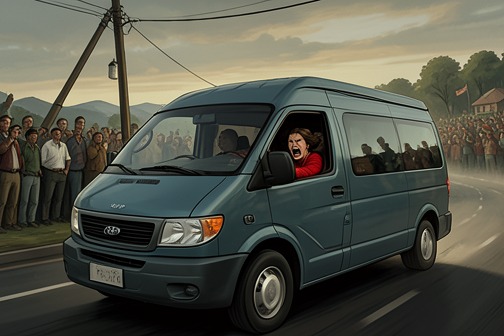
[Mom’s Car Crash and Suicide Attempt](entity:event-recall-event-f3537d02c688) was a family crisis that ended the family’s Preble County experiment and exposed how uncertain the children’s understanding of their mother’s life had been. After Bob confronted [Mom](entity:character-recall-character-mom-15bf8f337f4b) about an affair and demanded a divorce, she intentionally crashed her new minivan into a telephone pole. The account of why she did so remained contested even within the family.
## Background and the Crash
In Preble County, conflict between Mom and Bob had become part of the children’s home life. Their arguments could be loud and frightening, and the financial strain was compounded by purchases the family could not afford. The crisis that brought that period to a head followed a discovery the narrator had not seen coming: while working at Middletown Hospital, Mom had met a local fireman and fallen in love with him, beginning an affair that lasted for years.
On the morning of the crash, Bob confronted her about the affair and demanded a divorce. Mom drove away in her new minivan and deliberately struck a telephone pole. The narrator later learned these circumstances rather than understanding them at the time. At eleven, he had seen much of the family’s turmoil but had missed the relationship that immediately preceded this event.
## Competing Accounts and Immediate Aftermath
The crash was described as a failed suicide attempt, and Mom spent a couple of days in the hospital. [Mamaw](entity:character-recall-character-mamaw-c66ebbf60ef8), however, doubted that Mom had intended to kill herself. She suspected the crash was meant to draw attention away from the affair and the family’s financial problems. The memoir presents that suspicion as Mamaw’s interpretation, not as a settled explanation of Mom’s motive.
The narrator and Lindsay largely accepted Mamaw’s view. Their response was relief: they believed Mom had not truly meant to hurt herself and hoped the episode would bring their life in Preble County to an end. Within a month, the family moved back to Middletown, settling one block closer to Mamaw than before and with one fewer man in the household. The move transformed a frightening crisis into a decisive change of place and family arrangement.
## Recurrence and Significance
The episode belongs to a broader pattern in which family conflict was followed by flight rather than resolution. The narrator later recalled Mom taking him and the family’s toy poodle to a Middletown motel after a fight with Bob; they stayed for days before Mamaw persuaded Mom to return home and face the problem. He connected that habit of escape with Mom’s childhood, when she had fled with her mother and sister from the terror of living with an alcoholic father. Looking back, he described himself as a [third-generation escaper](entity:expression-recall-expression-third-generation-e-7c9913463641).
That pattern also shaped the narrator’s later understanding of his own intimate relationships. When he tried to end things with Usha rather than work through conflict, he recognized the family habit of withdrawing from problems. The car crash itself did not resolve the conflicts that surrounded Mom, but its aftermath made escape and its repetition visible as part of the family’s history.
Event 3
Mother’s Driving Threat and Arrest
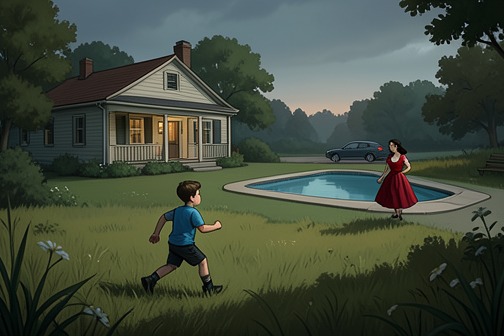
[Mother’s Driving Threat and Arrest](entity:event-recall-event-58d3c575e4ce) is a childhood crisis in which a promised outing with [Mom](entity:character-recall-character-mom-15bf8f337f4b) became a threat to both their lives and ended with police taking her into custody. The episode changed where [J.D. Vance](entity:character-recall-character-j-d-vance-9fc68b5aa691) could live, exposed the limits of formal protection for a child seeking kinship care, and left him caught between fear for himself and pressure to protect his mother from jail.
## The Drive and Escape
Mom offered to take J.D. to the mall and buy him football cards after an earlier episode of family conflict. He accepted the offer, drawn by a gift he especially wanted. On the highway, something he said angered her. She accelerated to what he understood as roughly one hundred miles per hour and threatened to crash the car, killing them both. J.D. moved to the backseat and tried to use two seat belts, believing that doing so might improve his chances of surviving a collision. Mom pulled over, and he escaped from the car as the confrontation escalated.
The setting made help uncertain: they were in a rural part of the state, and J.D. ran across a field until he found a small house. Its owner was outside beside an aboveground pool. J.D. asked her to call [Mamaw](entity:character-recall-character-mamaw-c66ebbf60ef8) and said that Mom was trying to kill him. Inside the house, he gave Mamaw the owner’s address and urged her to come quickly. The call was a direct appeal to family, but it also placed a stranger between him and the immediate danger.
Mom found the house and demanded that J.D. come out. The owner locked the doors and warned that her two small dogs would attack if Mom tried to enter. Mom nevertheless broke through the door and dragged J.D. outside. The owner did not physically stop her, a fact that initially made J.D. resent her. Only afterward did he learn that, between his call to Mamaw and Mom’s arrival, the woman had called 911. Two police cruisers arrived as Mom was taking him back toward the car, and officers handcuffed her and put her in a cruiser after a struggle. The apparent inaction of the person who sheltered him thus concealed the action that brought police to the scene.
## The Police and Family Response
An officer placed J.D. in the back of a cruiser while they waited for Mamaw. He remembers feeling profoundly alone: he could not open the door from inside and did not know when his grandmother would arrive. Lindsay then climbed into the cruiser and held him tightly. Neither sibling cried or spoke; her embrace gave him a sense that the situation had become safe again. Mamaw and [Papaw](entity:character-recall-character-papaw-4ce8b873129f) arrived, hugged him, and checked whether he was all right. Lindsay stayed close, while Papaw spoke with the officer about where Mom had been taken.
At home, the family was quiet. Mamaw’s anger remained visible, and J.D. worried about what might happen after Mom was released. Papaw, on his way to collect Wendy’s food, paused beside J.D. on the couch, placed a hand on his forehead, and began to cry. J.D. was frightened by the unfamiliar sight and did not look up. Papaw composed himself when Mamaw came back into the room, and neither of them later discussed the moment. The episode therefore left not only an account of danger and rescue but also a private sign of how deeply the crisis affected the adults who had taken him in.
## The Hearing and the New Arrangement
Mom was released on bond and prosecuted for a domestic-violence misdemeanor. The case depended on J.D.’s testimony. At the hearing, when asked whether Mom had threatened him, he said that she had not. His grandparents had hired an expensive, highly regarded lawyer. Although the lawyer did not directly tell J.D. to lie, he made clear that the answer could affect whether Mom spent additional time in prison and asked whether J.D. wanted his mother jailed. J.D. chose to protect her liberty, despite the threat he had experienced.
That choice was made within a family bargain rather than through a formal change in custody. Mom retained official custody, but J.D. understood that he could live with his grandparents whenever he chose. Mamaw reinforced the arrangement with a threat involving her gun if Mom challenged it. In the family’s account, this informal enforcement worked: J.D. could stay with Mamaw without his mother’s imprisonment being the price of his safety. The resolution did not erase the danger or make the hearing a simple account of justice; it joined a child’s denial in court to a practical promise of refuge at home.
The courtroom also sharpened J.D.’s awareness of social difference. He saw families dressed casually among lawyers and a judge in formal roles, and noticed that the professionals and officials had what he called [TV accents](entity:expression-recall-expression-tv-accents-3ee45b64621c), unlike the people appearing before them. To him, the people administering the system seemed distinct from the families subjected to it. This observation gives the hearing a broader meaning in his recollection: the court was a place where the family’s private crisis became an official matter, but its language and authority felt culturally distant.
## Child Services and the Limits of Formal Protection
The arrest brought J.D. into contact with social workers, home visits, mandated family counseling, and the prospect of another court date. Although the caseworkers were ostensibly there to protect him, he soon regarded them as obstacles to preserving the arrangement he wanted. When he explained that he spent most of his time with his grandparents and wished to continue doing so, they warned that the courts might not approve it. In the eyes of the law, Mamaw was an untrained caretaker without a foster-care license. If Mom’s case went badly, J.D. feared that he could be placed with a foster family rather than with the grandparents he loved.
That possibility changed how he dealt with officials. Afraid of being separated from his family, he said little to the social workers and told them that everything was fine. The hope that his grandparents could keep caring for him was realized: Mom did not go to jail, and J.D. stayed with Mamaw under the informal arrangement already established after the hearing. His account later treats this outcome as fortunate but exceptional, dependent on Mamaw’s determination and the family’s fear of her rather than on a dependable system for placing children with relatives.
The episode thus connects an urgent family emergency to a wider institutional problem. J.D. argues that child services and state rules can exclude grandparents, aunts, uncles, and cousins from care because relatives may lack the required foster-parent license. For families that rely heavily on extended kin, the very system meant to protect a child can threaten to separate that child from the people already providing care. The lasting significance of the event lies in both its immediate reversal—from a threatened drive to police custody and refuge with grandparents—and the precariousness of the solution: J.D. was able to remain with family, but the arrangement rested on informal permission and personal force rather than secure recognition of kinship care.
Event 4
J.D.’s renewed connection with his biological father
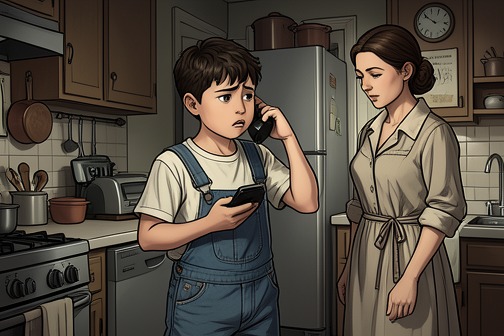
[J.D. Vance](entity:character-recall-character-j-d-vance-9fc68b5aa691)’s renewed connection with his biological father, [Don Bowman](entity:character-recall-character-don-bowman-438b0e78e18f), began during a summer of loss and family change. It reopened a relationship interrupted by adoption, but did not erase the pain or divisions created by that history. Over time, visits with Don and a new account of the custody decision gave J.D. a place in his biological family while leaving him to reconcile competing loyalties and explanations.
## The Call and the Return
On August 2, J.D.’s eleventh birthday, he was in [Jackson, Kentucky](entity:location-recall-location-jackson-kentucky-2aa0fa7fbd49), with [Mamaw](entity:character-recall-character-mamaw-c66ebbf60ef8) and his cousin [Gail Huber](entity:character-recall-character-gail-huber-dbc2aa0c2df0). Mamaw urged him to call [Bob Hamel](entity:character-recall-character-bob-hamel-9dc9e02c6247), who remained his legal father. After the family had returned to [Middletown, Ohio](entity:location-recall-location-middletown-ohio-211fd18a5bf4), Bob and [Mom](entity:character-recall-character-mom-15bf8f337f4b) divorced, and he rarely contacted J.D. Still, J.D. expected a birthday call. He phoned, reached the answering machine, and tried again a few hours later. The repeated silence led him to understand, instinctively, that he would not see Bob again.
That same summer, Mom called J.D. into the living room to speak by phone with Don. The conversation was short, but its questions reached back to a life J.D. barely remembered. Don asked whether J.D. remembered wanting a farm with horses, cows, and chickens, and whether he remembered his siblings. J.D. recalled the farm dream and had only a partial memory of the children. Don then asked whether he would like to see him again. J.D. agreed, and Mom allowed the reunion. The timing made the return especially consequential: as one father disappeared from J.D.’s daily life, his biological father re-entered it.
Before the call, J.D. knew little about Don. He understood that Don was his biological father, that he had been adopted by Bob, and that Mom and Mamaw had described Don as having abandoned him to avoid child support. He also knew that Don had a family of his own and that people thought J.D. looked like him. His curiosity about Don’s religious background added another attraction: J.D. had little experience of church and wanted to see what a real congregation was like. The call therefore opened both a family relationship and a new religious world.
## A Shared [Kentucky](entity:location-recall-location-kentucky-cdc5c1d01274) Inheritance
Don’s family history helped explain why he understood J.D.’s attachment to Kentucky. Don’s father had migrated from eastern Kentucky to southwest [Ohio](entity:location-recall-location-ohio-1ed5d8da8148) for work, then died suddenly after starting a family, leaving a young wife and two small children. Don spent much of his childhood in eastern Kentucky with his grandparents after his mother remarried. Though his stepfather was a good man, Don experienced him as firm and as an outsider to the life he had known. In Kentucky, among familiar people and with room to be himself, Don found a sense of belonging that J.D. recognized from his own time with Mamaw.
Don had built a modest version of that remembered life on fourteen acres. His property included a pond stocked with fish, fields for cows and horses, a barn, and a chicken coop. The children gathered eggs in the morning, usually seven or eight, and spent their days outdoors with a dog, catching frogs and chasing rabbits. These details echoed the rural childhood Don had known and the Kentucky experiences J.D. shared with Mamaw. Their connection rested not only on biology: each recognized in the other a feeling for place and a preference for the familiarity of one’s own people.
## Visits, Church, and a Divided Family
Despite the lack of a legal relationship between them, J.D. began spending substantial time with Don. He visited on most holidays and every other weekend, rejoining aunts, uncles, and cousins who had been absent from his life for years. The visits gave the relationship continuity, but the two sides of the family remained largely separate. Don avoided Mom’s relatives, and they avoided his. Lindsay and Mamaw welcomed his renewed role while continuing to distrust him; Mamaw saw him as the father who had left J.D. at a critical point in childhood. J.D. also resented the past, even as he grew closer to Don.
Don’s church became part of that closeness. J.D. enjoyed spending time with his father and was drawn both to the church’s structure and to the opportunity to share something important to Don. He became a devoted convert, reading young-earth creationist books, challenging evolution in online chat rooms, accepting millennialist predictions that the world would end in 2007, and discarding his Black Sabbath CDs. At Don’s house, even music associated with Eric Clapton could be rejected because of its supposed spiritual influence. The church thus offered J.D. belonging and a framework for understanding the world, while also encouraging distance from secular culture.
The religious environment also contrasted with the faith J.D. knew through Mamaw. She rarely attended church and distrusted organized religion, yet her personal belief in God shaped her advice and sense of family duty. Don’s church, by contrast, linked belief to an organized community with practical support. It helped people facing addiction find companionship, offered expectant mothers housing and training, connected people to jobs, and rallied to buy Don’s family a used car when money was tight. J.D.’s growing attachment to the church was therefore not only doctrinal; he saw it providing material assistance in a community under pressure from joblessness, addiction, and family instability.
## Reconsidering the Adoption
As J.D. spent more time with Don, the adoption that had separated them became a frequent subject. Don gave him an account that differed sharply from what Mom and Mamaw had told him. According to Don, the decision had not been made to evade child support: he had hired several lawyers and tried within reason to keep his son. He said he reconsidered his approach after seeing how frightened J.D. was during pre-adoption visits and learning that the custody dispute was affecting him emotionally and at school.
Don also described asking God for three signs that adoption was in J.D.’s best interest, and said those signs appeared before J.D. became Bob’s legal son. J.D. could empathize with the difficulty of Don’s decision and found comfort in learning that his father had cared about him. That knowledge eased some childhood pain. Yet he remained uneasy about leaving a child’s future to signs from God. Reconnection, then, did not deliver a simple resolution: it supplied evidence of Don’s concern while preserving J.D.’s questions about the choice that had kept them apart.
The relationship’s significance lies in this combination of return and unresolved history. Don became a regular presence, introduced J.D. to relatives and a church community, and offered a version of the adoption that altered J.D.’s understanding of his childhood. But the family remained divided, and the past could not be undone. J.D. came to love Don and his church without ceasing to feel the injury of their long separation; renewed contact made room for affection and a more complicated account of what had happened.
Event 5
Papaw’s death
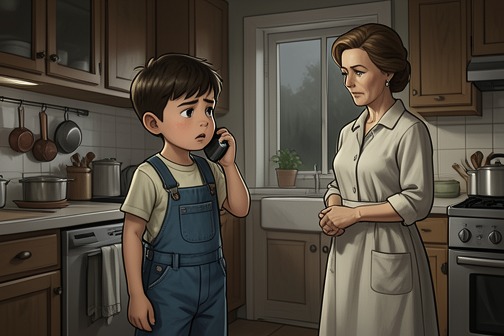
[Papaw’s death](entity:event-recall-event-papaw-f5dd0d888a9a) turns an ordinary absence into a family rupture. When he misses the fixed appointments that had structured every day, [J.D. Vance](entity:character-recall-character-j-d-vance-9fc68b5aa691) understands that something is wrong; within hours, [Mom](entity:character-recall-character-mom-15bf8f337f4b) and [Mamaw](entity:character-recall-character-mamaw-c66ebbf60ef8) find him dead at home. The loss is personal, but its consequences reach beyond grief: it brings the family’s concealed crisis into view and permanently changes where J.D. lives.
## The missed routine and discovery
Mamaw called to ask where Mom was and told J.D. that no one had seen or heard from [Papaw](entity:character-recall-character-papaw-4ce8b873129f). At first, he thought Mamaw was overreacting. Then he thought through Papaw’s exceptionally regular day. Papaw woke at six each morning without an alarm, went to McDonald’s at seven for coffee with former Armco colleagues, and afterward usually spent the morning at Mamaw’s house watching television or playing cards. Before dinner, he might stop at his friend Paul’s hardware store. He was also almost always at Mamaw’s when J.D. came home from school; if J.D. went instead to Mom’s, Papaw generally came by to say goodbye before going home. Missing all of those familiar occasions made his absence unmistakable.
Mom arrived a few minutes after Mamaw’s call and found J.D. already crying. He told her he thought Papaw was dead. The account of what happened next comes back to him in fragments: they picked up Mamaw and drove the few minutes to Papaw’s house. J.D. knocked violently at the front door while Mom ran around to the back. She saw her father hunched over in his chair, returned to the front, grabbed a rock, broke a window, and entered to tend to him. Papaw had been dead for nearly a day. Mom and Mamaw sobbed as they waited for an ambulance.
J.D. tried to comfort Mamaw, but at first she was so overwhelmed that she did not respond even to him. Once she stopped crying, she held him close and told him to say goodbye before Papaw’s body was taken away. J.D. went back to look at him, though he did not explain his real reason to the medical technician beside the body. The family then went to [Aunt Wee](entity:character-recall-character-aunt-wee-094176e73c12)’s house, where she met them in tears, before returning to Mamaw’s to make arrangements and contact relatives. J.D. was given the task of finding [Lindsay Leigh Lewis](entity:character-recall-character-lindsay-leigh-lewis-014cccd288af). Before mobile phones, reaching his seventeen-year-old sister meant calling the house and her friends, none of whom answered. The adults discussed the funeral and where Papaw should be buried; Mamaw insisted on [Jackson, Kentucky](entity:location-recall-location-jackson-kentucky-2aa0fa7fbd49).
## A family’s grief
Lindsay Leigh Lewis returned shortly before midnight. J.D. went down the street to tell her, and she stopped on the stairs when she saw his face. When he said Papaw was dead, she collapsed; he ran to her, and they held each other and cried. She had recently relied on Papaw to work on her car, and, through her tears, she worried that she had taken advantage of him. The memoir sets this regret against the distance that can exist between a teenager’s social life and an older relative who does not seem fashionable or easy to be around. Papaw wore the same old pocketed T-shirt, smelled of clothes left to dry in the washing machine, listened repeatedly to Johnny Cash, and drove an old El Camino. Yet he had worked on Lindsay’s car and, after she wrecked it, bought and fixed up another so she would not feel she came from nothing.
At the funeral, J.D. stood to explain what Papaw had been to him. He said that he had never had a dad, but Papaw had always been there and had taught him what men needed to know; he called him the best dad anyone could ask for. Papaw’s importance rested not only on practical care but on the kind of attention he gave his grandchildren. He practiced increasingly difficult math problems with J.D. and taught him that not knowing something was different from being unintelligent: knowledge could be gained through patience and hard work. He also got down on the floor to play with J.D. and Aunt Wee’s baby girls, and welcomed hugs and kisses despite his grouchiness. His example included a rule about how a man should treat the women in his family, a principle informed by his own earlier failures. After the funeral, people praised J.D.’s courage. Mom, however, seemed withdrawn and slow-moving, as if grief had overtaken her in a different way.
## Grief exposes a hidden crisis
In the days after the funeral, the family’s responses diverged. Lindsay spent time with friends; J.D. stayed near Mamaw and read the Bible; Mom slept more and became increasingly angry at home. When Lindsay failed to do chores, Mom’s outbursts centered on the claim that her father had been the only person who understood her. J.D. initially took this as familiar temper rather than a sign that the household was approaching a crisis. Mamaw also kept him from staying at Mom’s, explaining that she needed him with her while she grieved. Lindsay, who had spent a night in J.D.’s room, promised that they would get through what was coming, though he did not yet know what she meant.
A few days after the funeral, J.D. saw Mom in a bath towel in her front yard, screaming at [Matt](entity:character-recall-character-matt-49128ced0765), Lindsay Leigh Lewis, and her friend Tammy. A police cruiser was already there. When J.D. reached the porch and begged Mom to calm down, an officer grabbed her shoulders; she fell, struggled, and kicked as the officer carried her to the cruiser. There was blood on the porch, and someone said she had tried to cut her wrists. Mamaw took J.D. and Lindsay away. J.D. remembered thinking that Papaw would have known what to do.
Only in retrospect does J.D. connect this public breakdown to what had preceded it. A year earlier, Mom had lost her job at [Middletown Regional Hospital](entity:organization-recall-organization-middletown-regio-211253fdde8b) after rollerblading through the emergency room. J.D. had understood her erratic behavior as a consequence of her divorce from [Bob Hamel](entity:character-recall-character-bob-hamel-9dc9e02c6247), while Mamaw’s remarks about Mom getting high seemed like offhand comments. Mom had begun taking prescription narcotics not long after the family moved to [Preble County, Ohio](entity:location-recall-location-preble-county-ohio-4bd2a9646cdf). J.D. believes the use began with a legitimate prescription, but Mom soon stole drugs from patients and became so intoxicated that she rollerbladed through the emergency room. Papaw’s death did not begin the addiction; in J.D.’s account, it removed the last support that had allowed Mom to function at even a basic level.
## The changed course of J.D.’s life
Before Papaw died, J.D. had a chaotic but workable arrangement: he divided his time between Mom’s home and Mamaw’s, and could retreat to one household when life in the other became difficult. After Papaw’s death, Mom went to the [Cincinnati Center for Addiction Treatment](entity:location-recall-location-cincinnati-center-fo-94b59eb3dbac), and J.D. began to feel like a burden to Mamaw. He understood that she had spent much of her life managing hardship, from poverty in the holler and Papaw’s abuse to Aunt Wee’s teenage marriage and Mom’s encounters with the law. Now she was raising two teenage grandchildren without Papaw’s help. Her public strength did not erase the grief and exhaustion J.D. had seen at the funeral home.
The death also stands within a longer sequence of disrupted homes. J.D. recalls the family leaving Middletown for Preble County during his third-grade year, returning to a duplex on McKinley Street after fourth grade, and moving again on the same street after fifth grade. By sixth grade, one of Mom’s partners had been replaced by another; by seventh, Matt was in the picture and Mom hoped J.D. would move with her to Dayton. After eighth grade came a brief stay with his biological father before J.D. agreed to move to Dayton; after ninth grade, he lived with [Ken](entity:character-recall-character-ken-86ded82a565a), a stranger, and Ken’s three children. Drugs, domestic violence proceedings, children’s services, and Papaw’s death compounded the instability. The memoir’s retrospective perspective makes the loss a turning point within this accumulated history, not an isolated misfortune.
After J.D. moved permanently into Mamaw’s house, the pattern changed. At the end of each of his tenth-, eleventh-, and twelfth-grade years, he still lived there with no one else. He later associated that continuity with being able to do homework, focus on school and a job, form lasting friendships, and clarify what he wanted from life. Most immediately, he remembered being happy: he no longer feared the end-of-day school bell, did not have to wonder where he would live the next month, and was no longer caught up in Mom’s romantic decisions. His grades improved, he lost interest in drugs, aced the SAT, and found teachers who helped him love learning. Years later, after four years in the [United States Marine Corps](entity:organization-recall-organization-united-states-ma-0009a2eac3c2), he drove from [Cherry Point](entity:location-recall-location-cherry-point-d98b7137d1b3) to Middletown with his discharge papers and was preparing to begin classes at [Ohio State](entity:organization-recall-organization-2a796f26ae37). Papaw’s death had marked the end of one family arrangement; the stable home that followed became the ground from which J.D. could pursue a different future.
Event 6
Mom’s Breakdown and Addiction Treatment After Papaw’s Death
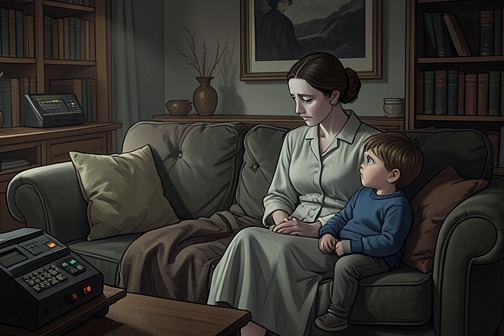
[Mom’s Breakdown and Addiction Treatment After Papaw’s Death](entity:event-recall-event-papaw-4112239ae562) marks the point when [Papaw’s death](entity:event-recall-event-papaw-f5dd0d888a9a) exposed how far [Mom](entity:character-recall-character-mom-15bf8f337f4b)’s prescription-drug addiction had progressed and redirected the family’s life. A public crisis prompted her treatment at the [Cincinnati Center for Addiction Treatment](entity:location-recall-location-cincinnati-center-fo-94b59eb3dbac), while her children faced a new role: trying to sustain their household and take part in her recovery without the adult structure they had depended on.
## Background: Grief and an Unseen Crisis
In the days after [Papaw](entity:character-recall-character-papaw-4ce8b873129f) died, each family member responded differently. Lindsay spent time with friends and kept moving; J.D. stayed near [Mamaw](entity:character-recall-character-mamaw-c66ebbf60ef8) and read the Bible; Mom slept more than usual. At home, however, ordinary frustrations could provoke an outburst. When Lindsay failed to finish chores, Mom’s anger returned to her father’s death and her feeling that nobody understood what she had lost. J.D. had known Mom to have a temper, so he initially treated this as familiar behavior rather than a warning that something more serious was unfolding.
Mom also seemed to regard her own grief as uniquely legitimate. She resented the idea that Mamaw, [Aunt Wee](entity:character-recall-character-aunt-wee-094176e73c12), Lindsay, or J.D. could grieve Papaw in the same way she did. The household’s grief therefore did not simply draw the family together: it became another source of conflict, even as the children were trying to understand their loss.
Only later did J.D. connect the crisis to events that had preceded Papaw’s death. Mom had lost her job at Middletown Hospital after behaving erratically at work, and Mamaw had alluded to her getting high. At the time, J.D. attributed Mom’s unusual behavior to her divorce from Bob and did not understand that the adults had even discussed whether he should move permanently to California. In retrospect, he identifies Mom’s use of prescription narcotics, which began after the family moved to Preble County, as the hidden problem. He believed it started with a legitimate prescription; she later stole medication from patients and became increasingly impaired. Papaw’s death did not begin this history, but, in J.D.’s account, it pushed an already precarious situation into a more severe crisis.
## The Public Crisis
A few days after the funeral, J.D. saw a commotion from Mamaw’s front porch and ran toward Mom’s house. Mom was in the front yard, shouting at people close to her, including [Matt](entity:character-recall-character-matt-49128ced0765), Lindsay, and Tammy. Her words turned against the very people who had been trying to support her. J.D. begged her to calm down, but police were already there. An officer intervened, and Mom was taken to a cruiser while still resisting. The scene made visible what J.D. had not recognized in the preceding months: grief and addiction had overwhelmed Mom’s ability to manage ordinary interactions.
Mamaw arrived and took Lindsay and J.D. with her. J.D. remembers thinking that Papaw would have known what to do. That thought gives the crisis a particular force in the family story: Papaw’s death had removed a person J.D. associated with practical help just as Mom’s condition became impossible for him to interpret as merely another bad day. The event revealed both the limits of the children’s understanding and the loss of an adult they imagined could have made sense of the emergency.
## Treatment and the Family’s Part in It
Mom entered the Cincinnati Center for Addiction Treatment, which the family called the CAT house. On designated weekdays and weekends, Lindsay and J.D. visited her there. Wednesdays involved group activities for patients and their families. Each family sat at its own table in a large room for discussions intended to explain addiction and its triggers. In one session, Mom connected her drug use to the stress of paying bills and the pain of Papaw’s death. In another, Lindsay and J.D. learned that ordinary conflict between siblings could make it harder for Mom to resist using drugs.
These sessions did not produce a simple, calm account of recovery. They brought families into arguments and raw displays of feeling. In that shared room, children confronted parents, parents asked forgiveness and then blamed relatives, and the strain of addiction became audible across family tables. The setting also exposed J.D. to the lives of other families dealing with addiction, including Black families and white families with Southern accents. The treatment process thus widened his view beyond Mom’s crisis, even as its most immediate work was personal and difficult.
For Lindsay, the sessions made room to tell Mom what the family crisis had required of her. She resented having to act as caretaker after Papaw’s death instead of grieving herself. She also described the repeated hurt of watching J.D. grow attached to one of Mom’s boyfriends and then seeing that man leave. J.D. began to see Lindsay as the real adult. She had recently graduated from high school; he had just started seventh grade. The contrast between their ages and responsibilities was stark, and the treatment sessions helped reveal how much of the family’s care had fallen to her.
## Aftermath and Changed Household
As Mom’s treatment proceeded, her condition appeared to improve. Sundays were reserved for family time at the CAT house. They could not take Mom off-site, but they could eat together, watch television, and talk. Those visits were usually happy, offering a limited return to familiar family contact within the boundaries of treatment.
At home, the change was more unsettling. Before Papaw’s death, J.D. had lived in a chaotic but workable rhythm between Mom’s house and Mamaw’s: when Mom had a bad day, he still had somewhere to go. With Papaw gone and Mom in treatment, that arrangement no longer felt secure. J.D. began to worry that he was a burden to Mamaw, whose life had already involved poverty, Papaw’s abuse, family crises, and years of managing other people’s needs. Although she did not tell him he was unwanted, he remembered seeing her alone and exhausted at Papaw’s visitation and could no longer assume that her strength was limitless.
Rather than turn to Mamaw each time problems arose, J.D. increasingly relied on Lindsay and himself. Lindsay worked while he attended school, and they managed much of daily life with food such as Hamburger Helper, TV dinners, Pop-Tarts, and cereal; sometimes Matt or Tammy brought them food. They had little structure. When Lindsay discovered that J.D. had been drinking beer with her friends, however, she sent them away and lectured him about substance abuse. Her response echoed the family’s new reality: she was not only keeping a household going but trying to protect her younger brother from repeating destructive patterns.
School presented another practical consequence. J.D. accumulated enough unexcused absences for the district to warn that his parents could be summoned or prosecuted. He and Lindsay found the letter both absurd and frightening: they did not know who could respond as his legal guardian. Lindsay forged Mom’s signature, and the letters stopped. The improvised solution captures the instability surrounding treatment without making it the whole story; even while Mom was receiving care, the children still had to handle the ordinary institutional demands that an available adult would usually manage.
## Significance
The episode changes the family’s trajectory because it converts an unstable arrangement into a crisis of care. Mom’s addiction, previously obscured from J.D. by explanations such as divorce and temperament, becomes unmistakable after Papaw’s death. Treatment brings the family into a shared process of learning about addiction, but it does not immediately restore a dependable household. Instead, the burden shifts toward Lindsay and J.D., while Mamaw’s own grief and limits come into view. The narrative holds these facts together: Mom’s need for treatment, the children’s exposure to the consequences, and the imperfect kinship support that helped them continue through the disruption.
Event 7
Mom’s drug-test crisis and J.D.’s permanent move to Mamaw’s
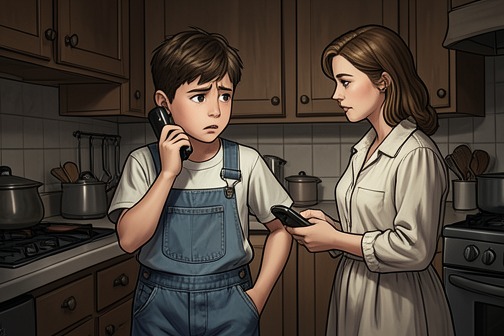
[Mom’s drug-test crisis and J.D.’s permanent move to Mamaw’s](entity:event-recall-event-j-d-mamaw-b68ec213e4f9) turns a request for a clean urine sample into a decisive break in J.D.’s unstable home life. The episode brings his mother’s addiction, [Mamaw](entity:character-recall-character-mamaw-c66ebbf60ef8)’s enduring hope for her daughter, and J.D.’s exhaustion with repeated promises into direct conflict; its immediate outcome is that he helps [Mom](entity:character-recall-character-mom-15bf8f337f4b) pass her test, while its lasting consequence is that Mamaw asks him to stay with her permanently.
## The Test and the Request
One morning, after staying at Mamaw’s house the previous night, J.D. was getting ready for school when Mom arrived frantic and out of breath. The nursing board required her to submit to random urinalyses to keep her license, and she had been told that morning to provide a sample by the end of the day. She asked J.D. for clean urine. Mamaw could not supply it because prescription drugs had affected her own urine, leaving J.D. as the only available candidate.
The urgency of the request was only part of what made the moment a crisis. Mom approached as though J.D. should simply comply: her demand carried entitlement rather than remorse, and she showed no guilt about having broken another promise not to use drugs. The test put her professional license at risk, but the burden of answering that risk was placed on her son. The episode made the family’s familiar pattern plain: Mom faced the consequences of her drug use, while relatives were asked to help her get through them.
## Refusal, Confession, and Mamaw’s Intervention
J.D. initially refused. When Mom recognized his resistance, she changed course, becoming apologetic and desperate. She cried, begged, and promised to do better. J.D. had heard that pledge many times and no longer believed it. He understood her determination to survive difficult circumstances, but that did not make another promise persuasive or erase the history behind the request.
His refusal gave way to anger. He told Mom that she needed to stop damaging her life rather than seek a sample from him, and he blamed Mamaw as well for enabling her. He called both women bad mothers. Mamaw’s face drained of color, and she would not meet his eyes; his accusation had reached a painful place. The confrontation was not simply about whether to provide a sample. J.D. was challenging the family’s habit of rescuing Mom and asking why earlier intervention had not prevented this recurring crisis.
Yet J.D. also knew that his own urine might not be clean. In private, he told Mamaw that he had smoked [Ken](entity:character-recall-character-ken-86ded82a565a)’s marijuana twice in recent weeks and worried that a test could put both him and Mom in trouble. Mamaw first reassured him that the small amount he described was unlikely to appear on the screen. Then she made the moral and familial case for helping: Mom was her daughter, and perhaps assistance this time would finally teach her a lesson. Mamaw’s argument did not resolve the contradiction; it asked J.D. to act within it, balancing his refusal to excuse Mom’s behavior against the hope that she might change.
## The Decision and Its Immediate Cost
J.D. relented and provided the sample. He later regarded the act as wrong, but did not regret following Mamaw’s lead. Her faith in the people she loved, sustained despite repeated disappointment, had shaped his own willingness to help Mom. That pattern extended beyond this morning: he had attended some of Mom’s [Narcotics Anonymous](entity:organization-recall-organization-narcotics-anonym-dee55630d8d1) meetings and read about addiction because he hoped that participating in her treatment might help her get better. Mamaw’s appeal drew on the same persistent hope.
The decision nevertheless left J.D. distressed. He went to school with red eyes after crying and regretted having helped. A few weeks earlier, he had watched Mom struggle to eat at a Chinese buffet after taking prescription pain pills. The episode had left him angry and had led him to promise himself that he would leave the house if she used drugs again. Against that earlier resolve, giving her urine felt like another concession to the behavior he could no longer accept. The help that preserved Mom’s chance of passing the test also marked a limit in J.D.’s trust.
## A Permanent Home with Mamaw
The urine episode was Mamaw’s breaking point, too. When J.D. returned from school, she told him she wanted him to stay with her permanently, without further moves between homes. Mom did not appear to object; she said she needed a break. She and Ken did not remain together much longer. By the end of J.D.’s sophomore year, Mom had moved out of Ken’s house, and J.D. had moved in with Mamaw, never again returning to live in the homes of Mom and her partners. Mom passed her drug test, but the test did not restore their household or reverse the decision about where J.D. would live.
The move offered J.D. continuity after repeated changes in residence, though it did not erase the strain of the family’s history. The request for clean urine revealed how far Mom’s addiction had drawn him into managing its consequences; Mamaw’s response showed both the cost and the sustaining force of her hope. In J.D.’s later recollection, the incident sits among the moments when he came close to losing stability, alongside his near-failing school year and the earlier stretches when family members had to care for him. Its ending is therefore double: he helped his mother through one immediate test, while Mamaw’s decision gave him a lasting home.
Event 8
J.D.’s temporary move to live with his biological father
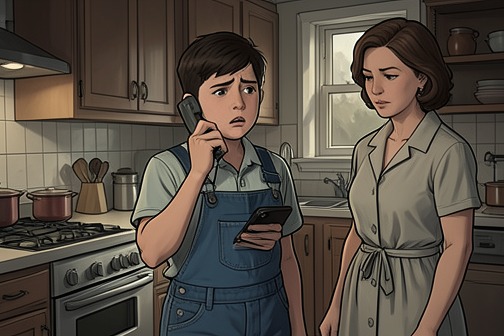
[J.D. Vance](entity:character-recall-character-j-d-vance-9fc68b5aa691)’s temporary move to live with his biological father, [Don Bowman](entity:character-recall-character-don-bowman-438b0e78e18f), gave him a brief experience of the calm domestic routine he had long wanted, but not the security to remain there. At fourteen, facing uncertainty about where he could live and reluctant to become a burden to [Mamaw](entity:character-recall-character-mamaw-c66ebbf60ef8), he chose Don’s home as the least bad option. Its ordinary meals and quiet evenings contrasted sharply with the instability he had known; still, he could not stop wondering how Don would respond to parts of his life he had kept hidden. Mamaw’s reassurance brought the stay to an end, and his sister [Lindsay Leigh Lewis](entity:character-recall-character-lindsay-leigh-lewis-014cccd288af) came to take him home.
## Circumstances and Decision
The move followed a period when J.D. felt that his family’s possible arrangements had narrowed around him. His mother had asked him to move with her to Dayton, and a therapist she introduced had initially seemed less like a source of help than an obstacle placed in his way. J.D. was wary of another intervention by children’s services after an earlier disclosure about his mother’s parenting had prompted a report. In talking to the therapist, he withheld some of what he felt, including his fear of being separated from the people on whom he depended. He did, however, say that he would probably live with his father. The therapist agreed that this sounded like a good idea.
The choice did not mean that J.D. felt free to select among easy alternatives. [Papaw](entity:character-recall-character-papaw-4ce8b873129f) was no longer there, and Mamaw, a longtime smoker with emphysema, seemed worn down and perhaps too frail to care for a fourteen-year-old. His aunt and uncle had two young children; Lindsay Leigh Lewis, newly married, had a child of her own. J.D. also understood that Mamaw and the rest of the family wanted him to live with her permanently. He feared that asking for help elsewhere would bring offers of spare rooms that ultimately gave way to that demand. Living with Mamaw carried its own weight: guilt about her age and energy, questions about why he did not live with either parent, and comments to her that she should enjoy her later years. He took these impressions from small cues, including what she muttered and the weariness he observed. Don’s home became the option that seemed least bad, not a declaration that his family’s other difficulties had been resolved.
## The Household He Had Wanted
In some respects, life with Don and his stepmother supplied a strikingly different model of home. His stepmother worked part-time and was usually there; Don returned from work at a fairly regular time. One of them made dinner each night, and the family ate together. They said grace before meals, a practice J.D. had liked but had not experienced outside [Kentucky](entity:location-recall-location-kentucky-cdc5c1d01274), and watched a family sitcom on weeknights. The household’s regularity mattered because it made daily life predictable: work ended, dinner was prepared, and the family spent the evening together.
The contrast was clearest not in a dramatic revelation but in the absence of the conflicts J.D. had learned to expect. Don and his stepmother did not scream at one another. J.D. once heard them raise their voices during an argument about money, but even that disagreement remained unlike the shouting that had shaped his sense of family life. The first weekend he spent there knowing he would still be in the same home on Monday made the promise of this routine concrete. His younger brother invited a friend to sleep over; the boys fished in Don’s pond and fed the horses, and the family grilled steaks for dinner. They watched Indiana Jones films into the early morning. For J.D., the evening’s defining quality was its ordinariness: there was no fighting, no insults between adults, and no household objects being angrily thrown or broken. The quiet did not feel empty. It was precisely what had attracted him to Don’s home.
## Safety Without Certainty
A settled household did not immediately make J.D. feel settled within it. He had known Don for two years and regarded him as a good, quiet man and a devout Christian from a strict religious tradition. Don had made clear that he disliked J.D.’s classic-rock taste, especially Led Zeppelin, but had not forbidden him to listen. Instead, he recommended Christian rock. The distinction between a stated preference and a prohibition was real, yet J.D. remained unsure what else might be unacceptable to his father.
He did not tell Don that he played Magic, a collectible card game that children in the church youth group discussed as an evil influence on young Christians. Nor did he raise his questions about faith, including whether it could be reconciled with modern science or which denomination was correct in particular doctrinal disputes. J.D. doubted that Don would actually have become angry, but doubt itself governed what he felt able to say. He could not know whether questions or the wrong music might lead Don to reject him, or whether their new relationship depended on Don seeing him as a good kid. The worry extended to ordinary choices, such as playing his Led Zeppelin CDs around his younger siblings. The new household therefore offered reliable routines without giving J.D. confidence that he could reveal himself fully within them. What attracted him and what troubled him coexisted: the first weekend demonstrated the peace he had wanted, while his unasked questions made belonging feel conditional.
## Mamaw Calls Him Home
J.D. believes Mamaw understood his conflict even though he had not explained it directly. They spoke by phone often. One night, she told him that she loved him more than anything and wanted him to return when he was ready. Her assurance was simple and expansive: “This is your home, J.D., and always will be.” It offered a form of belonging that did not depend on J.D. first resolving his doubts about Don’s expectations. The next day, he called Lindsay Leigh Lewis and asked her to come get him.
Lindsay Leigh Lewis had a job, a house, a husband, and a baby, but agreed to make the trip and said she would arrive in forty-five minutes. J.D. apologized to Don, who was heartbroken by the decision but understood why his son could not stay away from Mamaw. Don’s recognition of her importance was especially significant to J.D. because Mamaw had never said anything kind about Don. His response was the first indication that Don could understand the complicated loyalties J.D. carried between them. When Lindsay Leigh Lewis and her family arrived, J.D. got into the car, sighed, and thanked her for taking him home. He kissed his infant nephew on the forehead, said nothing else until they reached Mamaw’s, and returned to the household whose demands had also made him feel guilty.
## The Meaning and Aftermath of the Move
The stay with Don lasted only a few weeks. It did not produce an epiphany or settle J.D.’s divided feelings: he still wanted to be with Mamaw and still feared that his presence deprived her of the comfort of old age. The move nevertheless clarified what he valued in a home. Predictable work hours, shared meals, grace, and a quiet evening were not incidental details; together they represented a way of living he had wanted but could not yet trust himself to inhabit. Returning to Mamaw was not evidence that he had found Don’s home intolerable. The account instead emphasizes the force of uncertainty and the particular reassurance Mamaw offered.
After spending most of the rest of the summer with Mamaw, J.D. told his mother that he would live with her on the condition that he could remain in Middletown’s schools and see Mamaw whenever he wanted. His mother mentioned that he would need to transfer to a Dayton school after his freshman year, but he chose to defer that problem. In this sequence, the short move to Don’s home is a temporary attempt to find a workable place among imperfect choices. Its calm domestic life showed J.D. what stability could look like; his return showed that routine alone could not answer his fear of being rejected or his need to feel that Mamaw’s home remained his own.
Event 9
J.D.’s Marine Corps enlistment
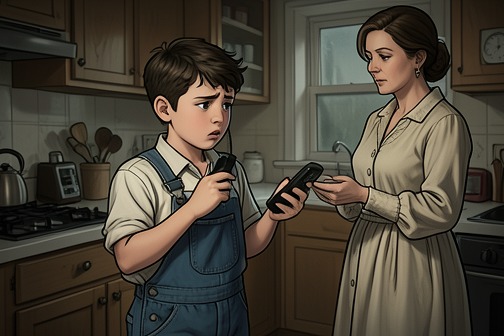
[J.D. Vance](entity:character-recall-character-j-d-vance-9fc68b5aa691)’s Marine Corps enlistment turned a difficult choice about adulthood into a four-year commitment to the [United States Marine Corps](entity:organization-recall-organization-united-states-ma-0009a2eac3c2). With an [Ohio State](entity:organization-recall-organization-2a796f26ae37) tuition deposit approaching, he was drawn to the Marines as a route toward discipline, financial independence, and service during the [Iraq War](entity:event-recall-event-994a2ad5cf73). The decision also meant leaving the close family life he had found with [Mamaw](entity:character-recall-character-mamaw-c66ebbf60ef8), whose fear of his departure gave the enlistment its most personal cost.
## Background and Uncertainty
By the end of high school, Vance wanted to excel in college, find a good job, and provide his family with things he had lacked. Wanting those outcomes did not mean he felt prepared to reach them. The unstructured demands of college worried him: he had little experience feeding himself well or paying his own bills, and his school record included many absences and tardies. Even his improving circumstances in Mamaw’s home had not erased his sense that he had a long way to go.
A practical suggestion came from Rachael, a Marine Corps veteran and the oldest daughter of [Uncle Jimmy](entity:character-recall-character-uncle-jimmy-dc7f2eef6f07). She occupied an important place among the cousins, who looked up to her, and her advice that he consider military service carried particular weight. She presented the United States Marine Corps as a place that could impose the discipline he felt he lacked. Her recommendation did not make the choice easy, but it made enlistment seem possible where it had previously felt almost unimaginable.
The timing sharpened the question. The [September 11 attacks](entity:event-recall-event-386102a65454) had occurred about a year earlier, during Vance’s junior year. He considered going to the Middle East to fight terrorists and felt that he would regret never taking part in the country’s newest war. At the same time, military life frightened him: he anticipated demanding drill instructors, constant exercise, and separation from his family. The possibility of going to war was real, but so were the ordinary trials of a service routine he could not yet picture himself enduring.
## The Decision to Enlist
Just weeks before the deadline for his Ohio State tuition deposit, Vance went to a recruiter’s office on a Saturday in late March. The recruiter did not present enlistment as an easy bargain. He explained that the pay would be low and that Vance might go to war, while also describing the leadership and discipline the Marines could teach him. Vance could barely reconcile that prospect with his own image of himself: he was a pudgy teenager with long hair, walked much of the mile in gym class, and had never regularly risen before six in the morning. The prospect of waking at five and running several miles each day made the distance between his present habits and military life unmistakable.
After the meeting, he weighed three paths: college, doing nothing, or joining the Marines. He did not want either of the first two options. The GI Bill offered a concrete reason to choose service, since it could help replace educational debt with greater financial freedom. He also believed his country needed him and that he would regret sitting out the war. Four years in the United States Marine Corps, he reasoned, might help him become the person he wanted to be. The decision therefore joined public duty to private calculation: enlistment could offer a way to serve and a means of financing a future beyond the service.
He was not eager to leave home. Lindsay had recently had her second child and was expecting a third; her son was still a toddler, and Lori’s children were also babies. The more Vance considered the separation, the less he wanted it. Yet he knew that further delay might give him time to talk himself out of enlisting. Two weeks after visiting the recruiter, as the [Iraq](entity:location-recall-location-iraq-57b030bc9041) crisis became the Iraq War, he signed the papers and committed the first four years of his adult life to the Marines.
## Family Reaction
At first, relatives scoffed at the idea, telling him in effect that military service did not suit him. Their skepticism softened as it became clear he would not change his mind, and some family members came to share his excitement. Mamaw remained opposed. Her objections combined doubts about his suitability for military life, fear that he would be killed, concern for Lindsay’s children, and worry about who would care for her. She eventually accepted his decision, but acceptance did not make her comfortable with it.
Shortly before Vance left for boot camp, the recruiter came to speak with Mamaw. She met him outside, stood as straight as she could, and made clear that he should not step onto her porch. The conversation took place in the front yard. The scene gave physical form to the conflict between Vance’s new commitment and the home he was preparing to leave: the recruiter represented the institution he had chosen, while Mamaw’s guarded welcome expressed how fiercely she wanted to keep him near.
## Departure and Significance
When [Mom](entity:character-recall-character-mom-15bf8f337f4b), Lindsay, and [Aunt Wee](entity:character-recall-character-aunt-wee-094176e73c12) drove Vance to the bus that would take him to the airport and then to boot camp, his strongest fear was not that he would die in Iraq or fail to qualify as a Marine. He imagined returning four years later to a world without Mamaw. He understood home as Middletown with her in it, and anticipated that she would not survive his time away. The enlistment thus began before he boarded the bus, but its emotional consequence was already clear: becoming independent required leaving the person whose home had become his lasting refuge.
The decision was not a simple escape from family or a purely patriotic gesture. Vance wanted structure because the prospect of managing adult life and college unsettled him; he valued the GI Bill because he wanted a future less burdened by debt; and he believed military service answered a national need. At the same time, his reluctance to leave the children in his family and his fear of losing Mamaw show what those ambitions asked him to risk. Enlistment marked a turn toward discipline and adult responsibility, but its first cost was separation from the people who made home feel secure.
Event 10
J.D.’s Marine Corps boot camp
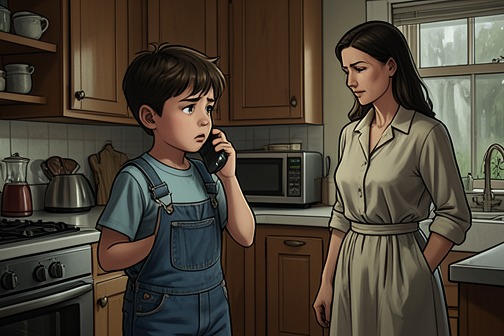
[J.D.’s Marine Corps boot camp](entity:event-recall-event-j-d-397572335480) at [Parris Island](entity:location-recall-location-parris-island-6cb547223da8) transformed a punishing thirteen weeks into a test of what he could do, not merely what he feared he could not. Drill instructors, exhausting routines, and an institutional demand to surrender individual identity pressed against the self-doubt formed by years of instability at home. By graduation, J.D. had begun to believe that he could meet the next challenge rather than assume it would overwhelm him.
## Leaving for Boot Camp
Before leaving, J.D. feared less for his own safety or success than for the possibility that [Mamaw](entity:character-recall-character-mamaw-c66ebbf60ef8) would not survive his four years in the Marines. Home, as he understood it, was Middletown with Mamaw in it; he imagined that finishing his service would mean returning to a world without her. That apprehension gave the departure a personal stake beyond enlistment: boot camp marked the start of a long absence from the person who had made home feel permanent.
The training itself lasted thirteen weeks, with a new focus each week. On the night J.D. arrived at Parris Island, South Carolina, a drill instructor met the group as they left the plane and sent them onto a bus. Another instructor ordered them off and onto the famous yellow footprints. The next six hours stripped away familiar markers of civilian life: medical personnel examined the recruits, equipment and uniforms were assigned, and J.D.’s hair was cut off. He was allowed one call and used it to reassure Mamaw, reading from the card he had been given: “I have arrived safely at Parris Island. I will send my address soon. Goodbye.”
## Discipline and Daily Tests
Even that brief call revealed the distance between military procedure and family intimacy. Mamaw interrupted the script to ask whether he was all right. J.D. said he could not talk but confirmed that he was safe and promised to write. A drill instructor overheard the extra words and sarcastically asked whether there had been enough time “for her to tell you a fucking story.” From the first day, the institution treated personal expression as something to restrict, even when it came from concern for family.
Boot camp made discipline visible in minute, repeated rules. Meals, for example, took no more than eight minutes. Recruits moved through a cafeteria line, took what was served, and ate without looking at their plates or moving their heads. Dessert was the one discretionary choice. At J.D.’s first meal, he took a piece of cake, only for a drill instructor to stop him and ask, “You really need that cake, don’t you, fat-ass?” The question was rhetorical: the instructor knocked the cake from his hands and moved on. J.D. never took the cake again.
The humiliation mattered less as a lesson about food than as an unexpected measure of J.D.’s response. He cleaned up the cake and returned to his seat. He later recognized that his childhood had trained him to doubt his ability to overcome obstacles, and to fear the next one even after getting past the last. The boot camp episode showed him behaving differently from the person he thought he was: he endured an insult without giving up or allowing it to decide what he could do.
The same pressure operated through the recruits’ names and speech. No one used a recruit’s first name, and they were forbidden to say “I”; requests had to begin with “This recruit,” whether asking to use the bathroom or see the doctor. Recruits were reminded that they had not yet earned the title “marine,” while those who arrived with Marine Corps tattoos were berated. J.D.’s platoon began with eighty-three people and ended with sixty-nine. Most who left did so for medical reasons, but their departure reinforced the sense that completing the course meant surviving a real test.
## Learning to Act
J.D.’s confidence grew by increments rather than through a single triumph. Each time a drill instructor screamed and he stood proudly, each run he feared he would fail but completed, and each task he had thought impossible—such as climbing a rope—gave him evidence against his old assumptions. The course’s challenge lay partly in this repetition: a person who expected to have no control over outcomes had to keep acting, then discover that effort could change what happened next.
J.D. described his earlier outlook as “learned helplessness”: the belief that his choices had no effect on his life. The small expectations of Middletown and the chaos at home had helped form that belief. Mamaw and [Papaw](entity:character-recall-character-papaw-4ce8b873129f) had kept him from surrendering to it entirely; the Marines, in his account, pushed him into new territory. Where home had taught helplessness, boot camp began teaching “learned willfulness.” The change was not that hardship vanished, but that he accumulated experiences in which persistence made a difference.
## Family, Letters, and Graduation
The separation from family made letters essential. Boot camp allowed no ordinary phone calls; J.D. was permitted one call to [Lindsay Leigh Lewis](entity:character-recall-character-lindsay-leigh-lewis-014cccd288af) when her half brother died. Many recruits received a letter every day or two. J.D. sometimes received half a dozen in a night. Mamaw wrote daily, at times sending long reflections on what was wrong with the world and at other times brief streams of thought. Most of all, she asked how he was doing and reminded him that she loved him, was proud of him, and believed he would not give up. As he struggled with drill instructors and fitness routines that pushed his out-of-shape body to its limits, her letters supplied encouragement he could return to each day. He kept nearly all the letters his family sent.
Graduation became the proudest day of J.D.’s life. Eighteen members of his family came to see him, including Mamaw, who sat in a wheelchair beneath several blankets and looked frailer than he remembered. He showed his relatives around the base with the exhilaration of someone who felt he had won the lottery. The next day, released for ten days of leave, he joined the family caravan back to Middletown. The return joined two endings that had shadowed the training: J.D. had completed the challenge he once doubted he could meet, and he was briefly home again with Mamaw.
## Significance
Boot camp’s importance in J.D.’s account rests less on a claim that the military erased his past than on the concrete experiences through which he revised his estimate of himself. A fallen piece of cake, a completed run, a rope climbed, and letters opened after a hard day each supplied a different kind of proof. The course imposed severe limits on individual expression, yet its repeated demands also made individual effort newly consequential.
The event therefore marks a change in J.D.’s understanding of agency. Earlier family turmoil had made life feel governed by forces beyond his control; at Parris Island, he learned that he could persist through discomfort and accomplish things he had thought impossible. His graduation did not resolve his fear of losing Mamaw, who appeared visibly frail, but it brought his achievement and his attachment to family into the same scene. The pride of completing boot camp was inseparable from the letters, encouragement, and homecoming that had sustained him.
Event 11
Iraqi boy receives an eraser
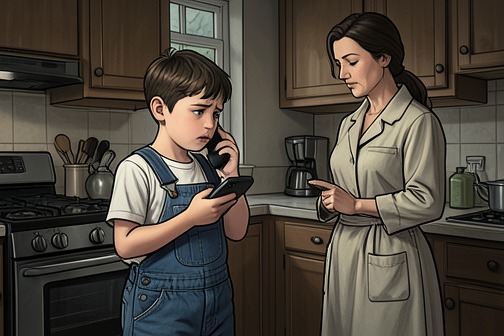
The [Iraqi boy receives an eraser](entity:event-recall-event-c12e8d1da6c6) during a civil-affairs mission in [Iraq](entity:location-recall-location-iraq-57b030bc9041), a small encounter that becomes one of the most consequential moments of [J.D. Vance](entity:character-recall-character-j-d-vance-9fc68b5aa691)’s Marine Corps service. A schoolboy’s joy over a two-cent object did not erase Vance’s grievances, but it gave him a new measure for them: against the deprivation around him, the life he had resented contained comforts, support, and love he had taken for granted.
## Mission and Setting
Early in his deployment, Vance, serving as a public affairs marine, attached to different units to record their routines, photograph marines, and write short accounts of their work. He sometimes escorted civilian reporters. For this mission he joined a civil-affairs unit conducting community outreach, a kind of work considered more dangerous because small groups of marines went into unprotected Iraqi territory to meet local people.
Senior marines met with school officials while the rest of the group provided security or spent time with the children. The scene was neither a firefight nor a formal ceremony: the marines played soccer and handed out candy and school supplies. That ordinary activity placed Vance in direct contact with the children whose daily circumstances differed sharply from his own.
## The Encounter
A very shy boy approached Vance and held out his hand. Vance gave him a small eraser. The boy’s face lit up briefly; then he ran back to his family, holding the two-cent prize aloft in triumph. Vance remembered never having seen such excitement on a child’s face.
The exchange is striking in its scale. The gift was inexpensive and the encounter brief, yet the boy’s response made the object seem momentous. The scene does not claim that the eraser changed the boy’s circumstances, or that Vance learned the boy’s story. Its force lies instead in the visible intensity of his happiness and in what that expression made Vance reconsider.
## A Reassessment of Resentment
Vance explicitly resisted the idea that a single instant could transform a person. He had seen people sincerely want to change and then lose resolve when change proved difficult. The encounter came close to an epiphany, but he distinguished the moment’s impact from the harder work of becoming different.
Before Iraq, he had carried resentment toward the world: toward his mother and father, the bus ride to school while other children got rides with friends, clothes he could not buy at Abercrombie, his grandfather’s death, and the family’s small house. Surveying the children in a war-torn country, their school without running water, and the boy celebrating the eraser, he began to recognize the material advantages and personal support in his own life. He described himself as having been born in the United States with modern conveniences at hand and supported by two loving hillbillies; despite the family’s quirks, he knew they loved him unconditionally.
## Meaning and Aftermath
The encounter did not make Vance’s earlier hardships disappear, nor did he claim to have completed the change it prompted. Instead, he resolved to become the kind of man who would smile when someone gave him an eraser. He acknowledged that he had not quite become that man, but that without this day in Iraq he would not be trying.
The scene therefore marks a beginning rather than a finished conversion. Its contrast is concrete: a child’s delight in a tiny school supply against Vance’s catalogue of grievances and his belated recognition of what he had been given. The eraser becomes a modest measure of attention and gratitude, while Vance’s qualification—that he is still trying—keeps the moment from being presented as effortless redemption.
Event 12
Mamaw’s death

[Mamaw’s death](entity:event-recall-event-mamaw-c27205b383df) was a turning point in [J.D. Vance](entity:character-recall-character-j-d-vance-9fc68b5aa691)’s family life: it ended the steady refuge she had provided, brought relatives together for a difficult decision about life support, and exposed financial tensions that would deepen the family’s divisions. The event is narrated retrospectively, with the crisis at [Middletown Regional Hospital](entity:organization-recall-organization-middletown-regio-211253fdde8b) set against the years of protection and practical care that had made [Mamaw](entity:character-recall-character-mamaw-c66ebbf60ef8)’s home a lasting source of stability for J.D. Vance.
## Background and Significance
Mamaw’s place in J.D. Vance’s life had been formed by contrast. Before he moved in with her permanently, his childhood involved repeated changes of home and household. In the middle of third grade, he left Middletown and his grandparents to live in Preble County with Bob. After fourth grade came a move to a duplex on McKinley Street; after fifth grade, another move, to a different block. In later school years, the adults in his mother’s life changed, and each change carried the possibility of another move. By the end of ninth grade, he was living with [Ken](entity:character-recall-character-ken-86ded82a565a), a stranger, and Ken’s three children. Alongside these displacements were drugs, domestic violence, children’s services, and the death of [Papaw](entity:character-recall-character-papaw-4ce8b873129f).
Mamaw’s home brought a different pattern. After J.D. Vance moved in with her permanently, he remained there through the end of tenth, eleventh, and twelfth grades. Its importance lay not only in protection from household conflict but in the continuity of having the same home and caregiver. J.D. Vance later connected that stability with his improved schoolwork, stronger friendships, and greater ability to focus on his own future. Her death therefore meant the loss of a person as well as the end of the dependable domestic center around which those years had been organized.
Her religious life was private and personal rather than centered on regular church attendance. Mamaw distrusted organized religion and conspicuous displays of piety, yet gave money to churches in [Jackson, Kentucky](entity:location-recall-location-jackson-kentucky-2aa0fa7fbd49). She believed God remained with the family through both good times and bad, and taught that hard work, care for family, forgiveness, and hope were duties rooted in faith. These beliefs were part of the moral and emotional support J.D. Vance associated with her.
## The Last Days Before the Hospital Crisis
In April 2005, shortly before Mamaw’s seventy-second birthday, J.D. Vance spoke with her by telephone while waiting at a Walmart Supercenter as technicians changed the oil in his car. She told him about babysitting [Lindsay Leigh Lewis](entity:character-recall-character-lindsay-leigh-lewis-014cccd288af)’s children that day. He laughed with her, said he loved her, and told her that her monthly three-hundred-dollar check was on its way. Mamaw thanked him for helping her, said she was proud of him, and told him she loved him. The exchange showed how their relationship had changed: the child who had depended on her was now able to contribute to her support.
Two days later, Lindsay Leigh Lewis called with news that Mamaw’s lung had collapsed and that she was in a coma. J.D. Vance was asked to return home as quickly as possible. He packed his dress-blue uniform in case a funeral was necessary and left within two hours. Driving from [Cherry Point](entity:location-recall-location-cherry-point-d98b7137d1b3), North Carolina, he was stopped in West Virginia for traveling ninety-four miles per hour on I–77. The officer gave him a warning and told him the highway was clear of speed traps for the next seventy miles; J.D. Vance then continued at even greater speed until crossing into [Ohio](entity:location-recall-location-ohio-1ed5d8da8148). He completed a journey that ordinarily took thirteen hours in just under eleven.
## The Family’s Decision
J.D. Vance arrived at Middletown Regional Hospital at eleven in the evening. His family had gathered around Mamaw’s bed. Her lung had been reinflated, but the infection that had caused it to collapse was not responding to treatment. The doctor warned that waking her before the infection improved would be agonizing, if waking her was possible at all. The family waited several days for signs that the medication was working. Instead, Mamaw’s white blood cell count continued to rise, and some of her organs showed severe stress.
The doctor explained that Mamaw had no realistic chance of surviving without a ventilator and feeding tube. The family conferred and agreed that if her white blood cell count rose further after another day, they would withdraw life support. [Aunt Wee](entity:character-recall-character-aunt-wee-094176e73c12) held the legal authority to make the decision. She asked J.D. Vance tearfully whether she was making a mistake. He remained convinced that she and the family had chosen rightly, while acknowledging that certainty was impossible and wishing they had a doctor among their relatives.
When the family withdrew the ventilator, they had been told Mamaw might die within fifteen minutes, or at most an hour. Instead, she lived for three hours. [Uncle Jimmy](entity:character-recall-character-uncle-jimmy-dc7f2eef6f07), [Mom](entity:character-recall-character-mom-15bf8f337f4b), Aunt Wee, Lindsay Leigh Lewis, Kevin, and J.D. Vance were present. They took turns speaking quietly to her and hoping she could hear. As her heart rate fell, J.D. Vance opened a Gideon’s Bible at random and read a passage from First Corinthians about seeing indistinctly in the present and later seeing face to face. Mamaw died a few minutes afterward. The passage drew together her personal faith and the family’s final vigil without resolving the uncertainty surrounding death.
## Grief and the Estate
J.D. Vance did not cry when Mamaw died or for several days afterward. Aunt Wee and Lindsay Leigh Lewis worried about his composure and urged him to grieve. He understood his restraint as a way of projecting strength while sensing that the family was close to falling apart. Mamaw’s death required more than mourning: relatives had to settle her estate, determine her debts, dispose of her property, and divide what remained.
That process revealed the extent of Mamaw’s financial support for Mom. Uncle Jimmy learned about charges for drug rehabilitation and numerous loans that had never been repaid; afterward, he refused to speak to her. The revelations did not surprise those familiar with Mamaw’s generosity. Although Papaw had worked and saved for more than four decades, the house that he and Mamaw had bought fifty years earlier was the only substantial asset left. Her debts threatened to consume much of its equity. Because she died in 2005, during the real-estate boom, the family was able to avoid the much worse financial outcome that might have followed had she died in 2008.
Mamaw’s will divided what remained among her three children, but Mom’s portion was split evenly between J.D. Vance and Lindsay Leigh Lewis. The arrangement became one more pressure within an already strained family. J.D. Vance was occupied with the estate and with seeing relatives he had not visited for months, and at first did not recognize that Mom was moving toward the kind of emotional crisis that had followed [Papaw’s death](entity:event-recall-event-papaw-f5dd0d888a9a).
## Aftermath and Narrative Role
Mamaw’s death also sits within the larger chronology of J.D. Vance’s transition into adulthood. He went to war a few months after she died and served four years in the Marines. At twenty-three, he returned from Cherry Point to Middletown in the first major purchase he had made, an old Honda Civic, carrying his discharge papers and preparing to start classes at [Ohio State](entity:organization-recall-organization-2a796f26ae37) three weeks later. The sequence places bereavement among the experiences that marked his military years, without making it the sole cause of his later choices.
The account’s emphasis falls on the concrete forms of care that Mamaw had supplied: a home that did not keep changing, financial help for relatives, and a faith expressed through responsibility and endurance. At her bedside, those forms of care became the family’s shared task of deciding when further medical intervention could no longer offer a realistic chance of recovery. Her death removed the person who had given J.D. Vance a stable place to grow, while the estate proceedings revealed how costly that same generosity had been for the family. The loss thus altered both his private sense of security and the family relationships that remained after her.
Event 13
Iraq War

The [Iraq War](entity:event-recall-event-994a2ad5cf73) enters [J.D. Vance](entity:character-recall-character-j-d-vance-9fc68b5aa691)’s memoir as both a national conflict and a personal reckoning. It helps prompt his decision to enlist in the [United States Marine Corps](entity:organization-recall-organization-united-states-ma-0009a2eac3c2), separates him from a family he fears leaving behind, and gives him experiences in [Iraq](entity:location-recall-location-iraq-57b030bc9041) that complicate his earlier resentment and later shape his response to civilian judgments about the war. The account does not attempt to recount the conflict’s full military history; its focus is how the war intersects with family obligation, service, education, and the hard work of change.
## Enlistment and the Decision to Leave
In late March, Vance walked into a military recruiter’s office to ask about the Marine Corps. The recruiter did not promise an easy life: he warned that the pay would be low and that Vance might go to war, while also describing the leadership and discipline the service could provide. That prospect appealed to a young man who did not yet see himself as disciplined. He was pudgy and long-haired, had never developed the habit of getting up before six in the morning, and would walk through at least half of a mile run at school. The contrast between his current habits and the military’s demands made enlistment seem less like a natural fit than a chance to become someone different.
After returning home, Vance weighed the alternatives. He thought his country needed him and that he would regret missing the chance to take part in America’s newest war. The GI Bill also offered a way to exchange future indebtedness for greater financial freedom. He regarded college, doing nothing, and military service as the available choices, and believed four years in the Marines could help him become the person he wanted to be. His decision was therefore driven by more than patriotism or financial calculation: he also felt he had no appealing alternative and wanted the discipline to make adulthood manageable.
The decision carried a personal cost. [Lindsay Leigh Lewis](entity:character-recall-character-lindsay-leigh-lewis-014cccd288af) had recently had her second child, was expecting a third, and had a toddler at home; other young children in the extended family were still babies. Vance did not want to leave them, and the more he considered enlistment, the less willing he felt to go. But he also feared that delay would give him time to abandon the decision. Two weeks after first considering his options, as the Iraq crisis became the Iraq War, he signed a commitment to give the Marine Corps the first four years of his adult life.
His family initially doubted that the Marines suited him. [Mamaw](entity:character-recall-character-mamaw-c66ebbf60ef8) tried to dissuade him, warning that the service would overwhelm him and asking who would look after her. The objections reflected the same family ties that made departure difficult, but they did not change his mind. Eventually the family accepted his decision, though Mamaw remained particularly troubled by the possibility of war.
## Deployment and the Family Left at Home
After boot camp, Vance left for a permanent Marine Corps assignment and returned home whenever leave and long weekends allowed, usually every few months. The family continued its life in his absence: [Mom](entity:character-recall-character-mom-15bf8f337f4b) moved in with Mamaw, Mamaw’s health seemed to improve, and Lindsay Leigh Lewis and [Aunt Wee](entity:character-recall-character-aunt-wee-094176e73c12) and their families appeared healthy and happy. Vance had feared that a crisis would strike while he was away and that he would be unable to help. For a time, the feared calamity did not arrive.
In January 2005, he learned that his unit would go to Iraq a few months later. He felt both excitement and nervousness. When he told Mamaw, she fell silent and said she hoped the war would end before he had to leave. Although they spoke by phone every few days, neither of them spoke about Iraq as winter turned to spring. Vance understood that Mamaw did not want to discuss or think about the deployment, and he let the subject remain unspoken.
The impending deployment made their practical obligations more immediate. Mamaw was frail and ill, took a dozen medications, and made regular hospital visits. When her health coverage became more expensive, she needed an additional three hundred dollars each month to afford it. Vance volunteered to pay that amount from his own earnings. He estimated that the Marines paid him about a thousand dollars a month after taxes, with housing and meals provided; he also earned extra money playing online poker. Mamaw had not previously accepted money from him, including earnings from his earlier work or boot camp, so her acceptance told him how serious the financial strain had become. His departure for war thus coexisted with a continuing responsibility to help sustain the household he had left.
## Work in Iraq and a Small Encounter
Vance served as a public affairs Marine. He attached to different units to observe their routines, sometimes escorted civilian journalists, and otherwise took photographs or wrote short accounts of Marines and their work. Early in his deployment, he joined a civil affairs unit conducting community outreach. Such missions were considered more dangerous because small groups of Marines went into Iraqi territory that was not under their protection. On one mission, senior Marines met with local school officials while the rest of the group provided security or spent time with the schoolchildren, playing soccer and distributing candy and supplies.
One shy boy approached Vance with an outstretched hand. Vance gave him a small eraser, and the boy’s face briefly brightened before he ran back to his family holding it up. The object was worth only two cents, but Vance had never seen a child display such excitement over so little. He later came close to treating the encounter as transformative, while insisting that real change takes longer than a single moment. Its significance lay less in an instant conversion than in the challenge it posed to a lifetime of resentment: the war had put him in contact with people whose immediate circumstances could not be reduced to the grievances he had carried from home.
## Return, Memory, and the War’s Meaning
The deployment also became part of Vance’s later arguments about how civilians understand military service. In an undergraduate foreign-policy seminar, he heard a nineteen-year-old classmate claim that soldiers were generally less intelligent than students who went straight to college and that Marines killed and disrespected Iraqi civilians indiscriminately. Vance considered the student’s judgment baseless. His own Marine friends had held a wide range of political views, including strong opposition to George W. Bush and doubts that the war’s sacrifices had brought sufficient gains. Their differences made the classmate’s generalization seem especially careless to him.
Vance recalled the instruction Marines received on respecting Iraqi culture, including rules about gestures and how to address women in traditional dress. He remembered providing security for Iraqi poll workers and explaining the importance of their work without pressing American political opinions on them. He also remembered an Iraqi youth who could not speak English but performed every word of a 50 Cent song, and Marine friends who survived an improvised explosive device attack in the Al-Qaim region with severe burns. These experiences did not make his account a claim that the war was simple or uniformly well conducted; they made the accusation that Marines killed for sport impossible for him to accept as an adequate description of the people he knew and the work he had witnessed.
By the end of his four years in the Marines, Vance had also seen extreme poverty in Haiti, witnessed the aftermath of an airplane crash in a residential neighborhood, and lost Mamaw before going to war. He returned to [Ohio](entity:location-recall-location-ohio-1ed5d8da8148) with his discharge papers and an old Honda Civic, and with a clearer idea of what he wanted from life and how to pursue it. Three weeks later, he was due to begin classes at [Ohio State University](entity:location-recall-location-ohio-state-universit-dacbff6636b2). The Iraq War is therefore one part of a larger passage from dependence and uncertainty toward deliberate action: military service gave Vance discipline and a widened frame of reference, but the memoir presents that change as something formed through accumulated experience rather than delivered by war alone.
Event 14
September 11 attacks

The [September 11 attacks](entity:event-recall-event-386102a65454) enter the memoir as the subject of a conspiracy claim rather than as a narrated historical event. A message associated with the attacks’ tenth anniversary presents a documentary by right-wing radio talker Alex Jones as raising unanswered questions and suggesting that the U.S. government had played a role in the massacre of its own people. The passage records the claim’s circulation, not evidence for it, and gives no account of the attacks’ course or immediate aftermath.
## The Tenth-Anniversary Message
The memoir places the documentary in a sample of messages seen by the narrator from friends and family. Its anniversary timing gives the attacks renewed prominence in the message, while the documentary’s framing turns a public tragedy into a story of concealed government responsibility. The book does not elaborate on the documentary’s contents or identify any evidence it offered; its focus is on what the message reveals about the information environment in which such claims traveled.
## Conspiracy Claims and Media Distrust
The example appears amid a broader account of weak trust in the press and the Internet conspiracy theories that, in the narrator’s view, flourish when that trust is absent. Other items in the same sample include claims that [Barack Obama](entity:character-recall-character-barack-obama-6be715d5a49d) was a foreign alien seeking to destroy the country, that health-care legislation required microchip implantation, and that the [Newtown school shooting](entity:event-recall-event-d58d26f59bc6) had been engineered by the federal government. These assertions differ in subject, but the memoir presents them together as examples of how suspicion of public institutions can recast major events and public policy as evidence of hidden schemes. The September 11 message is one instance in this wider pattern, not a standalone account of the attacks.
## Religious and Political Atmosphere
Elsewhere, the narrator recalls encountering evangelical rhetoric about Christian persecution, cultural corruption, and the [End Times](entity:time-recall-time-0ebc9c09fcdc). In that setting, religious prophecy could give political fears additional force: warnings about an electronic mark of the beast, for example, attached apocalyptic significance to a false microchip story. The book does not say that this religious framework produced the September 11 conspiracy claim. Rather, the juxtaposition shows the kinds of political and religious narratives circulating in the same broader world of distrust and perceived threat.
## Narrative Significance
The reference is brief, but its placement matters. The memoir moves from intimate recollections toward questions about community and social conditions, and later argues that no single book, expert, or field can fully explain the problems it examines. The anniversary message serves as a concrete example of how distrust circulates through personal networks as well as public media. Accordingly, the September 11 attacks appear here as a focal point for a story about contested information and institutional suspicion, not as an event reconstructed from eyewitness experience.
Event 15
Newtown school shooting

The [Newtown school shooting](entity:event-recall-event-d58d26f59bc6) is mentioned as the subject of a conspiracy claim circulating in conservative media. The memoir records a WorldNetDaily editorial alleging that the federal government engineered the shooting to turn public opinion toward gun-control measures; it does not supply evidence for the allegation or narrate the event itself.
## The Editorial Claim
The reference appears as an example of material published by the popular website WorldNetDaily. Its editorial presented the shooting as a federal operation intended to influence the gun-control debate. The memoir reports what the editorial suggested, not a proven account of the shooting or its perpetrators.
## A Wider Climate of Persecution Narratives
Elsewhere, the narrator recalls encountering claims that Christians faced discrimination, that secularists threatened religious values, and that cultural change signaled impending moral collapse. The Newtown conspiracy allegation belongs to a broader landscape in which public events could be interpreted through narratives of hostile elites and hidden agendas. The text places these claims in view without establishing that they were accurate.
## Scope of the Account
The memoir provides no details about the shooting’s location, victims, circumstances, or aftermath. Its focus here is the existence of the editorial and what its allegation illustrates about conspiratorial explanations of public events. The distinction matters: the passage documents a claim’s circulation, not the truth of the claim.
Event 16
World War II
[World War II](entity:event-recall-event-7e5722c923de) enters [J.D. Vance](entity:character-recall-character-j-d-vance-9fc68b5aa691)’s memoir through a family interview rather than a battlefield scene: while working on a school project, he asks [Mamaw](entity:character-recall-character-mamaw-c66ebbf60ef8) about the war and discovers that her family’s participation is the history she most wants to recount. The conversation connects private memory to a broader inheritance of patriotism, one that gave meaning to his childhood and stood in tension with his community’s later sense of distance from national life.
## The Class Interview
Mamaw had lived through decades of marriage, children, grandchildren, death, poverty, and triumph when J.D. Vance interviewed her for a class project on World War II. The war, he recalls, was the subject that unmistakably stirred her greatest pride and enthusiasm. Their conversation spent only minutes on everything else, then continued for hours on wartime life and the part her family had played.
The details made the conflict intimate and domestic. Mamaw spoke about war rations and Rosie the Riveter, and about love letters her father sent her mother from the Pacific. She also remembered the day the atomic bomb was dropped. In this account, World War II is carried through family recollection: public events appear alongside the work, correspondence, and shared experiences through which they entered household memory.
## Family Service and Local Memory
Mamaw’s pride in her family’s wartime contribution belonged to a wider family and regional tradition of service. J.D. Vance recalls that he knew little about Breathitt County’s officials, health services, or prominent residents, but remembered the claim that the county had met its World War I draft quota entirely with volunteers—the only county in the United States to do so. The fact endured because people around him made sure he knew it. The contrast places Mamaw’s World War II memories within a longer story of patriotic service, passed down as a defining account of where the family came from.
Mamaw and [Papaw](entity:character-recall-character-papaw-4ce8b873129f) taught J.D. Vance to regard the United States as the greatest country on earth. The memoir presents that belief not as an abstraction but as a source of hope during an unsettled childhood: he trusted that better days were possible because the country allowed people to make choices that others had not. His interview with Mamaw shows how that conviction was reinforced by family stories, especially her pride in what her family had done during the war.
## Patriotism and the Memoir’s Contrast
The memoir sets this inheritance against a later cultural detachment in Middletown. During the wars of the 2000s, many people from the narrator’s neighborhood served, yet the community felt trapped in conflicts and in an economy that failed to provide the steady wage associated with the [American Dream](entity:expression-recall-expression-american-dream-fa64ce85a324). National pride and alienation therefore coexist in the book: the family’s devotion to the country remains strong even as its members feel separated from the institutions and promises of contemporary American life.
J.D. Vance describes himself as sharing Mamaw’s patriotism, including an emotional response to patriotic songs and military stories. The interview thus functions as more than a school assignment. It preserves the family’s account of wartime contribution and helps explain why love of country could remain central to his identity amid later disappointment. World War II is recalled as a source of family pride and continuity, not as a complete explanation for the community’s hardships.