Ancient Britain before the Roman invasion
Taleian Royal Order
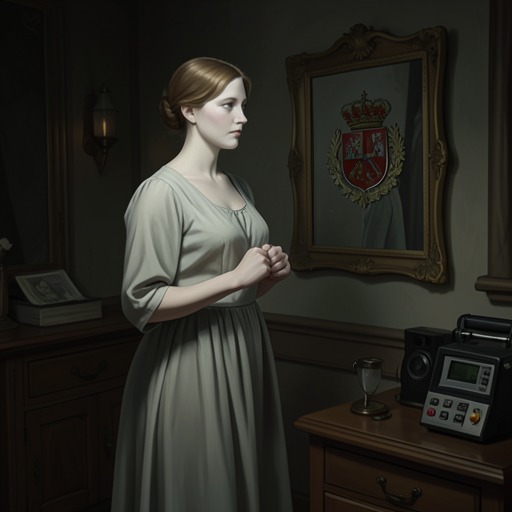
In the history [Prince Octavius](entity:character-recall-character-prince-octavius-036edc199995) recounts, the [Taleians](entity:organization-recall-organization-taleians-ea149cb744c5) were divided into clans and ruled by a Queen of the first royal clan, [Morrigan](entity:character-recall-character-morrigan-c7937d3fa712). Her consort and sword-bearing protector came from the [Breannin Clan](entity:organization-recall-organization-breannin-clan-95700d1a812f), whose members also served among her knights.
This royal order rested on a division of gifts: Taleian men were renowned as warriors, while Taleian women possessed powerful psychic abilities. The account establishes an ancestral society whose customs will later shape the claims made over Clara.
Ancient Britain, during the Taleian royal era
Fated Names in the Book
A Taleian child’s destined mate was said to be named at birth in the [Book of Talus](entity:object-recall-object-book-of-talus-a6cdd340af57), a magical text whose workings no one understood. The pairing was treated as fate rather than a choice made by the two people involved.
The rule helps explain why the men around Clara regard attraction as obligation, and why Octavius presents the old customs as something neither he nor Clara can simply disregard.
Ancient Britain, before the Roman invasion
The Taleian Curse
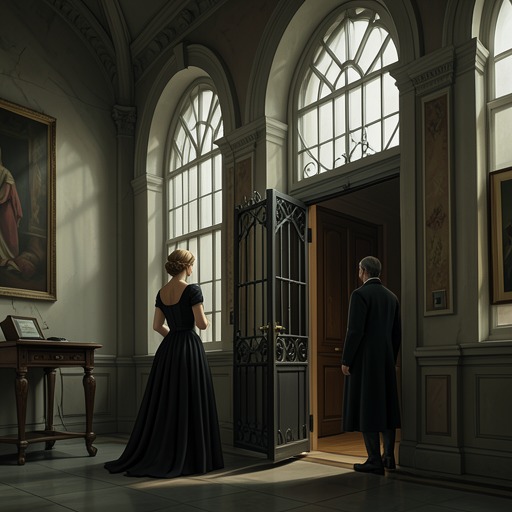
Jealous of the [Taleians](entity:organization-recall-organization-taleians-ea149cb744c5)’ lands and power, the [Druids](entity:organization-recall-organization-druids-9eecec562641) devised a curse that transformed them into [Vampires](entity:creature-recall-creature-vampires-1d7f37af175a). The transformation unleashed blood lust among the cursed people and left them vulnerable to persecution.
Octavius presents this calamity as the rupture that scattered the Taleians from their homeland. Their supernatural inheritance survived even as their society was broken apart.
Ancient Britain, after the curse
The Royal Pair's Murder
As the [Druids](entity:organization-recall-organization-druids-9eecec562641) hunted the cursed people, [Morrigan](entity:character-recall-character-morrigan-c7937d3fa712) and her warrior consort were murdered while trying to aid their people with the help of a powerful Magician. The loss of the Queen ended the old royal line's immediate protection of the [Taleians](entity:organization-recall-organization-taleians-ea149cb744c5).
The scattered survivors carried their customs and supernatural nature beyond Britain. Octavius's account makes the ancient killings part of a much longer history of lost rulers and endangered heirs.
After the ancient royal killings
Scattered Taleian Survivors
Hunted by the [Druids](entity:organization-recall-organization-druids-9eecec562641) and other humans, the surviving [Taleians](entity:organization-recall-organization-taleians-ea149cb744c5) dispersed across the world in separate clans. In Octavius's account, their enemies' persecution continued beyond the collapse of their homeland.
Taleian women became especially vulnerable to slavers, who sold them to humans for different purposes, including the belief that their flesh could cure terminal illness. The surviving men sought relationships with human women, changing the course of Taleian inheritance.
1893
The New Queen's Birth
After a long period without a new Queen, another was born in [1893](entity:time-recall-time-1893-84c45310276c) from a Taleian man and a human woman. Octavius describes this new royal child as the product of a union made possible by the relationships Taleian men formed with humans.
The birth restored the possibility of a ruling Queen, but it did not erase the danger facing Taleian women or the upheavals that had transformed their people.
After Taleian men began having children with humans
Hybrid Awakening
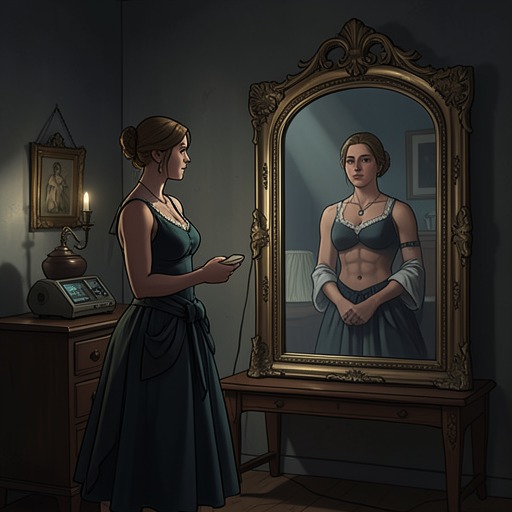
Children born from Taleian and human parents carried hybrid inheritance that could remain dormant for years. Their true Taleian form emerged later, sometimes when their bodies judged the time right, through an experience Octavius describes as a small death before awakening.
The hybrids remained in a youthful form, appearing no older than twenty-five. Clara's possible hybrid nature makes this history more than distant lore: Octavius tells her that she has not yet completed her own transformation.
After the hybrids helped the Taleians survive their evolution
The Empress's Rule
Octavius recalls an era when the Empress carried the inherited strands of the various peoples and governed with the [Five Princes](entity:organization-recall-organization-five-princes-ecf9412ebf8c). The [Book of Talus](entity:object-recall-object-book-of-talus-a6cdd340af57) provided mates and advisors meant to guard her power and keep her loved and safe.
He regards this arrangement as wiser and more nurturing than the rule of his father, [The Emperor](entity:character-recall-character-the-emperor-b3359aac7034). His account frames the current court's suppression of old customs as part of a deliberate effort to erase the Empress's legacy.
Centuries before the 26th century
A World Without the Sun
The world lost its sun and drifted through space in search of another. Survivors endured frozen wastelands on the surface, while inherited traits from [Taleians](entity:organization-recall-organization-taleians-ea149cb744c5), hybrids, [Werewolves](entity:creature-recall-creature-werewolves-8de514e497c0), and other supernatural peoples helped some of them survive.
The later underground cities developed within this transformed world. Octavius also says that alien refugees added another strand to the populations' already mixed inheritance.
Before Clara's arrival in the 26th century
The Emperor's Purge
According to Octavius, [The Emperor](entity:character-recall-character-the-emperor-b3359aac7034) found a way to murder [The Empress](entity:character-recall-character-the-empress-74f222d568cb), her child, and the [Five Princes](entity:organization-recall-organization-five-princes-ecf9412ebf8c). The killing removed the royal figures whose authority represented the older order and left the Emperor in power.
The news of the lost royal child gives Clara's identity disclosure its lethal significance. If she is that child, her presence threatens a ruler who has already destroyed the family she may belong to.
1987
Clara Hidden in 1987
Clara was somehow stolen from her own era and hidden in [1987](entity:time-recall-time-1987-0da5bb436088), centuries before [Londinium](entity:location-recall-location-londinium-f124cbb11dc1) existed. She grew up believing that James Driscoll was her father and that the woman she called Mum was her mother.
At the ball, the possibility that she is the lost Empress's child overturns those assumptions. The life she remembers suddenly seems built around a concealed identity and a displacement through time.
Before the palace ball in the 26th century
Kidnapping in Londinium
By the time of the ball, Clara and her friends have already been kidnapped. Clara believes [Byron Phraeon](entity:character-recall-character-byron-phraeon-741106312987) was responsible, but says there is no proof and that he remains beyond Darius's reach as a member of the [Emperor's Council of Advisors](entity:organization-recall-organization-emperor-s-counci-7faf82814b99).
The unresolved crime shadows Byron's appearance at court. His place on the council and the lack of evidence allow him to move freely despite Clara's suspicion.
26th century, during the palace ball
The Lost Heir's Revelation
As Byron leads Clara across the ballroom, she reels from his revelation that she may be the lost Empress's child, stolen and hidden in [1987](entity:time-recall-time-1987-0da5bb436088). She understands that her remembered family history may be false and grieves the possibility that James Driscoll was never her father.
Her distress is compounded by the public setting and by the realization that her identity could make her an enemy of the reigning Emperor. She tries to pull away from Byron, but he holds her close and refuses to let the dance end on her terms.
Moments after Clara's revelation at the ball
Byron's Courtship Claim
Byron kisses Clara on the cheek where Darius, [Prince Octavius](entity:character-recall-character-prince-octavius-036edc199995), and [Carter](entity:character-recall-character-carter-a01efa8905bf) can see, then declares that her future is with him. Clara is furious at the possessive display, while the other men react with visible shock, hurt, or anger.
When the dance ends, Byron kisses her gloved hand and says he will keep watch until he can make her his. Clara rejects his claim and insists that she is not property, but Byron treats the gesture as a valid courtship claim under the old rule.
Immediately after Byron's claim
Darius's Intervention
Darius takes Clara away from Byron and tells him to keep his distance because she is under his protection. Byron counters that Darius also desires to possess her and argues that his own public gesture has staked a claim.
Darius disputes the legitimacy of Byron's kiss as a bonding ritual, while Clara objects to being discussed as an object between them. When the men continue arguing, she leaves the dance floor in search of somewhere quiet.
Shortly after Clara walks away
Louise Leaves the Ballroom
[Louise Turner](entity:character-recall-character-louise-turner-1cea75a08982) notices Clara's tears and leaves Terri to accompany her. Clara confirms that Byron is the man she believes arranged their kidnapping, and Louise is alarmed that he has faced no arrest.
As they hurry down a marble corridor, Louise tries to make sense of the underground city and its levels. Clara explains that [Londinium](entity:location-recall-location-londinium-f124cbb11dc1) has eleven levels so far and that [Prince Octavius](entity:character-recall-character-prince-octavius-036edc199995) has spoken of plans for more.
In the corridor after Clara leaves the ballroom
Octavius Offers Solace
[Prince Octavius](entity:character-recall-character-prince-octavius-036edc199995) catches up with Clara and notices that she is crying. He offers to take her somewhere private to rest, while Louise graciously leaves them alone.
Clara accepts his kindness but hides what Byron has told her. She fears that revealing her possible identity could place her and her friends in danger, especially because Octavius is [The Emperor](entity:character-recall-character-the-emperor-b3359aac7034)'s son.
During Clara and Octavius's private conversation
The Bonding Ritual Explained
Octavius explains that the old Taleian bonding ritual required a series of sword duels before a mate could be joined by blood and a psychic bond. Under the account he gives, a male who lost to a challenger could lose his mate to the victor, leaving her bound to a man she did not love.
He says [The Emperor](entity:character-recall-character-the-emperor-b3359aac7034) has muted the ritual, though some [Taleians](entity:organization-recall-organization-taleians-ea149cb744c5) still feel compelled by it. Octavius also describes [Londinium](entity:location-recall-location-londinium-f124cbb11dc1)'s population as carrying inherited supernatural traits and says the world's surviving people have acquired an additional alien strand.
As the ritual explanation turns personal
Octavius Claims Clara
Octavius tells Clara that he felt drawn to her at first sight and believes Darius is also approaching the edges of her mind. He asserts that she belongs to him and says he will fight to the death to win her, then kisses her with an intensity she finds both overwhelming and confusing.
Clara struggles with her attraction to Octavius and Darius while recognizing that several men are trying to claim her. She breaks away and says she is only seventeen, is not ready to be claimed, and wants the right to choose whom she spends eternity with.
Immediately after the kiss
Clara Rejects the Claim
Clara argues that the ritual gives women no say and declares that, if she were Empress, she would change its rules. Octavius responds that earlier attempts to suppress the custom failed because the men remain possessive and the ritual rises again.
She tries to leave, but Octavius catches her and insists that protecting her from challengers is his duty. He tells her she belongs to him and says she cannot protect herself, then claims to sense psychic gifts in her that have not yet fully awakened.
Moments before the corridor erupts
The Attempted Bite
Octavius holds Clara despite her objections and tells her to submit. He touches his lips to her throat and scrapes his incisors against her skin, while Clara experiences an unwanted mixture of fear, desire, and confusion.
Darius speaks inside Clara's mind, warning her not to trust everything Octavius says. He tells her that their bond came first, that more than one mate may be possible, and that Octavius intends to mark her with a bite before the required challenges have occurred.
As Octavius moves to bite Clara
Darius Pulls Clara Away
Octavius rejects Clara's appeal and raises his mouth to bite her, but Darius pulls her away and holds her against him. The two men bare their teeth and hiss at each other as Darius insists that the ritual's challenges must come before anyone can claim Clara with a bite.
Clara tries to free herself from Darius's grasp, but his fear for her keeps him holding on. The rescue stops the immediate attempt to mark her, without resolving the struggle over who has a claim.
During the standoff in the corridor
Carter Enters the Confrontation
[Carter](entity:character-recall-character-carter-a01efa8905bf) arrives and asks Clara whether she is all right, offering to come and get her. His calm presence contrasts with the hostility between Darius and Octavius, both of whom turn on him when he approaches.
Clara signals Carter to stay back, unwilling to see him hurt. She then shouts for the men to stop treating her as something to be fought over and declares that she is not going with any of them.
Near the ending, moments after Clara's protest
The Palace Shockwave
Before the confrontation can escalate further, the ground beneath the group shakes. A second tremor threatens to throw everyone off balance, followed by a flash of blue light and a loud blast.
The force hurls Clara, Darius, Octavius, and [Carter](entity:character-recall-character-carter-a01efa8905bf) to the floor, and they lose consciousness. The story ends with their fate unresolved, as the palace corridor is left in the aftermath of the sudden explosion.