
The Dragon's Rise and Excess
I ChingThis flow follows the dragon imagery in the first hexagram as a sequence of concealed ability, emergence, disciplined activity, and overreach.
increasing Bearing strength in each event
 decreasing
Bearing strength in each eventdecreasingStrength Lies Hidden

The Unseen Dragon
Ability without its moment
The lowest line presents the dragon hidden in the deep. Its strength exists, but the time is not right for active action.
Legge reads the creature as an emblem of the superior person whose qualities have not yet found their public setting.
The virtue of waiting
The line makes restraint a positive response to circumstance. Hidden ability must not be mistaken for failure, nor should it be forced prematurely into view.
The first stage of the dragon's course is self-command.
The Dragon Appears in the Field

Ability Becomes Visible
A public emergence
The dragon appears in the field, where others can recognize its presence. The line recommends meeting the great man, suggesting that ability now benefits from the right connection.
Legge treats the image as a step from concealment toward service.
Recognition with direction
Emergence is not an end in itself. A capable person needs an appropriate guide or ruler if public promise is to become effective action.
The moment marks a change in circumstance, not merely a change in confidence.
Vigilance Fills the Day
Labor Under Risk
Continuous attention
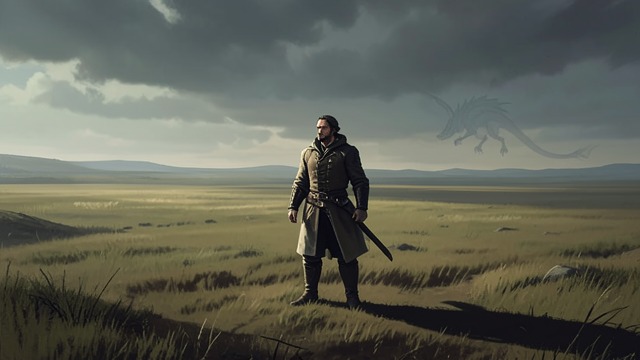
The superior man remains active and vigilant through the day, then careful and apprehensive in the evening. Legge reads the line as disciplined effort under dangerous conditions.
The position offers no guarantee of safety, yet careful conduct prevents error.
Success without complacency
Activity must be joined to watchfulness. The line's danger arises from its exposed position, but awareness makes that danger manageable.
The dragon's development depends on sustained work rather than a single heroic gesture.
The Dragon Takes Flight
Power at Its Height
A position of influence
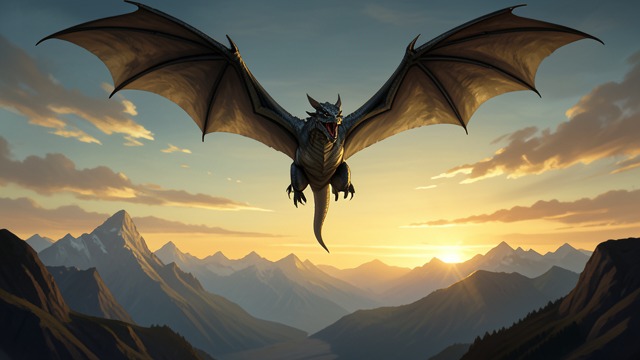
The dragon flies in the sky, the most celebrated point in the sequence. Legge connects the image with the ruler or great man whose virtues can now operate openly.
Meeting the great man remains advantageous: authority and capacity are joined.
The limits within success
The fifth line is a height of achievement, but the full sequence does not end there. Its position makes the next warning possible: even legitimate strength can go beyond its proper bounds.
The dragon's success is real, but not self-sustaining.
Excess Brings Regret
Beyond the Proper Limit
Strength becomes overreach
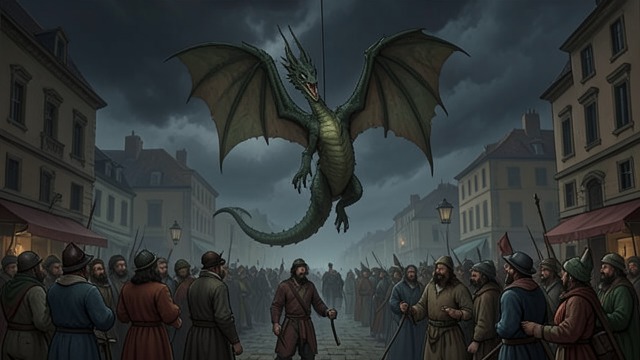
The topmost dragon exceeds its proper limits and faces repentance. Legge explains that the ruler has traversed the full sphere in which his qualities were needed.
The danger is not weakness but an unwillingness to relax when the work is done.
The turn toward humility
The supplementary image of dragons without heads shifts from dominance to submission. Legge interprets the change as the replacement of haughtiness with humility.
The dragon's trajectory ends with a paradox: enduring success requires a willingness to yield.
At the opening of the first hexagram
At the second line of the first hexagram
At the third line of the first hexagram
At the fifth line of the first hexagram
At the topmost line of the first hexagram
