
The Ruler Who Must Learn Restraint
I ChingThis flow follows rulers and ministers through prosperity, overconfidence, and the need to govern power without excess.
increasing Bearing strength in each event
 decreasing
Bearing strength in each eventdecreasingAbundance Creates Opportunity
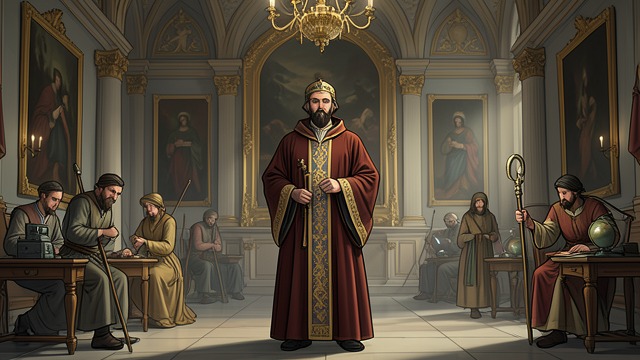
Prosperity at Its Peak
A flourishing state
Great Havings describes abundance in a kingdom or household. Legge says the favorable condition comes with a warning: prosperity may breed pride.
The ruler's position is strengthened by the cooperation of able subjects.
Humility as protection
A weak line in the place of honor represents a ruler who can remain modest despite great resources. The rest of the figure's strength can then serve rather than dominate.
Prosperity becomes a test of character as much as a measure of success.
The Ruler Restraints His Power

Great Resources Under Control
Power near the throne
The fourth line depicts a subject keeping substantial resources under restraint. Legge explains that proximity to the ruler makes self-control essential.
Strength is beneficial only when it does not threaten the authority it serves.
A minister's discipline
The figure presents the capable subordinate as someone who can possess power without making it a rival sovereignty.
The ruler's own humility and the minister's restraint jointly protect the state from internal conflict.
Peace Begins to Turn

Prosperity Is Not Permanent
A successful order
Peace shows strong lines below and yielding lines above, which Legge reads as a favorable political condition. The ruling class and wider community appear in productive relation.
Yet the third line warns that no peaceful state is immune to disturbance.
An approaching reversal
The final line pictures a city wall falling back into its moat. Legge reads the image as a decline that cannot be prevented merely by proclamations or military force.
The ruler's fate depends on recognizing change before prosperity becomes complacency.
The Blocked Ruler Faces Caution
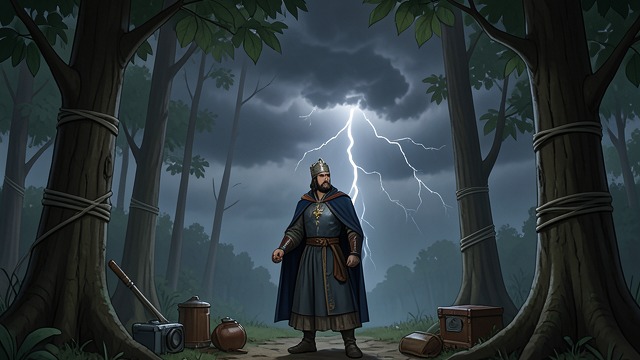
Ending a Political Stagnation
Authority amid distress
The fifth line portrays a great man bringing distress and obstruction toward an end. Legge nevertheless warns the ruler to imagine that the state might still perish.
Success must be guarded through continuing vigilance.
Stability is cultivated
The image of being bound to a clump of mulberry trees suggests that safety must be secured, not assumed. The ruler's strength matters, but so does awareness of continuing vulnerability.
The passage makes caution a form of political foresight.
Authority Is Re-earned Through Beneficence

Rule Through Trusted Conduct
A center for cooperation
Several hexagrams depict people gathering around a ruler whose integrity makes union possible. Legge stresses that authority alone cannot produce lasting attachment.
The ruler must display virtue and respond to the needs of those below.
A continuing responsibility
Appointments, rewards, and public announcements all test whether a ruler can use power proportionately. The final measure is not possession of the throne but the order it enables.
The political arc ends by redefining success as a maintained relationship between authority and service.
At the opening of Great Havings
At the fourth line of Great Havings
At the closing lines of Peace
At the fifth line of Obstruction
At the closing judgments on authority and union
